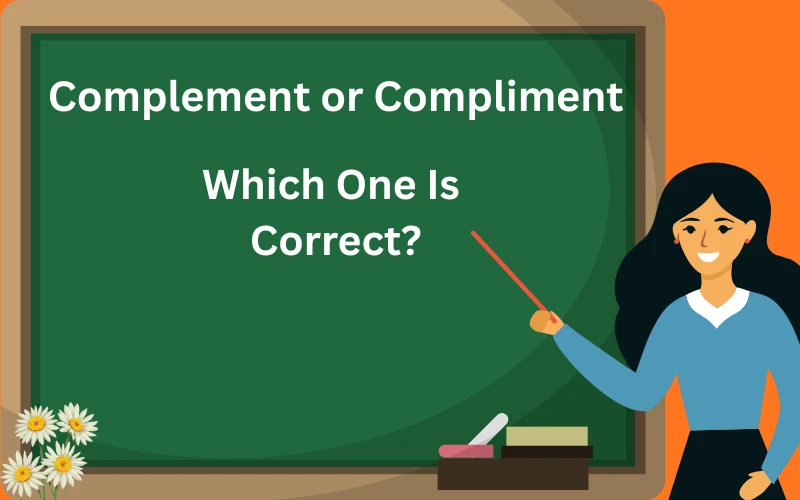
English has many words that sound almost identical but carry completely different meanings. Complement or compliment is one of those pairs. The spelling differs by only one letter, yet each word works in a different situation.
Complement usually refers to something that completes, matches, or improves something else. For example, two colors can complement each other because they look good together. It can also describe something that completes a set or makes something more effective.
Compliment, however, means a kind or positive remark about someone or something. You might compliment a friend on their outfit, praise a coworker for their work, or tell someone that you like their new hairstyle.
The easiest way to remember the difference is to connect each word with its purpose. Complement relates to completing or matching, while compliment relates to praise. Once you learn this small distinction, choosing the correct spelling becomes much easier.
Quick Answer
Complement means something that completes, matches, or enhances another thing. Compliment means a positive remark or expression of praise. Although both words sound alike, they have different meanings and uses.
A simple memory trick can help: complement has an “e” like complete, while compliment has an “i” like a kind or friendly expression you give someone. This difference can help you remember which word fits your sentence.
Related Guide: Swap vs Swop
Complement or Compliment: Direct Difference Explained Clearly
The difference between “complement” and “compliment” is based on meaning and usage. “Complement” refers to something that completes or enhances another thing, while “compliment” refers to praise or admiration given to someone.
Example
The red tie complements his suit
In this sentence, “complements” means it enhances the overall look. Now compare it with “compliment.”
Example
She gave him a compliment on his outfit
Here, “compliment” means praise. Understanding this difference helps you avoid confusion and use each word correctly in sentences.
What Does Complement Mean? Full Explanation
“Complement” means something that completes, improves, or enhances another thing. It is often used when describing how two things work well together or add value to each other.
Example
This sauce complements the dish perfectly
In this case, the sauce improves the overall taste of the dish. The word is commonly used in contexts like fashion, design, and food.
Example
The colors complement each other
Understanding “complement” helps you describe relationships where things work together effectively.
What Does Compliment Mean? Full Explanation
“Compliment” means a polite expression of praise or admiration. People use it when they want to say something nice about someone’s appearance, behavior, or achievements.
Example
She received a compliment on her presentation
This shows appreciation or positive feedback. Compliments are common in daily conversations and social interactions.
Example
He gave her a compliment on her dress
Knowing how to use “compliment” helps you communicate positivity and appreciation.
For More: Scrap vs Scrape
Why People Confuse Complement and Compliment
People often confuse “complement” and “compliment” because they sound identical when spoken. This similarity makes it difficult to choose the correct spelling in writing.
Example
Many write compliment instead of complement
This mistake changes the meaning of the sentence completely.
Example
The shoes complement the outfit
Understanding the difference helps you avoid these common errors and improves your writing accuracy.
Is Complement or Compliment Formal or Informal?
Both “complement” and “compliment” can be used in formal and informal contexts, depending on the sentence. They are standard English words and appear in everyday communication as well as professional writing.
Example
Formal: The design complements the structure
In casual conversation, they are also widely used.
Example
Informal: She gave me a nice compliment
Knowing their usage helps you communicate effectively in any setting.
How to Use Complement Correctly in Sentences
You should use “complement” when describing something that enhances or completes another thing. It is commonly used in descriptions of style, design, and functionality.
Example
The lighting complements the room
This shows how one element improves another. It is often used with objects and ideas.
Example
The music complements the mood
Using “complement” correctly helps you describe harmony and balance in different contexts.
For More: Persue or Pursue
How to Use Compliment Correctly in Sentences
You should use “compliment” when expressing praise or admiration toward someone. It is commonly used in conversations and social interactions.
Example
She gave me a compliment on my work
This shows appreciation and positive feedback. It is used with people rather than objects.
Example
He received a compliment from his teacher
Using “compliment” correctly helps you communicate appreciation clearly.
Common Situations Where Complement Is Used
“Complement” is used in situations where one thing improves or completes another. It is common in design, food, fashion, and relationships between objects.
Example
The wine complements the meal
This shows how one element enhances another. It is also used in visual contexts.
Example
The colors complement the theme
Using “complement” helps describe how things work well together.
Common Situations Where Compliment Is Used
“Compliment” is used when giving praise or expressing admiration. It is common in social interactions and daily conversations.
Example
She gave him a compliment on his performance
This shows appreciation. Compliments help build positive relationships.
Example
He received many compliments
Using “compliment” helps you express kindness and encouragement.
Real-Life Examples of Complement vs Compliment
Real-life examples make it easier to understand the difference between these two words. They show how meaning changes based on usage.
Example
The shoes complement the outfit
Example
She gave a compliment
The first sentence focuses on enhancement, while the second focuses on praise.
Example
Complement vs Compliment
Understanding these examples improves your grammar.
See Also: Felt vs Feel
When You Should Avoid Using Complement Instead of Compliment
You should avoid using “complement” when you mean to express praise. This mistake can confuse readers and change the meaning of your sentence.
Example
Wrong: She gave me a complement
This is incorrect because the sentence refers to praise.
Example
Correct: She gave me a compliment
Knowing when to use each word correctly helps you avoid common grammar mistakes.
Common Mistakes People Make with Complement and Compliment
Many learners mix up these words due to their similar pronunciation. This leads to incorrect spelling and meaning in sentences.
Example
Wrong: The dress compliment her style
This is incorrect because it refers to enhancement.
Example
Correct: The dress complements her style
Avoiding these mistakes improves clarity and accuracy.
Complement vs Compliment: Key Differences Explained
The key difference between “complement” and “compliment” lies in their meaning. “Complement” enhances or completes something, while “compliment” expresses praise.
Example
Complement → enhances
Example
Compliment → praises
Understanding this difference helps you choose the correct word easily.
Complement or Compliment Comparison Table
| Word | Meaning | Usage | Example |
| Complement | Enhances or completes | Objects/ideas | Colors complement |
| Compliment | Praise or admiration | People | Give a compliment |
Example
Complement improves, compliment praises
Tips to Remember Complement or Compliment Easily
A simple trick is to remember that “complement” relates to completion, while “compliment” relates to praise. This helps you quickly choose the correct word.
Example
Complement = complete
Example
Compliment = praise
Using this trick makes it easier to avoid confusion.
Why Understanding Complement or Compliment Improves Writing
Understanding the difference between “complement or compliment” improves your writing and communication skills. It helps you use precise language and avoid common grammar mistakes.
Example
Now I use correct words
It also increases clarity in communication.
Example
Clear writing matters
Learning this distinction strengthens your English skills.
If you enjoyed reading this article, you might also like the ones below.”
FAQs
What is the difference between complement and compliment?
Complement means to complete, match, or enhance something, while compliment means to praise someone or something.
Is it complement or compliment when praising someone?
Use compliment when you praise someone or give them a positive remark.
What does complement mean?
Complement means something that completes, matches, or improves another thing.
What does compliment mean?
Compliment means a positive statement that shows admiration, approval, or praise.
Is “your dress complements you” correct?
Yes. Complements works because the dress enhances or suits the person.
Is “I complimented her dress” correct?
Yes. Complimented works because the sentence describes praise for the dress.
How can I remember complement and compliment?
Remember complement with “complete” and compliment with praise or a kind remark.
Are complement and compliment pronounced the same?
Yes. They are commonly pronounced the same, even though their meanings and spellings differ.
Can complement be a noun and a verb?
Yes. Complement can describe something that completes another thing, and it can also mean to match or enhance it.
Can compliment be a noun and a verb?
Yes. A compliment is praise, while to compliment someone means to praise them.
Conclusion
The difference between these two words becomes clear when you focus on what you want to say. If you mean praise, choose compliment. If you mean something that completes, matches, or enhances, choose complement.
These words often create spelling mistakes because they sound alike in everyday speech. However, their meanings give you a reliable way to separate them. Think about whether your sentence involves a positive remark or something that fits with another thing.
For example, when you tell someone that their presentation was excellent, you give them a compliment. When two design elements work beautifully together, they complement each other.
Keep one simple trick in mind: complement connects with complete, while compliment connects with praise. That small memory link can make the correct choice much easier whenever you write either word.