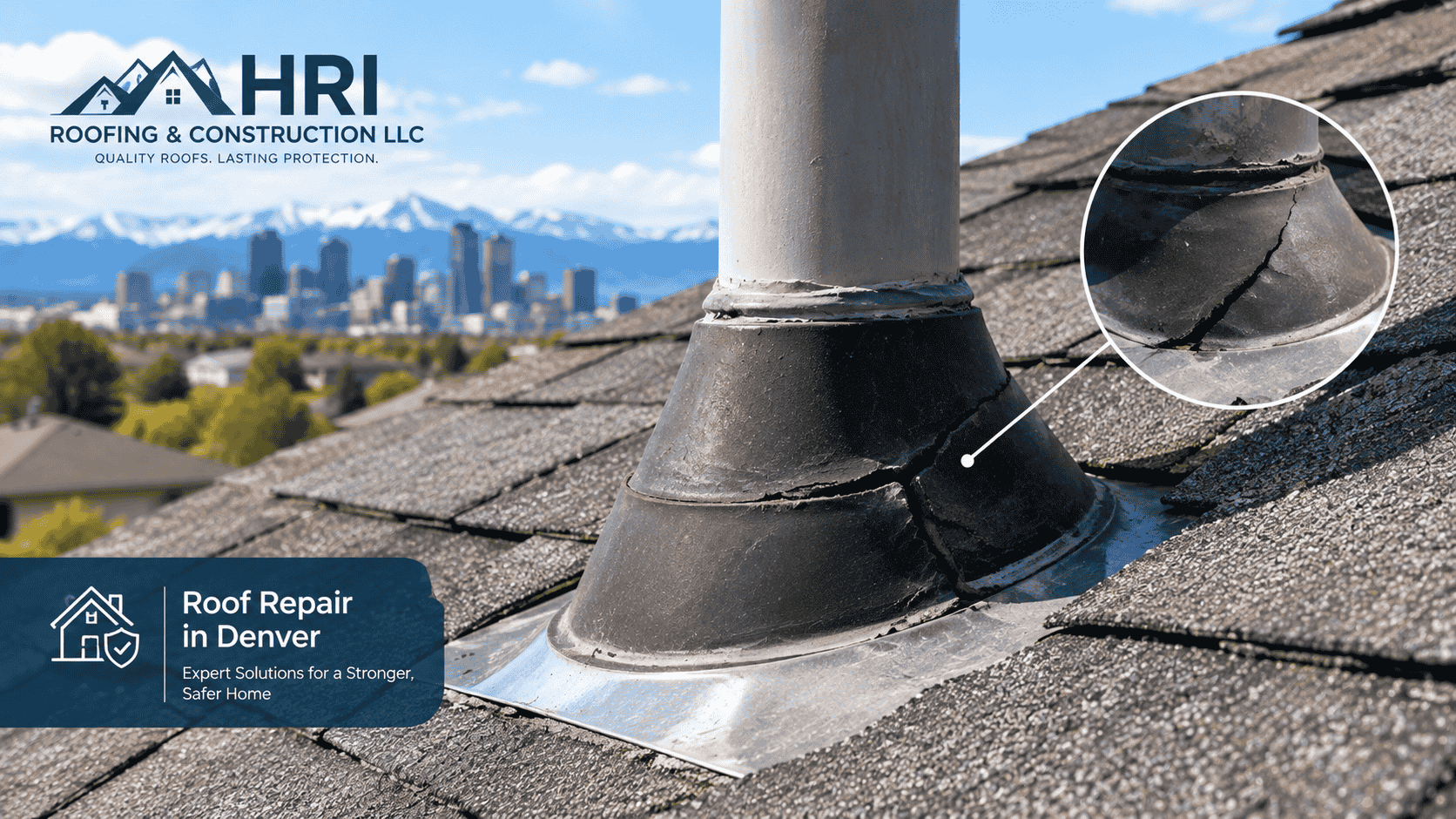
A roof does not have to be old or visibly damaged to develop a leak. Sometimes, the problem starts around a small pipe that extends through the shingles to ventilate a home’s plumbing system. The component that seals this opening is called a roof pipe boot, or plumbing vent flashing. When its rubber collar deteriorates, the flashing loosens, or the original installation fails, rainwater can enter the roof assembly and eventually appear as a ceiling stain or damp area in the attic.
For homeowners in Denver, Colorado, changing temperatures, strong sunlight, wind, hail, and seasonal snowmelt can all place stress on roofing materials. Understanding the signs of a roof pipe boot leak can help homeowners recognize a potential problem before moisture affects more of the roof system. The important first step, however, is confirming the source of the leak rather than assuming that every ceiling stain comes from the nearest roof penetration.
What Is a Roof Pipe Boot and Why Does It Matter?
A plumbing vent pipe extends through the roof to help the home’s drainage system operate properly. Because the pipe passes through the roof deck, the opening must be sealed against rain and melting snow. A roof pipe boot provides that protection by fitting around the pipe and directing water over the surrounding roofing materials.
On many asphalt-shingle roofs, the assembly includes a rubber or flexible collar around the pipe and a metal or synthetic base flange integrated with the shingles. The collar helps seal the gap around the pipe, while the base flashing directs water down the roof instead of allowing it beneath the roofing system.
This small component is easy to overlook because it occupies very little space compared with the rest of the roof. However, a damaged pipe boot can create an entry point for water even when the surrounding shingles appear to be in reasonable condition.
Proper installation matters just as much as the condition of the materials. If the flashing is poorly integrated with the shingles, fasteners are exposed, or the collar no longer fits securely around the pipe, water may find a path into the roof deck. That is why a roof leak around a vent pipe requires a closer assessment of the complete flashing assembly rather than a quick visual judgment.
What Causes a Roof Pipe Boot to Fail?
Several conditions can cause roof pipe flashing to deteriorate. Identifying the specific failure helps determine whether a limited repair is appropriate or whether the entire boot needs replacement.
Cracked or Deteriorated Rubber Collar
Rubber collars are exposed to sunlight and changing outdoor temperatures throughout the year. Over time, some materials become brittle, shrink, split, or lose their ability to maintain a close seal around the pipe. Once a gap develops, rainwater can enter around the penetration and travel into the roof assembly.
A damaged collar is one possible explanation for a roof leaking around a vent pipe. However, the boot should be inspected alongside nearby shingles, flashing edges, and other potential water entry points before a repair is selected.
Loose Fasteners or Damaged Flashing
The rubber collar is not the only component that can fail. The base flange may become damaged, corroded, lifted, or improperly integrated with the surrounding shingles. Fasteners can also loosen, and exposed fastening points may allow water to enter.
If the flashing does not direct water correctly over the roofing materials, replacing the collar alone may not address the underlying problem. A lasting roof flashing repair needs to account for the condition of the entire assembly.
Poor Installation and Previous Temporary Repairs
Installation details can influence how well a pipe boot performs over time. An incorrectly positioned flange, incompatible materials, or unsuitable sealant may leave vulnerable areas around the penetration.
Previous repairs also deserve attention. Applying sealant over a deteriorated collar may not restore the original watertight assembly, especially if the rubber has split or the base flashing is damaged. A recurring leak often warrants a more complete assessment instead of another surface-level patch.
Sun Exposure and Colorado Temperature Changes
Denver homeowners experience substantial changes in weather throughout the year. Sun exposure, cold temperatures, freeze-thaw cycles, wind-driven rain, and snowmelt can place stress on exposed roofing components.
These conditions do not cause every pipe boot to fail, and the rate of deterioration varies by material, installation quality, roof exposure, and maintenance history. Nevertheless, inspecting roof penetrations as part of routine roof maintenance can help identify deterioration before it leads to more extensive moisture damage.
Signs of a Roof Leak Around a Vent Pipe
The first sign of a roof pipe boot leak may appear inside the home rather than on the roof itself. Water can move along the underside of the roof deck, framing, or other surfaces before reaching a ceiling. As a result, the visible stain may not be directly beneath the original entry point.
Homeowners may notice fresh ceiling discoloration after rain, peeling paint, damp insulation, or moisture in an attic. A musty odor or repeated staining in the same area can also justify further investigation, although these symptoms may have causes unrelated to the roof.
The timing of the leak can provide useful information. For example, moisture that appears after wind-driven rain may point toward a roofing defect, while condensation or a plumbing issue can produce similar symptoms under different conditions. A qualified professional can compare these observations with the condition of the pipe boot, surrounding shingles, underlayment, and roof decking.
Do not climb onto the roof to check for cracked rubber, loose flashing, or exposed fasteners. Roof surfaces can be slippery or unstable, particularly after rain or snow. Record visible interior symptoms from a safe location and arrange an inspection if you suspect a leak.
How Denver Weather Can Affect Roof Pipe Boots
Roofing materials must handle more than rainfall alone. In Denver and the surrounding Colorado communities, sunlight, hail, wind, temperature changes, and periods of snow accumulation can affect different parts of the roof in different ways.
Ultraviolet exposure can gradually degrade certain rubber and plastic components. Temperature changes can also cause materials to expand and contract, placing stress on the joints and seals around roof penetrations. Strong winds and hail may damage nearby shingles or exposed flashing, creating a leak that initially appears to originate at the pipe boot.
Snowmelt introduces another variable. Water may enter through a vulnerable roof detail as snow melts, but the timing alone does not establish that the pipe boot is responsible. Other flashing details, damaged shingles, and drainage conditions may also need to be examined.
For this reason, Denver roof leak repair should begin with a careful diagnosis rather than an assumption based only on the weather or the location of a ceiling stain. The goal is to find the actual entry point and determine whether moisture has affected any concealed roofing materials.
Can a Roof Pipe Boot Be Repaired, or Should It Be Replaced?
The right repair depends on which part has failed. A roof vent boot may need a limited repair in some circumstances, while a deteriorated collar or damaged base flashing may require replacement. The surrounding shingles and roof deck also influence the appropriate scope of work.
When a Limited Repair May Be Appropriate
If the flashing assembly remains structurally sound and the problem is confined to a repairable detail, a qualified roofer may recommend a compatible repair that follows the product manufacturer’s requirements. The decision depends on the materials involved, the nature of the defect, and whether the repair can restore reliable water protection.
When Roof Pipe Boot Replacement Makes More Sense
Replacement may be the more appropriate option when the rubber collar is split, the flashing base is damaged, the assembly was installed incorrectly, or previous repairs have not stopped the leak. The surrounding shingles and roof deck should also be assessed to determine whether moisture has caused additional damage.
Replacing a failed pipe boot does not automatically mean the entire roof needs replacement. If the problem is isolated and the surrounding roofing materials remain serviceable, a targeted repair may be sufficient. If the roof has widespread deterioration or several recurring leaks, a broader evaluation may be necessary.
Why Sealant Alone May Not Solve the Problem
Sealant has specific uses in roofing, but it cannot correct every type of flashing failure. It will not restore a badly deteriorated collar or repair a damaged flange simply by covering the visible gap.
The repair should address the cause of the leak, use compatible materials, and preserve the way the roofing system sheds water.
Homeowners comparing repair options should ask the contractor to explain what failed, what work is necessary, and whether any concealed damage was identified.
What Homeowners Should Do If They Suspect a Pipe Boot Leak
If you notice water entering your home, start by keeping people away from affected areas and avoiding wet electrical equipment. Photograph visible staining and note when the moisture appeared, whether it followed rain or snowmelt, and whether the problem has occurred before. These observations can help a roofing professional investigate the leak.
Do not attempt to inspect, seal, or cover the pipe boot from the roof yourself. A professional inspection can assess the flashing, surrounding shingles, underlayment, roof decking, and possible alternative sources of water intrusion.
When arranging a repair, be sure to ask whether the proposed work addresses the confirmed entry point and whether any additional damage requires attention. If you’re comparing options for A Local roof repair in Denver, seek a contractor who can clearly explain the findings and differentiate between an isolated pipe boot issue and a more extensive roofing problem.
When to Contact a Denver Roofing Contractor
A professional roof assessment is particularly useful when a leak returns after an earlier repair, the source of the moisture remains uncertain, or the surrounding roofing materials show signs of deterioration. It is also important to arrange an assessment when water intrusion appears to be affecting insulation, the roof deck, or interior finishes.
Before approving work, ask the contractor to identify the suspected cause, explain whether the pipe boot needs repair or replacement, and describe any related damage found during the inspection. A clear explanation helps you understand the scope of work rather than paying for a repair that addresses only the visible symptom.
For homeowners in Denver and nearby communities, choosing a contractor who understands local weather conditions and residential roofing systems can make the repair process more straightforward. The objective is not simply to stop visible dripping. It is to restore the affected roof detail and reduce the chance of the same problem returning.
Final Thoughts
A roof pipe boot is a small component, but its condition can affect the performance of the surrounding roofing system. Cracked rubber, damaged flashing, installation problems, and deteriorated seals can all contribute to leaks, even when the rest of the roof looks acceptable from the ground.
If you notice a ceiling stain or suspect a roof leak around a plumbing vent, avoid assuming that the pipe boot is automatically the cause. A proper assessment should identify the entry point, examine the surrounding materials, and determine whether a targeted repair or replacement is appropriate.
For homeowners who need help understanding a roofing problem, Denver Roofing Company provides roofing services in the Denver area. Addressing a confirmed problem early can help prevent continued water intrusion and give homeowners a clearer understanding of the work their roof actually needs.
Frequently Asked Questions
What are the signs of a leaking roof pipe boot?
Possible signs include a ceiling stain that appears after rain, damp attic materials, or deterioration around the pipe flashing. These symptoms can also result from other roofing or plumbing problems, so the source should be confirmed through an appropriate inspection.
Can a damaged roof pipe boot cause ceiling leaks?
Yes. If the collar or flashing no longer prevents water from entering around the pipe, moisture can travel through the roof assembly and eventually reach the ceiling. The visible stain may be some distance from the actual entry point.
Should a roof pipe boot be repaired or replaced?
That depends on the type and extent of damage. A limited repair may be suitable when the assembly remains sound and the defect can be corrected properly. A split collar, damaged base flange, or recurring leak may require replacement.
Can Denver weather damage roof pipe flashing?
Sun exposure, temperature changes, wind, hail, and snowmelt can contribute to deterioration or expose existing weaknesses. The actual effect depends on the roofing materials, installation, and condition of the roof.
Does a leaking pipe boot mean the entire roof needs replacement?
No. An isolated pipe boot failure can often be addressed without replacing the entire roof, provided the surrounding materials remain serviceable. A broader inspection helps determine whether the problem is isolated or part of more extensive roof deterioration.