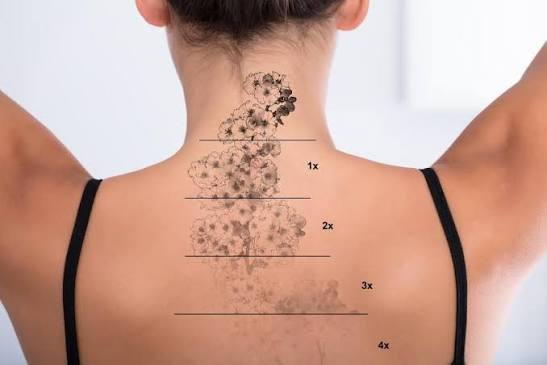
Tattoo removal looks simple from the outside: a laser touches the skin, and ink disappears over a few visits. What actually happens underneath is a much more involved biological process that stretches on for months, sometimes over a year, and involves your immune system doing most of the heavy lifting. Understanding that process changes how you prepare for treatment, what you expect from each session, and how you care for your skin in between.
The Laser Targets Pigment, Not Skin
A tattoo removal laser emits short pulses of high-intensity light tuned to wavelengths that ink particles absorb but surrounding skin mostly does not. When that light hits a pigment particle, it heats up almost instantly and shatters into much smaller fragments. This process is called photothermolysis, and it's the reason lasers can break up ink without cutting or burning away the skin itself.
Different ink colors absorb different wavelengths, which is why black and dark blue respond fastest while greens and yellows often need specialized lasers. The fragmentation happens in a fraction of a second, but the real work of clearing that shattered pigment takes weeks.
Right After Treatment: Redness, Swelling, and Blistering
Immediately after a session, the treated area typically turns red and swells, similar to a sunburn. Pinpoint bleeding is common, and small blisters or a frosted white appearance can show up within minutes as tissue reacts to the heat. None of this is unusual, and it generally settles within a few hours to a couple of days.
Some people also notice temporary darkening of the tattoo before it starts to fade, which happens when oxidized ink particles rise closer to the surface. Ice packs and gentle care manage most of the discomfort during this window.
The Body's Cleanup Crew Gets to Work
Once the ink is fragmented, white blood cells called macrophages move in to absorb the smaller particles and carry them through the lymphatic system, where they're gradually filtered out of the body. This is the same cleanup system that handles cellular debris and foreign material elsewhere in the body, just redirected to a new job.
This process explains why results show up gradually rather than all at once. Macrophages can only process so much material at a time, which is part of why sessions are spaced weeks apart instead of back to back.
Why Multiple Sessions Are Necessary
Ink sits at different depths in the skin, and a single pulse of laser light can't reach every particle evenly. Each session breaks up another layer of pigment, and the body needs time between treatments to clear what's already been fragmented before more can be targeted effectively.
Most tattoos require somewhere between six and twelve sessions, spaced six to eight weeks apart, though amateur tattoos with less ink density often clear faster than professional ones. Age of the tattoo, ink color, and skin tone all affect the timeline as well. Clinics offering laser tattoo removal Sugar Land residents rely on typically build a custom treatment plan after assessing these factors in person, since guessing at a timeline without seeing the tattoo rarely gives an accurate picture.
Skin Texture and Color Changes to Expect
Temporary changes in pigmentation are common during the removal process. The treated area might look lighter or darker than the surrounding skin for several weeks, a condition called hypopigmentation or hyperpigmentation, which usually resolves on its own.
Minor textural changes, like slight dryness or a faint raised feel, can also show up as the skin heals. Scarring is rare with modern lasers when aftercare instructions are followed, but it becomes more likely if blisters are picked at or scabs are removed before they're ready to fall off naturally.
How to Support Healing Between Sessions
Keeping the area clean and moisturized speeds up recovery and reduces the chance of complications. A fragrance-free healing ointment applied a few times a day, combined with a loose bandage for the first couple of days, protects the skin while it repairs itself.
Sun exposure should be avoided entirely until the area has fully healed, since UV rays can interfere with pigment changes and increase the risk of discoloration. Sunscreen with a high SPF is worth applying to the area for months after treatment finishes, even once the tattoo is gone.
When to Expect Final Results
Full clearance generally takes anywhere from nine months to two years, depending on the size, color, and location of the tattoo. Tattoos on the hands, feet, and ankles tend to clear more slowly than those on the torso or upper arms because of reduced blood flow in those areas.
Patience matters more than most people expect going into treatment. The fading happens in increments that can feel slow session to session, but the cumulative difference between the first and final appointment is usually dramatic. Tracking progress with photos after each session is one of the simplest ways to see that the process is working even when daily changes seem minor.