Key Takeaways
- Choose tint by balancing heat control, privacy, visibility, appearance, and legal requirements.
- Visible Light Transmission, or VLT, describes how much visible light passes through finished glass.
- A darker film does not necessarily offer better heat rejection.
- Local rules can differ by window position, vehicle type, reflectivity, and medical exemption status.
- Good installation, realistic expectations, and proper care help film look better for longer.
Car window tint can make a vehicle more comfortable in bright conditions, reduce glare, and add a more finished appearance. Options such as ceramic window tint are often considered by drivers who want heat management without choosing an especially dark look.
The right choice depends on how and where a vehicle is used. A long commuter drive in intense sun creates different priorities than frequent nighttime driving, school pickups, or street parking in a dense city.
Table Of Contents
- Why Drivers Choose Window Tint
- What Tint Percentages Really Mean
- Common Types of Automotive Window Film
- How Window Tint Helps Manage Heat
- Privacy Versus Nighttime Visibility
- How to Check Local Tint Laws
- Choosing Tint for Different Vehicles
- What to Look for in an Installation
- How to Care for Tinted Windows
- A Simple Tint-Buying Checklist
1. Why Drivers Choose Window Tint
Drivers commonly consider tint to cut harsh glare, make the cabin feel less exposed, help protect interior materials from direct sunlight, and improve the vehicle’s appearance. A driver in a hot, sunny climate may prioritize solar control, while someone who drives through busy urban areas may value privacy and glare reduction more.
Window film is a comfort and vehicle-care upgrade, not a substitute for safe driving practices. It cannot eliminate all sources of cabin heat, prevent sun exposure entirely, or compensate for poor visibility caused by weather, dirt, or worn wiper blades.
2. What Tint Percentages Really Mean
VLT measures the percentage of visible light that passes through glass and film. Higher numbers are lighter, so 70% VLT looks relatively light, 35% is noticeably darker, and 20% allows less light through. If damaged glass needs attention before film is installed, arranging auto glass repair first can help ensure the new film is applied to sound, clean glass.
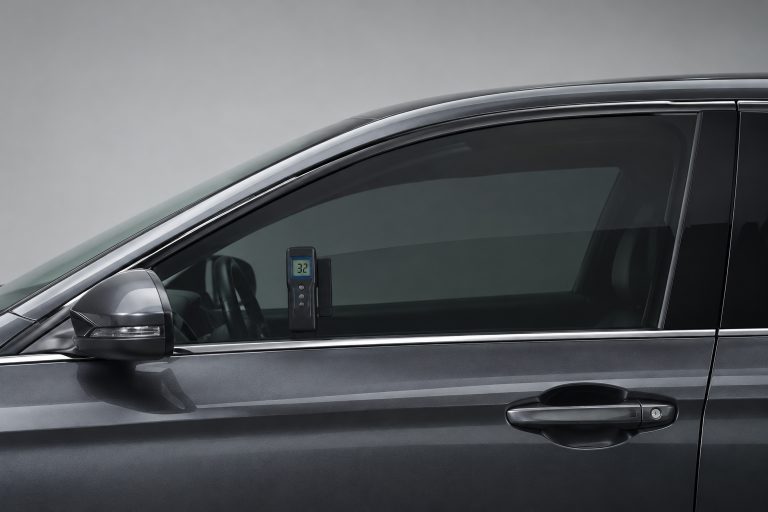
Film labels alone do not always predict the final result. Factory glass may already reduce light transmission, and adding film changes the combined VLT. Ask an installer to measure the finished window with a tint meter rather than assuming the film’s listed percentage is the final result.
3. Common Types of Automotive Window Film
Automotive films are made differently, and each category involves trade-offs. Dyed film is often chosen for its non-reflective appearance and lower upfront cost. Metalized film can offer durability and solar performance, but it may have a more reflective look. Ceramic and nano-ceramic films are commonly chosen by drivers seeking robust heat management without a mirror-like finish.
Questions to Ask About Any Film
- What are its published UV, glare, and solar-energy performance ratings?
- Does it have a scratch-resistant coating?
- Could its construction affect electronic signals in the vehicle?
- What does the warranty cover, and for how long?
4. How Window Tint Helps Manage Heat
Sunlight brings visible light, infrared energy, and ultraviolet radiation into a vehicle. Film can reduce some solar energy entering through the glass, but shade alone is not a complete measure of performance. Compare the manufacturer’s published specifications, including total solar energy rejected when available, rather than assuming the darkest choice will keep the cabin coolest.
In hot regions, recent reporting on window tint and summer heat has also emphasized that film is only one part of a practical strategy. Covered parking, a windshield sunshade, ventilation, and allowing the air conditioning system time to work can all matter on very hot days.
5. Privacy Versus Nighttime Visibility
Dark tint can feel comfortable in daylight, but it may make it more difficult to see pedestrians, cyclists, curbs, and nearby vehicles after sunset. Rain, fog, dim parking lots, unlit turns, and reversing situations can make that challenge more noticeable. Choose a shade that supports clear sightlines from the driver’s seat, especially if the vehicle is regularly driven at night.
Before committing, view samples or completed vehicles outside in both daytime and low-light conditions. Privacy is useful, but it should not come at the expense of being able to recognize hazards around the vehicle.
6. How to Check Local Tint Laws
Tint requirements vary by state and can differ for the windshield, front side windows, rear side windows, and rear glass. Rules may also address reflectivity, windshield strips, SUVs and trucks, and medical exemptions. Check an official state motor vehicle, transportation, or law enforcement resource before scheduling installation.
Federal rules also matter in certain circumstances. Federal glazing guidance explains the light-transmission requirements for areas requiring driving visibility and the obligations that may apply to commercial installers. State rules remain essential for owners operating vehicles on local roads.
7. Choosing Tint for Different Vehicles
A sedan, crossover, pickup, SUV, and van do not all present the same tinting needs. Large rear windows can admit substantial sunlight, while factory privacy glass may already make rear areas look dark without providing the same solar performance as added film. Family vehicles may prioritize rear-passenger comfort, while work trucks parked outdoors may prioritize heat and glare control.
Older vehicles deserve an extra inspection for worn seals, scratched glass, old adhesive, or failing film. Owners of vehicles with extensive electronics should also ask whether the chosen film is suitable for their equipment.
8. What to Look for in an Installation
Careful preparation is central to a clean result. Look for even film edges, consistent color, minimal visible debris, and no lifting around seals. Small moisture patterns can appear during the curing process, but an installer should explain what is normal, how long curing takes, and when windows may safely be lowered.
Request clear documentation of the film type, warranty, aftercare instructions, and, when available, the final VLT measurement. Those details make it easier to confirm the job meets your needs and local requirements.
9. How to Care for Tinted Windows
New film needs time to cure, so follow the installer’s guidance before rolling down the windows or cleaning the interior glass. Once it has cured, use a clean microfiber cloth and a mild, ammonia-free cleaner. Avoid rough towels, abrasive pads, sharp tools, and harsh chemicals that can scratch film or affect its adhesive.
Clean gently, inspect edges occasionally, and address peeling, persistent bubbling, color change, or lifting early. These issues may indicate a product or installation issue covered by the warranty.
10. A Simple Tint-Buying Checklist
- Identify the main goal: heat control, glare reduction, privacy, appearance, or a combination.
- Confirm applicable state and local tint rules before selecting a shade.
- Check whether the vehicle already has factory privacy glass.
- Consider how often the vehicle is driven after dark.
- Compare documented performance ratings and warranty terms.
- Ask whether the completed glass can be measured with a tint meter.
Conclusion
The best window tint is rarely just the darkest option. A smart decision balances comfort, privacy, performance, appearance, legal compliance, and safe visibility. Start with the laws that apply where you drive, account for the glass already on the vehicle, and choose the lightest film that still meets your real-world needs.