

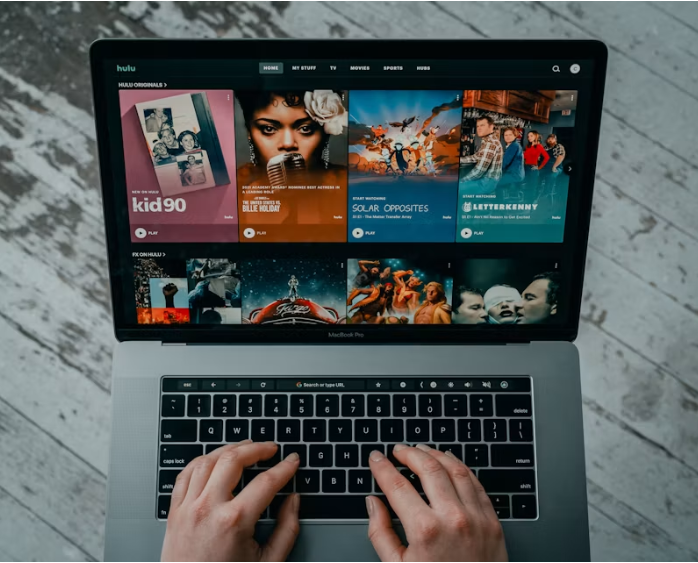
Live entertainment used to come with a simple condition: you had to be there when it happened. A television broadcast started at a set hour and viewers arranged their time around it. Missing the start could mean missing part of the experience altogether.
Online streaming has loosened that arrangement. Live events can now reach phones and laptops wherever viewers happen to be. But access is only part of the change. Viewers can react as events unfold and sometimes join the conversation, giving online entertainment a new sense of immediacy.
Live Entertainment No Longer Needs a Television Schedule
Traditional broadcasting tied live entertainment to a schedule. Viewers knew when a program would begin and where they needed to find it, meaning the audience had to adapt to the broadcast rather than the other way around.
Internet streaming changed that relationship. Live video can reach a laptop at home or a phone while someone is away, making it possible to check a stream during a short break without much preparation. The screen and connection are often already available.
Scheduled start times have not disappeared. A concert or live discussion still happens at a particular time, but viewers can now join from more devices and locations. That flexibility makes live entertainment easier to fit around workdays or travel.
Live Streaming Has Made Entertainment Feel More Immediate
A recording offers a finished sequence. Someone can stop halfway through and return tomorrow with the knowledge that the material will be exactly where they left it. Live video carries a different tension. Whatever happens next is still unresolved for everyone watching.
That uncertainty matters more than it might seem. A conversation can wander somewhere unexpected. A performer can react to something in the room. Even fairly ordinary moments feel different when the audience knows they’re happening now. There’s a small sense of risk in that timing because the experience hasn’t been edited into its final form.
Live technology has also found its way into interactive digital formats. Instead of only watching a broadcast, people can encounter experiences built around events happening on screen in real time. Crazy Time live is one example of how real-time video can support a more interactive format. The underlying streaming technology connects what appears on screen with actions taking place as the experience unfolds.
There’s a social quality to that timing too. People in different cities can follow the same unexpected moment with only a relatively short delay, although stream latency means they may not see it at precisely the same time. They might never meet or speak directly. For a while, though, their attention is fixed on the same unfolding experience.
Audiences Can Now Become Part of the Stream
Old broadcast television mostly sent information one way. Presenters spoke and viewers watched. A person at home could have a strong reaction to what happened on screen although the people making the program were unlikely to know about it until much later.
Live streaming can shorten that distance. A chat window lets viewers respond while a broadcast is underway. Creators can glance at those reactions and answer a question that arrived seconds earlier. Sometimes the audience changes the direction of a conversation simply by showing what it wants to hear more about.
That can make a large audience feel surprisingly present. Picture someone watching alone late in the evening. Something funny happens and the chat suddenly fills with reactions. The viewer is still physically alone yet there’s clear evidence that hundreds of other people just saw the same moment.
Participation doesn’t need to dominate the experience either. Plenty of viewers never type a message. Seeing other reactions can still add texture to what they’re watching. For creators the challenge is deciding when that extra layer adds something useful and when the stream is better left to breathe.
Better Technology Has Made Live Video Easier to Watch
The appeal of live video disappears quickly when the picture freezes every few seconds. People can tolerate a brief interruption. Repeated buffering is different because it breaks the feeling of sharing the moment with everyone else.
Streaming technology has become better at dealing with imperfect connections. Several processes work behind the scenes to keep video moving:
- Video compression: reduces the amount of data needed to deliver audio and images while preserving usable quality.
- Adaptive streaming: prepares the stream at different quality levels and switches between them according to the bandwidth available.
- Quality adjustment: can temporarily reduce picture quality when bandwidth drops, then increase it again when the connection improves.
These adjustments should barely register during an actual stream. Someone watching a live interview cares about the answer being given on screen, not the technology delivering it. When the underlying systems work well, they stay out of the way.
Live Streaming Is Changing What Viewers Expect
People get used to convenience quickly. Once a viewer has joined live entertainment from a phone during a journey, being tied to one screen can start to feel unnecessarily restrictive. The same applies to waiting through long loading screens. Familiar technology quietly resets expectations.
Interaction has done something similar on many platforms. Audiences have seen creators respond to comments within seconds and watched conversations develop around live video while the main event continues. Those features have helped establish expectations for more interactive forms of online entertainment.
Recorded entertainment still suits plenty of moments. Sometimes the whole appeal is being able to pause halfway through and come back two days later. Other times a viewer wants something carefully edited rather than unpredictable. Live streaming doesn’t erase those preferences.
It simply gives people another familiar choice. They can watch something finished on their own schedule or join an experience while nobody knows exactly how it will unfold. Having both options so readily available is one of the more lasting changes streaming has brought to online entertainment.
Real-Time Entertainment Has More Room to Develop
Live streaming has moved real-time entertainment beyond the television in the living room. It can follow people onto smaller screens and give distant viewers a way to share the same unfolding moment. Sometimes they can even respond while it happens.
The technology will keep improving although its best work may become harder to notice. Faster starts and smoother video matter because they let the event itself take over. Once viewers stop thinking about the stream and simply become absorbed in what’s happening, the technology has done what it needed to do.




1 thought on “How Live Streaming Technology Is Changing Online Entertainment”