
For centuries, formal education was defined by a specific physical setting: rows of desks facing a chalkboard, lecture halls packed with students, and campuses alive with student activity. Acquiring a degree or mastering a discipline required physical presence, adherence to fixed schedules, and geographical proximity to academic institutions.
The rapid rise of high-speed internet, cloud computing, and digital learning platforms has permanently rewritten that paradigm. Online education has evolved from an experimental alternative into a mainstream academic powerhouse. Yet, as digital classrooms proliferate, a central question emerges for students, parents, and educators: how does online learning fundamentally differ from traditional education, and which model delivers the superior educational experience? Understanding the structural, social, and pedagogical distinctions between these two approaches empowers learners to choose the environment best aligned with their personal goals, learning preferences, and lifestyles.
1. Instructional Mechanics: Flexibility vs. Structured Routine
The most immediate contrast between online and traditional schooling lies in how instruction is delivered and consumed.
The Geographic and Temporal Freedom of Online Classrooms
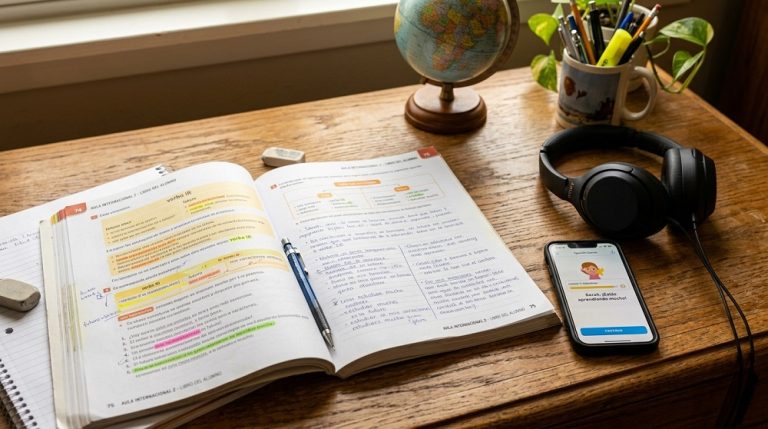
Online education decouples learning from physical location and, frequently, from rigid schedules. In asynchronous formats, students can access recorded lectures, read materials, and submit assignments on their own timeline. This flexibility is transformative for non-traditional students, working professionals, and caregivers who must balance academic pursuits with existing commitments. Learners can study from anywhere on Earth, eliminating the time and expense of daily commutes.
Furthermore, digital platforms allow students to consume content at their own cognitive pace. A student grappling with an intricate organic chemistry mechanism can pause, rewind, and re-watch a lecture multiple times, whereas a student in a physical lecture hall must keep pace with the professor’s live delivery.
The Power of Real-Time Scaffolding in Traditional Classrooms
Traditional education operates on fixed schedules and synchronous delivery. Students report to specific classrooms at designated hours, creating a predictable, structured routine. For many learners—particularly younger students or those prone to procrastination—this external scaffolding is essential.
In a physical classroom, instructor-student interaction is immediate. A teacher can read non-verbal cues—a furrowed brow, an hesitant pencil, or a glazed expression—and adjust the explanation in real time before confusion takes root. In online environments, particularly asynchronous courses, students must proactively articulate their misunderstandings via email or discussion posts, often waiting hours or days for clarification.
2. Social Dynamics, Networking, and Soft Skill Cultivation
Education encompasses far more than the transmission of technical facts; it is a profound social process where interpersonal communication and cultural perspectives are developed.
Spontaneous Community and Campus Immersion
Traditional campuses provide an immersive social environment that digital screens struggle to fully replicate. Casual hallway conversations before class, spontaneous study groups in the library, and extracurricular student organizations build emotional camaraderie and lasting friendships.
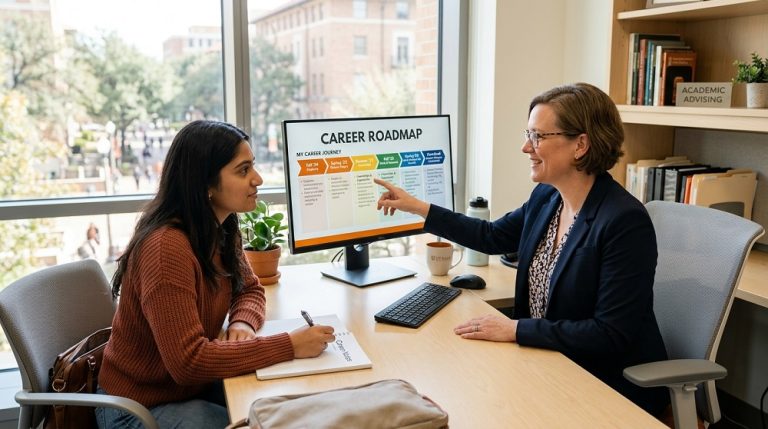
Crucially, traditional institutions foster organic professional networking. Interacting in person with professors during office hours, participating in on-campus career fairs, and forming bonds with peers who will enter the same industry creates high-trust professional relationships. The physical campus environment naturally cultivates vital interpersonal soft skills—such as public speaking, active conflict resolution, and collaborative compromise.
Digital Collaboration and Global Perspectives
Online learning does not eliminate collaboration; it reshapes it to reflect modern remote workplaces. Through discussion boards, collaborative document editing, and video conferences, online students learn to communicate clearly and asynchronously in digital environments—a skill directly transferable to the modern global economy.
Additionally, online cohorts often boast remarkable demographic and geographic diversity. A single virtual seminar might include a military veteran in Germany, a mid-career professional in Tokyo, and a high school graduate in rural Kansas. This geographic breadth enriches discussions with diverse real-world perspectives that a localized regional college might lack.
3. Financial Realities, Accessibility, and Resource Allocation
Evaluating educational paths requires a clear assessment of total expenses and access barriers.
Cost Structures and Ancillary Savings
Traditional campus education often carries a high total cost of attendance. Beyond tuition and mandatory student fees, residential students must finance campus housing, dining meal plans, parking permits, and regular commuting costs. These auxiliary expenses frequently represent $40\%\text{ to }50\%$ of the annual cost of higher education.
Online programs, by contrast, frequently offer lower overall expenses. While per-credit tuition rates can sometimes mirror on-campus equivalents, students save thousands of dollars annually by remaining in their existing homes, preparing meals independently, and eliminating transit costs. However, online learning demands upfront investments in hardware: students must possess a reliable, modern computer, specialized software, and dependable high-speed broadband internet.
Access to Specialized Physical Infrastructure
Certain disciplines inherently demand tactile, hands-on environments that online models cannot easily simulate. Aspiring mechanical engineers, performing artists, laboratory biologists, and clinical medical professionals require physical access to wind tunnels, ceramic kilns, wet chemistry labs, and clinical simulation mannequins. While virtual simulations and remote laboratory kits have advanced substantially, traditional campuses remain the premier venues for physical, tactile training.
4. Learner Autonomy and Internal Motivation
Because the learning environments differ so drastically, each format demands a distinct psychological profile from the student.
The Self-Directed Nature of Digital Learning
The greatest advantage of online learning—boundless autonomy—is also its primary vulnerability. Without an instructor standing in the room or peers sitting alongside, the burden of motivation rests entirely on the learner. Online students must possess high levels of metacognition, rigorous time management, and intrinsic motivation. Without self-imposed discipline, it is easy to defer reading assignments, fall behind on lecture recordings, and experience academic burnout.
The Natural Accountability of Physical Presence
Traditional classrooms rely on external accountability. The physical act of getting dressed, walking into a lecture hall, making eye contact with an instructor, and submitting handwritten assignments creates social contracts that discourage disengagement. For individuals who struggle with solitary focus or digital distractions, the physical boundaries of a classroom create a focused environment free from home interruptions.
Conclusion: The Rise of the Blended Future
Neither online learning nor traditional education is universally superior; each represents a different set of strengths and trade-offs. Traditional education remains the gold standard for social immersion, hands-on laboratory sciences, and students who thrive on structured routine and immediate human contact. Online learning offers unprecedented access, geographic freedom, and cost-efficiency for self-directed students seeking to advance their education around existing life demands.
As technology continues to mature, the boundary between these two approaches is dissolving. Forward-thinking universities are increasingly adopting blended or hybrid models—combining the flexibility of digital lectures with the rich engagement of in-person seminars and workshops. Ultimately, the right choice depends not on the technology itself, but on the individual student’s learning style, financial goals, and personal aspirations.