Table Of Contents
-
Why Screen-Free Activities Still Matter
-
How Word Search Puzzles Work The Brain
-
Ways They Can Support Learning
-
Building Focus Without Making It Feel Like Work
-
Choosing Puzzles For Different Age Groups
-
How To Set The Right Difficulty
-
Creating A Simple Puzzle Routine
-
Making Puzzles A Shared Activity
-
What Puzzles Can And Cannot Do
-
Common Questions
Word search puzzles offer a straightforward way to spend a few quiet minutes with words, patterns, and a clear goal. Readers who enjoy adding a letter-based activity to a home, classroom, or travel bag can explore crossword books alongside word-search collections for an easy, screen-free option.
The appeal is not that a puzzle must accomplish something dramatic. It is that it can create a short, contained period of attention. A child can look for animal names in the back seat on a trip, while an adult can work through a themed grid during a calm afternoon break.
Why Screen-Free Activities Still Matter
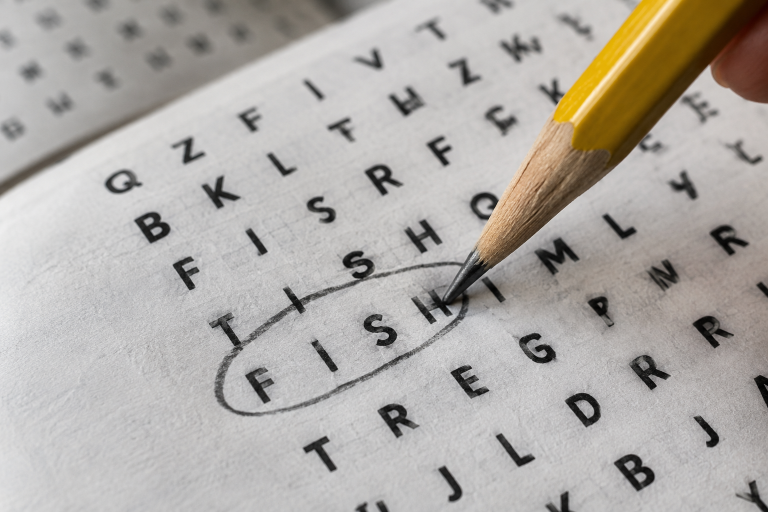
Printed puzzles have practical advantages: they require little setup, work without a battery or internet connection, and can be used nearly anywhere. Digital word games can also be convenient, especially when someone prefers adjustable text or an always-available puzzle. The best format is the one a person will genuinely enjoy using. In a traditional word search, target words are hidden in a letter grid, usually in horizontal, vertical, or diagonal directions, as described in this overview of word search puzzles.
How Word Search Puzzles Work The Brain
Solving a word search involves several modest mental tasks at once. The solver scans rows and columns, compares letter sequences with a word list, holds the target word in mind, and ignores irrelevant letters. A reverse word or diagonal placement adds another layer of visual checking. These are useful demands within the puzzle itself, but completing a puzzle does not prove that someone’s overall memory or long-term cognitive health has changed.
Ways They Can Support Learning
Word searches work particularly well as review activities because the word list can match a lesson already underway. A teacher might use planet names after a science discussion, spelling words after a reading lesson, or beginner vocabulary after a language exercise. At home, a puzzle about gardening, geography, or animals can spark a conversation. The activity is most helpful when it supports reading, discussion, writing, and hands-on learning rather than replacing them.
Building Focus Without Making It Feel Like Work
A short puzzle gives attention a clear destination: find one word, then the next. Beginners can start with five to fifteen minutes, placing phones or other unrelated materials out of reach beforehand. Marking even a few completed words provides visible progress. When eyes become tired or concentration slips, a brief pause is more productive than forcing the session to continue.
Choosing Puzzles For Different Age Groups
For Children
Choose large letters, short familiar words, and simple themes such as food, colors, animals, or seasons. It is fine to let children point, trace with a finger, or ask for help with spelling. The goal is participation, not speed.
For Teens And Adults
Longer word lists, denser grids, and hobby-based themes can provide more challenge. A travel, sports, literature, or history theme can lead naturally into a short written response, such as defining a new word or using it in a sentence.
For Older Adults
Large-print pages, good contrast, comfortable lighting, and a relaxed pace matter more than difficulty alone. Enjoyment is a worthwhile reason to solve puzzles. For broader well-being, mentally engaging hobbies are best paired with movement, sleep, healthy eating, and social connection, all of which are addressed in guidance on cognitive health and older adults.
How To Set The Right Difficulty
A useful puzzle should require effort without being discouraging. Build difficulty gradually:
-
Begin with a short list of familiar words.
-
Use horizontal and vertical placements first.
-
Add diagonal words when scanning feels easier.
-
Introduce backward words later.
-
Increase grid size before filling the list with unfamiliar terms.
If every answer appears immediately, the puzzle may be too easy. If progress stops entirely, simplify the grid, use a ruler to follow lines, or select a more accessible theme.
Creating A Simple Puzzle Routine
Consistency does not require a complicated plan. Keep a pencil, puzzle book, and reading glasses in one place. Choose a natural time, such as after breakfast, during a passenger commute, or before settling into another evening activity. A modest goal, like one page or ten minutes, makes the routine easier to maintain. Rotate puzzles with walking, reading, drawing, music, and conversation to keep leisure time varied.
Making Puzzles A Shared Activity
Although word searches often feel solitary, they can become social with a small adjustment. Two people can take turns choosing words, search different sections of the grid, or explain the meaning of each completed answer. In classrooms and family settings, a themed puzzle can start a discussion about the topic behind the words. Untimed group challenges also emphasize cooperation over competition.
What Puzzles Can And Cannot Do
Word searches can provide practice with visual scanning, spelling recognition, and focused attention during the activity. They cannot diagnose memory concerns, prevent dementia, or guarantee lasting improvements in cognition. Anyone noticing meaningful changes in memory, reasoning, or daily functioning should discuss those concerns with a qualified health professional rather than relying on puzzle use as an answer.
Common Questions
Are Word Search Puzzles Good For Children?
Age-appropriate puzzles can reinforce familiar vocabulary and spelling while giving children practice following a simple task. They are most effective when paired with broader learning activities.
Can Word Searches Improve Memory?
They require a person to remember a target word while searching the grid, but that does not make them a guaranteed way to improve long-term memory.
Are Printed Puzzles Better Than Digital Puzzles?
Neither format is automatically better. Printed pages can reduce screen use, while digital puzzles may offer portability and accessibility settings. Preference and comfort should guide the choice.
Final Takeaway
Word search puzzles remain useful because they are flexible, low-pressure, and easy to fit into ordinary life. Used as a small part of a balanced routine, they offer a chance to practice words, settle into focused attention, and enjoy a few screen-free minutes.