
A single letter can change the meaning of an English word completely. That happens with than or then, two words that look and sound close but serve different purposes. Many writers mix them up, especially when they write quickly or follow the way the words sound in speech.
Than mainly helps you compare people, things, actions, or amounts. You will often see it after words such as “better,” “more,” “less,” “older,” or “faster.” It connects two parts of a comparison and shows how they differ.
Then usually relates to time, order, or what happens next. You can use it when you describe a sequence of events, talk about a past or future moment, or explain the next step in a situation.
The easiest way to choose the right word is to look at the job it performs in your sentence. If you compare two things, use than. If you talk about time, order, or a next action, use then.
Related Guide: Due To vs Do To
Quick Answer
Than is a comparison word. It shows a difference between two people, things, actions, or amounts. Then usually refers to time, order, or the next event. Although the words look similar, they do not have the same meaning.
A quick memory trick can make the difference easier: than = comparison, while then = time or sequence. Whenever you feel unsure, check whether your sentence compares something or explains what happens next.
Clear Usage Examples
Seeing both words in real sentences makes the difference easier to understand. Than usually appears when you compare two things, while then shows time, order, or the next action.
Examples of “Than”
- My brother is taller than me.
- This phone costs less than the other one.
- She runs faster than I do.
- Today feels colder than yesterday.
- I would rather walk than wait for the bus.
In each example, than connects two things in a comparison.
Examples of “Then”
- I finished my homework, then I watched TV.
- We ate dinner and then went outside.
- Back then, I lived with my grandparents.
- First, read the question; then write your answer.
- If you finish early, then you can leave.
Here, then shows when something happens, what happens next, or the order of events.
A Simple Comparison
Compare these two sentences:
She is older than her sister.
This sentence compares two people, so it uses than.
She finished her work, then she called her sister.
This sentence shows the order of two actions, so it uses then.
A quick test can help: if you can replace the word with “compared with,” choose than. If you can replace it with “next” or “at that time,” choose then.
Visit Also: Impatient vs Inpatient
Than or Then: Direct Difference Explained Clearly
The difference between “than” and “then” is based on function and meaning. “Than” is used when comparing two things, while “then” is used to describe time, order, or sequence in events. This distinction is important in both writing and speaking.
Example
She is taller than her sister
In this sentence, “than” is used for comparison. Now compare it with “then.”
Example
We finished dinner, then we watched a movie
Here, “then” shows sequence. Understanding this difference helps you avoid confusion and improve your grammar accuracy in everyday communication.
What Does Than Mean? Full Explanation
“Than” is a conjunction used to compare two or more things. It helps show differences in size, quantity, quality, or degree. It is commonly used in comparative sentences.
Example
This book is better than the other one
This sentence compares two books. “Than” highlights the difference between them. It is often used with comparative adjectives like bigger, faster, and stronger.
Example
He runs faster than me
Using “than” correctly allows you to make clear and accurate comparisons in English.
What Does Then Mean? Full Explanation
“Then” is an adverb used to refer to time or sequence. It shows what happens next or indicates a specific moment in time. It is commonly used in storytelling and instructions.
Example
Finish your work, then take a break
This shows the order of actions. “Then” connects events in a sequence. It can also refer to time in the past or future.
Example
Back then, we played outside every day
Using “then” correctly helps you describe actions in order and improve clarity.
Why People Confuse Than and Then
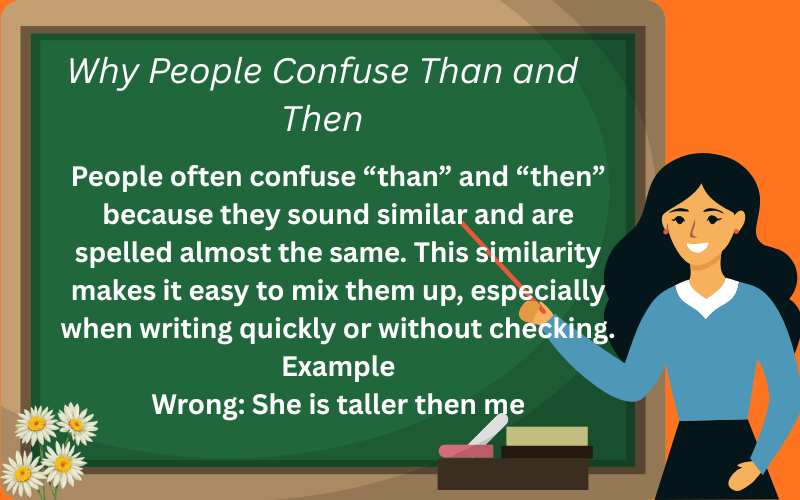
People often confuse “than” and “then” because they sound similar and are spelled almost the same. This similarity makes it easy to mix them up, especially when writing quickly or without checking.
Example
Wrong: She is taller then me
This mistake changes the meaning of the sentence. The correct word is “than.”
Example
Correct: She is taller than me
Understanding the difference between these words helps you avoid common grammar mistakes and improve writing accuracy.
For More: Serpent vs Snake
Is Than or Then Formal or Informal?
Both “than” and “then” are standard English words used in formal and informal communication. They are essential parts of grammar and appear in everyday conversations, academic writing, and professional communication.
Example
Formal: The results were better than expected
In informal contexts, they are also commonly used.
Example
Informal: Do this, then relax
Knowing their correct usage helps you communicate effectively in any situation.
How to Use Than Correctly in Sentences
You should use “than” when making comparisons between two things. It is often paired with comparative adjectives and expressions.
Example
This car is faster than that one
This sentence clearly compares two cars. “Than” highlights the difference. It is important to use it correctly to maintain clarity.
Example
She is more experienced than him
Using “than” properly helps you express comparisons accurately in both writing and speaking.
How to Use Then Correctly in Sentences
You should use “then” when describing time, sequence, or what happens next. It is commonly used in instructions and storytelling.
Example
First finish your homework, then watch TV
This sentence shows a clear sequence of actions. “Then” connects steps logically.
Example
We went to the park, then we had dinner
Using “then” correctly helps you organize ideas and present them clearly.
Common Situations Where Than Is Used
“Than” is commonly used in comparisons involving size, quality, or quantity. It appears in sentences where you compare two or more things.
Example
This phone is cheaper than that one
This sentence compares prices. “Than” helps highlight the difference. It is also used in expressions of preference.
Example
I would rather stay home than go out
Using “than” in these situations helps create clear comparisons.
Common Situations Where Then Is Used
“Then” is used in situations involving time, sequence, or cause and effect. It helps describe what happens next in a series of actions.
Example
We ate dinner, then watched a movie
This shows sequence. It is also used in conditional sentences.
Example
If you finish early, then you can leave
Using “then” correctly helps structure ideas logically.
Real-Life Examples of Than vs Then
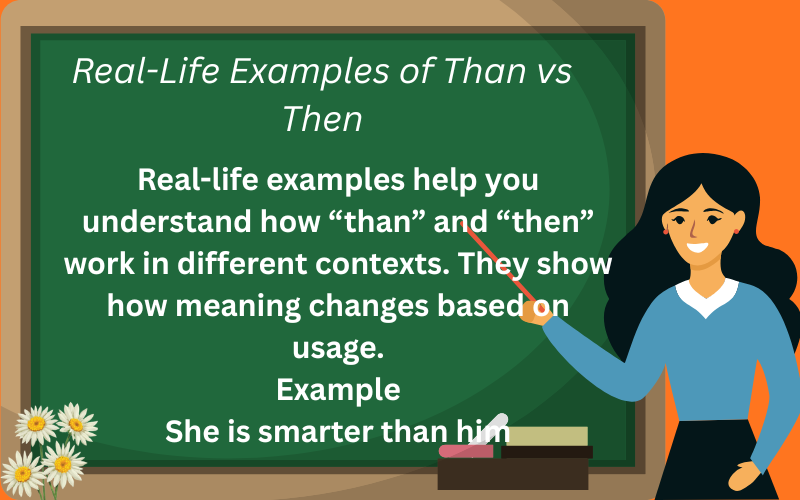
Real-life examples help you understand how “than” and “then” work in different contexts. They show how meaning changes based on usage.
Example
She is smarter than him
Example
Finish your work, then rest
The first sentence uses “than” for comparison, while the second uses “then” for sequence.
Example
Than vs Then
Understanding these examples improves your grammar skills.
See Also: To Fast or Too Fast
When You Should Avoid Using Than Instead of Then
You should avoid using “than” when referring to time or sequence. This mistake can make your sentence confusing or incorrect.
Example
Wrong: Do this than go home
This is incorrect because it refers to sequence.
Example
Correct: Do this then go home
Using the correct word ensures clarity and proper grammar.
Common Mistakes People Make with Than and Then
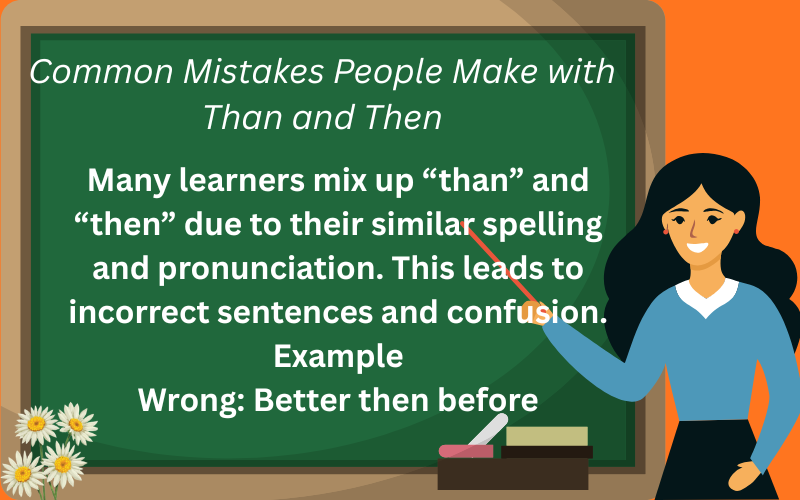
Many learners mix up “than” and “then” due to their similar spelling and pronunciation. This leads to incorrect sentences and confusion.
Example
Wrong: Better then before
This sentence should use “than.”
Example
Correct: Better than before
Avoiding these mistakes improves your writing and communication skills.
Than vs Then: Key Differences Explained
The key difference between “than” and “then” lies in their function. “Than” is used for comparisons, while “then” is used for time and sequence.
Example
Than → comparison
Example
Then → time or order
Understanding this difference helps you choose the correct word easily in any situation.
Than or Then Comparison Table
| Word | Meaning | Usage | Example |
| Than | Comparison | Compare things | Bigger than |
| Then | Time/Sequence | Order of events | Then go |
Example
Than compares, then sequences
Tips to Remember Than or Then Easily
A simple trick is to remember that “than” is used for comparison, while “then” relates to time. This helps you quickly decide which word to use.
Example
Than = compare
Example
Then = time
Using this trick makes it easier to avoid confusion and use the correct word.
Why Understanding Than or Then Improves Writing
Understanding the difference between “than or then” improves your writing clarity and accuracy. It helps you avoid common mistakes and communicate your ideas effectively.
Example
Now I use correct words
It also strengthens your grammar skills.
Example
Clear writing improves communication
Learning this distinction helps you write confidently.
If you enjoyed reading this article, you might also like the ones below.”
Quick Practice Quiz
Test yourself before moving on. Choose than or then for each sentence.
- My new laptop is faster ___ my old one.
- We finished dinner and ___ went for a walk.
- She is younger ___ her brother.
- First, check your answers; ___ submit the test.
- This book is more interesting ___ the last one.
- I lived there back ___, but I moved away later.
Answers:
- than
- then
- than
- then
- than
- then
The pattern is simple: use than for comparisons and then for time, order, or the next action.
FAQs
What is the difference between than and then?
Than is used for comparisons, while then usually refers to time, order, or what happens next.
When should I use than?
Use than when you compare two people, things, actions, or amounts. For example, “This bag is cheaper than that one.”
When should I use then?
Use then when you talk about time, sequence, or the next action. For example, “Finish your work, then take a break.”
Is it better than or better then?
The correct phrase is better than because it compares two things. “Better then” is incorrect in this context.
Is it first than or first then?
The correct phrase is first, then when you describe steps or order. For example, “First, wash your hands, then prepare the food.”
How can I remember than and then?
Remember this simple trick: than compares, while then shows time or order. This rule works in most everyday sentences.
Are than and then pronounced differently?
Yes. Than has a softer sound, while then begins with a voiced “th” sound. In fast speech, however, they can sound quite similar.
Can then describe something that happened in the past?
Yes. Then can refer to a past time. For example, “Back then, I lived in a small town.”
Can than start a sentence?
Yes, but this use is less common. You may see than at the beginning of a sentence when it follows a comparison or introduces a comparison clause.
Why do people confuse than and then?
People often confuse them because the words look similar and sound almost alike in normal speech. Their different meanings make the context important.
Conclusion
Choosing between than or then becomes much easier when you focus on the meaning of the sentence. Than belongs to comparisons, while then connects with time, order, or a following action.
When you compare prices, sizes, people, abilities, or choices, think of than. However, when you explain what happened next or describe a point in time, choose then.
A simple question can help you check your choice. Ask yourself whether you are comparing something or describing a sequence. If you are comparing, use than. If you are showing time or order, use then.
With a little practice, this common spelling mistake becomes easier to avoid. Keep the main rule in mind: than compares, and then shows time or order. That small reminder can help you write more clearly and confidently.