Choosing between “Ms.” and “Miss” can feel confusing because both titles refer to women, but they do not carry the same meaning. The right choice often depends on whether you want to mention a woman’s marital status or simply address her respectfully.
In everyday English, Ms. works as a neutral title for a woman regardless of whether she is married. Miss traditionally refers to an unmarried woman or girl, although people still use it in some situations where age or personal preference makes it appropriate.
The difference matters most in formal writing, invitations, letters, school settings, and professional communication. Using the right title helps you address someone clearly and respectfully.
Both titles remain common in English, but their use can vary by context and personal preference. Understanding the small difference makes it easier to choose the right one without overthinking it.
Quick Answer
Ms. is a neutral title for a woman and does not indicate her marital status. Miss traditionally refers to an unmarried woman or a girl.
- Ms. → Usually used for women regardless of marital status.
- Miss → Traditionally used for unmarried women and girls.
- Pronunciation: Ms. = “miz”; Miss = “mis.”
If you do not know a woman’s marital status or do not need to mention it, Ms. is generally the safer choice for formal communication.
Related Guide: What Does NMMS Mean in Text
Ms vs Miss: What Is the Main Difference?
“Ms” and “Miss” differ mainly in how they relate to marital status. “Miss” clearly refers to an unmarried woman, while “Ms” does not show whether a woman is married or not. Because of this, “Ms” is considered more neutral and modern, especially in professional communication.
Example
Miss Sarah is my teacher (unmarried)
Ms Sarah is my teacher (marital status not mentioned)
This difference makes “Ms” more flexible. Many people prefer “Ms” because it avoids personal assumptions and works in both formal and informal situations without causing confusion.
What Does “Miss” Mean and When to Use It?
“Miss” is a traditional title used for unmarried women. People often use it in schools, formal introductions, or when they know the woman is not married. It also appears commonly in teaching environments where students address female teachers as “Miss.”
Example
Miss Ali is our English teacher
You should use “Miss” only when you are sure about the person’s marital status. Using it incorrectly can sometimes sound outdated or inappropriate, especially in professional settings where personal details should remain private.
Example
Miss Fatima will join the meeting
What Does “Ms” Mean and When to Use It?
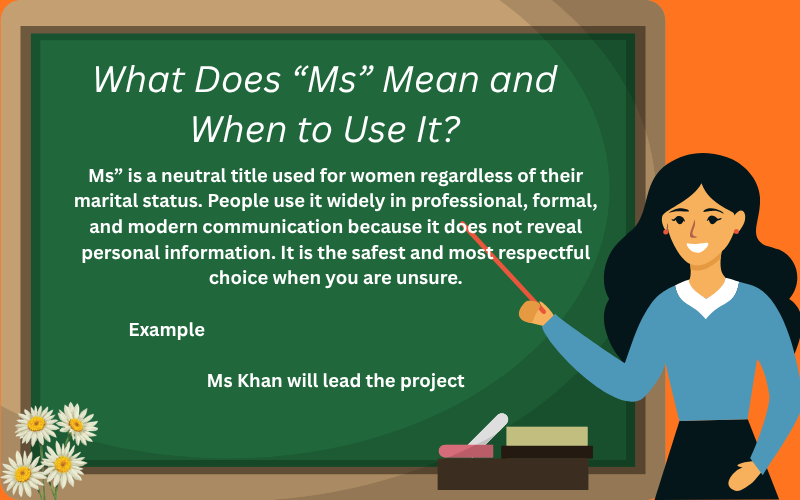
“Ms” is a neutral title used for women regardless of their marital status. People use it widely in professional, formal, and modern communication because it does not reveal personal information. It is the safest and most respectful choice when you are unsure.
Example
Ms Khan will lead the project
Many workplaces prefer “Ms” because it treats all women equally. It avoids assumptions and creates a more inclusive environment, especially in official documents, emails, and business communication.
Example
Dear Ms Ahmed,
Visit Also: WYS Meaning in Text
Why “Ms” Is More Common in Modern English
People use “Ms” more often today because it respects privacy and avoids unnecessary focus on marital status. In modern society, professional identity matters more than personal details, so “Ms” fits better in most situations.
Example
Ms Sara works in marketing
Using “Ms” shows professionalism and respect. It also prevents awkward situations where you might guess someone’s marital status incorrectly.
Example
Please contact Ms Noor for details
Is “Miss” Formal or Informal?
“Miss” can be both formal and informal, but its usage depends on context. It is formal in schools or traditional settings but may sound outdated in professional environments. Many organizations now avoid using it because it reveals personal information.
Example
Miss Sana is our class teacher
In casual conversations, people may still use “Miss,” but in workplaces, “Ms” is usually preferred for a more neutral tone.
Example
Miss Ayesha will attend the event
Is “Ms” Formal or Informal?
“Ms” works in both formal and informal situations. People use it widely in business emails, official documents, and everyday communication. Its neutral nature makes it suitable for almost any context.
Example
Dear Ms Ali,
It sounds professional and respectful without sharing personal details. That is why it has become the standard choice in modern English.
Example
Ms Maria will join the meeting
How to Choose Between Ms and Miss?
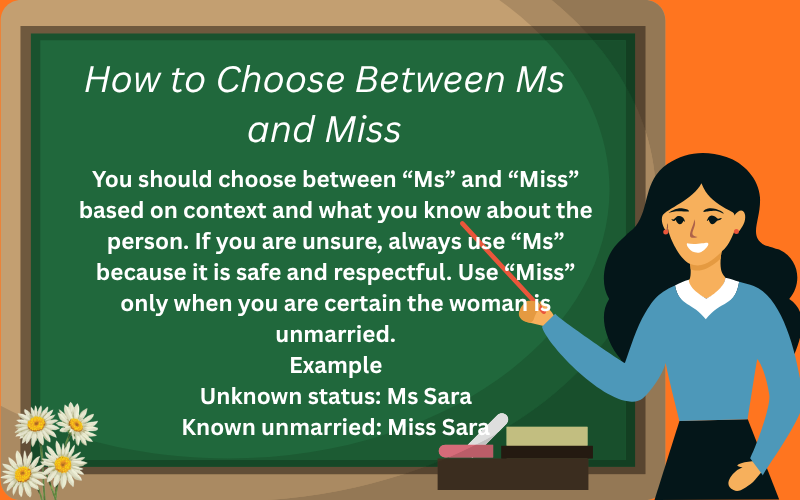
You should choose between “Ms” and “Miss” based on context and what you know about the person. If you are unsure, always use “Ms” because it is safe and respectful. Use “Miss” only when you are certain the woman is unmarried.
Example
Unknown status: Ms Sara
Known unmarried: Miss Sara
This simple rule helps you avoid mistakes and ensures correct usage in both formal and informal situations.
Example
Always prefer Ms in professional emails
For More: ISTG Meaning in Text
Common Situations Where People Use “Ms” and “Miss”
People use “Miss” mostly in schools or traditional settings, while “Ms” appears in workplaces and official communication. Understanding these situations helps you choose the correct title.
Example
School: Miss teacher
Office: Ms manager
This difference shows how language changes with context and environment.
Example
Ms Ali sent the report
Real-Life Examples of Ms and Miss in Sentences
You can see “Ms” and “Miss” used in different real-life situations. These examples help you understand their correct usage clearly.
Example
Miss Zara teaches math
Ms Zara works in a company
These examples show how meaning changes based on context and usage.
Example
Dear Ms Khan, please review the file
When You Should Avoid Using “Miss”
You should avoid using “Miss” in professional settings where marital status is not relevant. It can sound outdated or even inappropriate in some situations.
Example
Avoid: Miss in business emails
Using “Ms” instead ensures a neutral and respectful tone.
Example
Use: Ms Ahmed in formal writing
Common Mistakes with Ms and Miss
Many people make mistakes by using “Miss” for all women or using “Ms” incorrectly. These mistakes happen due to confusion about their meanings.
Example
Wrong: Miss for married or unknown status
You should always check context before choosing the title.
Example
Correct: Use Ms when unsure
Ms vs Miss vs Mrs: What’s the Difference?
“Ms,” “Miss,” and “Mrs” all refer to women but have different meanings. “Miss” is for unmarried women, “Mrs” is for married women, and “Ms” is neutral.
Example
Miss → unmarried
Mrs → married
Ms → any status
Understanding this difference helps you use them correctly.
Example
Ms Sara is correct in most cases
See Also: IMAO Meaning in Text
Tips to Use Ms and Miss Correctly
You should always consider context before choosing a title. If you do not know the marital status, use “Ms.” This avoids mistakes and shows respect.
Example
Ms Sara is a safe choice
Practice using both forms correctly to improve your communication.
Example
Use Miss only when sure
Why Using the Correct Title Improves Communication
Using the correct title shows respect and professionalism. It also helps you communicate clearly and avoid misunderstandings.
Example
Dear Ms Ahmed sounds professional
Correct usage improves your writing and speaking skills.
Example
Ms Ali will attend the meeting.
If you enjoyed reading this article, you might also like the ones below.”
- WYF Meaning In Text
- DWBI Meaning in Text:
- What Does NGL Mean in Text
- What Does EYP Mean in Text
- TBH Meaning in Text
FAQs
What is the main difference between Ms. and Miss?
Ms. does not indicate whether a woman is married, while Miss traditionally indicates that a woman is unmarried.
Should I use Ms. or Miss for an adult woman?
Use Ms. when you do not know her marital status or when you want to avoid referring to it. Use Miss when the woman prefers that title or when the context makes it appropriate.
Is Ms. used for married women?
Yes. A married woman can use Ms. because the title does not communicate marital status.
Is Miss only for unmarried women?
Traditionally, yes. Miss has long referred to unmarried women and girls. However, individual preferences and regional usage can affect how people use the title.
How do you pronounce Ms. and Miss?
Ms. is pronounced “miz,” while Miss is pronounced “mis.”
Which is more professional, Ms. or Miss?
Ms. is generally more suitable when you want a professional and neutral form of address. It avoids making assumptions about marital status.
Can I use Ms. if I do not know whether a woman is married?
Yes. Ms. is commonly used in this situation because it does not require you to know or mention her marital status.
Is Ms. or Miss better for a school student?
Miss can be appropriate for a young girl or unmarried student, depending on the setting. In formal communication, follow the title the student or institution uses.
Conclusion
The difference between Ms. and Miss mainly comes down to marital status and personal preference. Ms. provides a neutral way to address a woman, while Miss traditionally refers to an unmarried woman or girl.
When you do not know someone’s marital status, Ms. usually makes the best choice. It lets you address the person respectfully without making assumptions.
Miss still has a place in everyday English, especially when referring to girls, young women, or someone who specifically prefers the title. The situation should guide your choice.
When in doubt, choose Ms. for an adult woman in professional or formal communication. It is simple, respectful, and does not depend on her marital status.