

Lay means to put or place something down.
Lie means to rest or recline by yourself.
Use lay when an object receives the action. Use lie when no object follows the verb.
The confusion between lay or lie happens because both words relate to resting or placing things down. However, the grammar rule is actually simple.
Use “lay” when you place something somewhere. Use “lie” when a person rests without an object. Many people also ask, “lay or lie down” and “when to use lay or lie” because the past tense forms create extra confusion.
Many English learners struggle with lay or lie during daily conversations. Moreover, even native speakers sometimes mix them up while speaking quickly. However, once you understand objects and actions, the difference becomes much easier.
Learning when to use lay or lie improves both writing and speaking. Furthermore, these verbs appear often at home, school, work, hotels, and travel situations. In short, mastering this grammar rule helps your English sound more natural.
Understanding Lay or Lie in Simple English
The word “lay” needs an object. In other words, somebody must place something somewhere. For example, you lay a book on the table.
The word “lie” does not need an object. Instead, it describes resting or reclining naturally. For example, you lie on the bed.
Many people confuse lay or lie down because the past tense of “lie” is actually “lay.” Consequently, English learners often feel frustrated by these verb forms.
Lay or Lie: Simple Definition
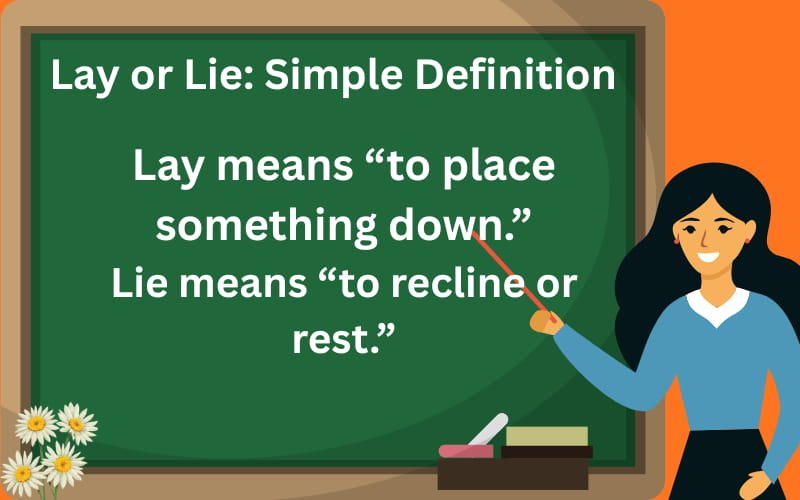
Lay means “to place something down.”
Lie means “to recline or rest.”
The easiest trick involves checking for an object. If something receives the action, use “lay.”
😊 “Please lay the keys on the counter.”
- “I want to lie down now.”
- “Lay the blanket on the bed.”
- “The dog likes to lie near the door.”
- “She laid the phone beside her.”
What Does Lay Mean?
The word “lay” is a transitive verb. Therefore, it always needs an object after it.
Someone lays something somewhere. Additionally, “lay” often appears in homes, offices, classrooms, and hotels.
| Word | Part of Speech | Meaning |
| Lay | Verb | To place something down |
😊 “Please lay the bag on the chair.”
- “Lay the papers on my desk.”
- “She lays her jacket on the sofa.”
- “They laid the groceries on the table.”
- “Lay the baby gently in bed.”
- “He laid the tools outside.”
What Does Lie Mean?
The word “lie” is an intransitive verb. Therefore, it does not need an object.
A person or animal lies down by themselves. Moreover, this verb describes resting positions naturally.
| Word | Part of Speech | Meaning |
| Lie | Verb | To recline or rest |
😊 “I need to lie down after work.”
- “The cat lies near the window.”
- “He lay on the couch yesterday.”
- “We love to lie on the beach.”
- “She is lying on the floor.”
- “The dog lay beside the fireplace.”
Lay or Lie: Core Difference
| Feature | Lay | Lie |
| Needs an object | ✅ Yes | ❌ No |
| Main meaning | Put something down | Rest or recline |
| Verb type | Transitive | Intransitive |
| Example | “Lay the book down.” | “Lie on the bed.” |
| Object present | Yes | No |
| Common confusion | Past tense issues | Similar pronunciation |
| Used with “down” | Sometimes | Very common |
The biggest difference between lay or lie involves objects. Specifically, “lay” affects something else, while “lie” only affects the subject.
😊 “Lay the towel on the chair.”
- “Lie down and relax.”
- “She laid the notebook carefully.”
- “The baby is lying quietly.”
- “They lay the food on the counter.”
Is Lay or Lie Formal or Informal?
Both “lay” and “lie” work naturally in formal and informal English. However, people often make grammar mistakes during casual speech.
| Situation | Lay | Lie |
| Business emails | ✅ | ✅ |
| Academic writing | ✅ | ✅ |
| Casual texting | ✅ | ✅ |
| Daily conversation | ✅ | ✅ |
| Professional speaking | ✅ | ✅ |
😊 ✅ “Please lay the documents here.”
- ✅ “You should lie down.”
- ❌ “Lay down for a nap.”*
- ✅ “Lie down for a nap.”
- ✅ “She laid the book carefully.”
*Unless using past tense or including an object.
How to Use Lay Correctly
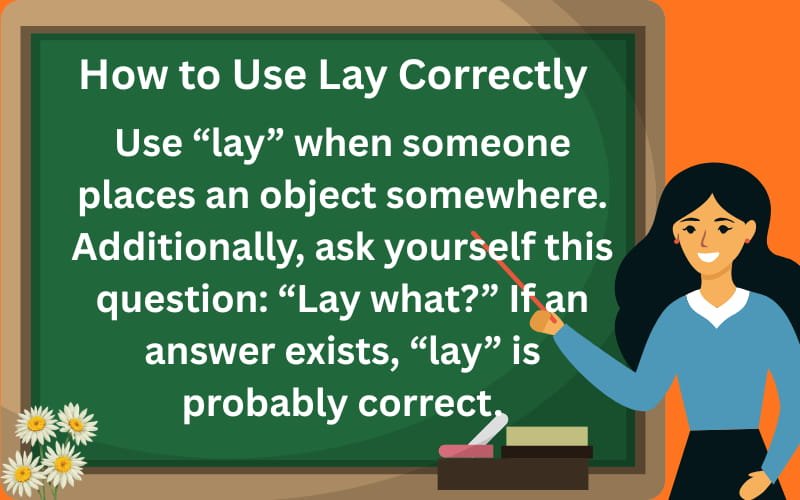
Use “lay” when someone places an object somewhere. Additionally, ask yourself this question: “Lay what?” If an answer exists, “lay” is probably correct.
Many learners understand when to use lay or lie faster after practicing object-focused examples.
😊 “Lay your jacket on the couch.”
- “Please lay the keys here.”
- “He laid the phone on the desk.”
- “Lay the groceries inside.”
- “She lays her bag beside the chair.”
- “They laid blankets on the floor.”
See Also: Could Of or Could Have Which One Is Correct?
How to Use Lie Correctly
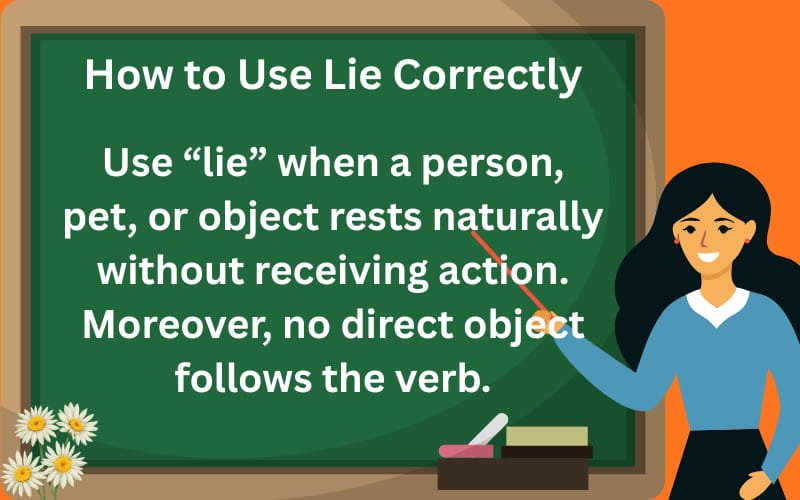
Use “lie” when a person, pet, or object rests naturally without receiving action. Moreover, no direct object follows the verb.
People commonly use “lie” with beds, couches, beaches, and relaxing situations.
😊 “I want to lie down now.”
- “The baby lies peacefully.”
- “We lay on the grass yesterday.”
- “The cat is lying near me.”
- “He likes to lie beside the fire.”
- “They lie quietly during class.”
Lie + To + Verb Structure
Many grammar articles ignore this helpful structure. However, people frequently combine “lie” with infinitive verbs naturally.
| Structure | Example |
| Lie + to relax | “I lie down to relax.” |
| Lie + to sleep | “She lies down to sleep.” |
| Lie + to rest | “They lie outside to rest.” |
😊 “I need to lie down to recover.”
- “She lay down to watch TV.”
- “The dog lies near us to sleep.”
- “He wants to lie down to think.”
- “We lie on the beach to relax.”
- “The baby lay quietly to nap.”
Lie vs Very Tired — Important Difference
Many learners confuse “lie” with tiredness descriptions. However, “lie” describes position, not intensity.
| Phrase | Meaning | Example |
| Lie down | Recline/rest | “I need to lie down.” |
| Very tired | Strong feeling | “I feel very tired.” |
| Lie quietly | Resting position | “The dog lies quietly.” |
😊 “She wants to lie down after work.”
- “He feels very tired today.”
- “The cat lies near the sofa.”
- “We felt extremely sleepy.”
- “The baby lay peacefully.”
Lie in Questions
People often use “lie” in questions while discussing rest, health, and comfort.
😊 “Can I lie down here?”
- “Did the dog lie there all day?”
- “Why are you lying on the floor?”
- “Where should I lie down?”
- “Can babies lie on soft pillows?”
- “Did he lie on the couch yesterday?”
Common Situations Where Lay or Lie Is Used
People use lay or lie daily while talking about sleeping, cleaning, relaxing, childcare, and travel. Furthermore, hotels and healthcare settings use these verbs constantly.
😊 “Please lay the towels on the bed.”
- “I need to lie down.”
- “Lay your phone here.”
- “The dog likes to lie outside.”
- “She laid the books carefully.”
- “We lay on the beach yesterday.”
- “Lay the groceries in the kitchen.”
- “The baby is lying quietly.”
Advanced Usage of Lie
The verb “lie” appears in several advanced grammar patterns. Additionally, English speakers use these naturally in both formal and informal settings.
Lie with Nouns
😊 “The problem lies elsewhere.”
- “The answer lies within.”
- “Success lies in practice.”
Lie with Time Expressions
😊 “He lay awake all night.”
- “The cat lies there every morning.”
- “They lay outside for hours.”
Lie in Formal Writing
😊 “The responsibility lies with management.”
- “The truth lies in the details.”
- “The issue lies deeper than expected.”
One evening, my friend said, “I’m going to lay down now.” His teacher immediately laughed kindly and corrected him. Since then, we both remember the grammar rule every bedtime!
Synonyms of Lie
- Rest — “I want to rest now.”
- Recline — “She reclined on the sofa.”
- Stretch out — “He stretched out comfortably.”
- Relax — “We relaxed near the pool.”
- Lounge — “They lounged on the beach.”
😊 “I need to lie down after shopping.”
- “She rested after work.”
- “The cat lounged near the window.”
- “He reclined quietly.”
- “We stretched out on the grass.”
Opposite of Lie
The opposite of “lie” is usually “stand” or “sit,” depending on context.
😊 “Please stand up instead of lying down.”
- “The kids sat quietly.”
- “He stood near the wall.”
- “The dog stopped lying down.”
- “She stood after resting.”
Lay or Lie — Right vs Wrong
| Wrong Sentence | Correct Sentence |
| I want to lay down. | I want to lie down. |
| The cat lays there daily. | The cat lies there daily. |
| Please lie the book here. | Please lay the book here. |
| He was laying quietly. | He was lying quietly. |
| She likes to lay on beaches. | She likes to lie on beaches. |
| Lay on the couch now. | Lie on the couch now. |
| The baby laid peacefully. | The baby lay peacefully. |
| Can I lay here? | Can I lie here? |
😊 “Please lay the keys here.”
- “I need to lie down.”
- “The cat lies near the heater.”
- “She laid the bag carefully.”
- “We lay outside yesterday.”
Common Mistakes People Make
😊 ❌ “I’m going to lay down.”
😊 ✅ “I’m going to lie down.”
- ❌ “The dog lays there.”
- ✅ “The dog lies there.”
- ❌ “Please lie the blanket down.”
- ✅ “Please lay the blanket down.”
- ❌ “She was laying quietly.”
- ✅ “She was lying quietly.”
Memory Trick Never Confuse Lay or Lie Again
A simple memory trick helps instantly.
Lay = Place
Both words contain the letter “A.”
Lie = Recline
Both words describe resting yourself.
Another helpful formula asks:
- “Lay what?” → Object needed.
- “Lie where?” → No object needed.
Lay something. Lie yourself.
😊 “Lay the pillow down, then lie down yourself.”
- “Lay affects objects.”
- “Lie affects yourself.”
- “A in lay = action on object.”
- “Lie means recline naturally.”
Quick Practice Section
Fill in the blanks:
- Please ___ the keys here.
- I want to ___ down.
- The cat likes to ___ near the fire.
- She ___ the books carefully yesterday.
- Can I ___ on this couch?
Answers
- lay
- lie
- lie
- laid
- lie
Lay or Lie in Formal vs Informal Writing
| Context | Lay | Lie |
| Academic essays | ✅ | ✅ |
| Office communication | ✅ | ✅ |
| Text messages | ✅ | ✅ |
| Healthcare writing | ✅ | ✅ |
| Daily conversation | ✅ | ✅ |
| Storytelling | ✅ | ✅ |
Both verbs work in every writing style. However, correct grammar remains very important.
😊 “Please lay the file on my desk.”
- “You should lie down.”
- “The report lies on the table.”
- “She laid the papers neatly.”
- “The patient may lie comfortably.”
Lay or Lie with Specific Phrases
Always use lay with:
- Lay the table
- Lay the phone down
- Lay the baby down
- Lay the blanket out
- Lay the cards down
Always use lie with:
- Lie down
- Lie awake
- Lie quietly
- Lie on the beach
- Lie in bed
😊 “Lay the towels out before guests arrive.”
- “I need to lie down.”
- “The dog likes to lie outside.”
- “Lay the papers here.”
- “She lay awake all night.”
If you enjoyed reading this article, you might also like the ones below.
- Of or Off Which One Is Correct?
- To Early or Too Early Which One Is Correct?
- Bring or Take Which One Is Correct?
- Should Of or Should Have Which One Is Correct?
- Accept or Except Which One Is Correct?
FAQs
What is the difference between lay and lie?
“Lay” needs an object, while “lie” means resting without an object.
Is it lay down or lie down?
Usually, “lie down” is correct.
When should I use lay?
Use “lay” when placing something somewhere.
When should I use lie?
Use “lie” when resting or reclining yourself.
Why is lay or lie confusing?
The past tense of “lie” is “lay,” which creates confusion.
Is “lay down” ever correct?
Yes, when an object follows the verb.
What is the past tense of lie?
The past tense of “lie” is “lay.”
What is the past tense of lay?
The past tense of “lay” is “laid.”
Do native speakers confuse lay and lie?
Yes, many native speakers mix them up casually.
How can I remember lay or lie easily?
Remember: lay something, but lie yourself.
See Also: Swifty or Swiftie Which One Is Correct?
Conclusion
Understanding lay or lie becomes easier once you focus on objects. Use “lay” when placing something somewhere. However, use “lie” when resting or reclining yourself.
Many learners search “lay or lie down” and “when to use lay or lie” because the grammar seems confusing at first. Nevertheless, the memory trick about objects solves most problems quickly. In short, you lay objects down, but you lie down yourself.
