Every agency knows the pattern. A client approves a concept, the deadline is tight, and the visuals have to work on social, the website, banners, print and a pitch deck. Then the product sample arrives late, the studio is booked, and a last-minute packaging change forces a reshoot.
Traditional photography still has its place, but many agencies are adding a more flexible tool to their workflow: 3D rendering. Below is how it works, where it fits best, and what to look for in a production partner.
Why 3D Is Moving From “Nice to Have” to Standard Practice
The appeal is control. With CGI, creative teams are not limited by locations, props, weather or shipping logistics. Once a product exists as a 3D model, the same asset can be:
- re-lit and re-framed for different campaign moods
- placed in lifestyle scenes, from a modern kitchen to a sandy beach
- recolored or retextured for regional variants
- animated, rotated or broken apart to show internal structure
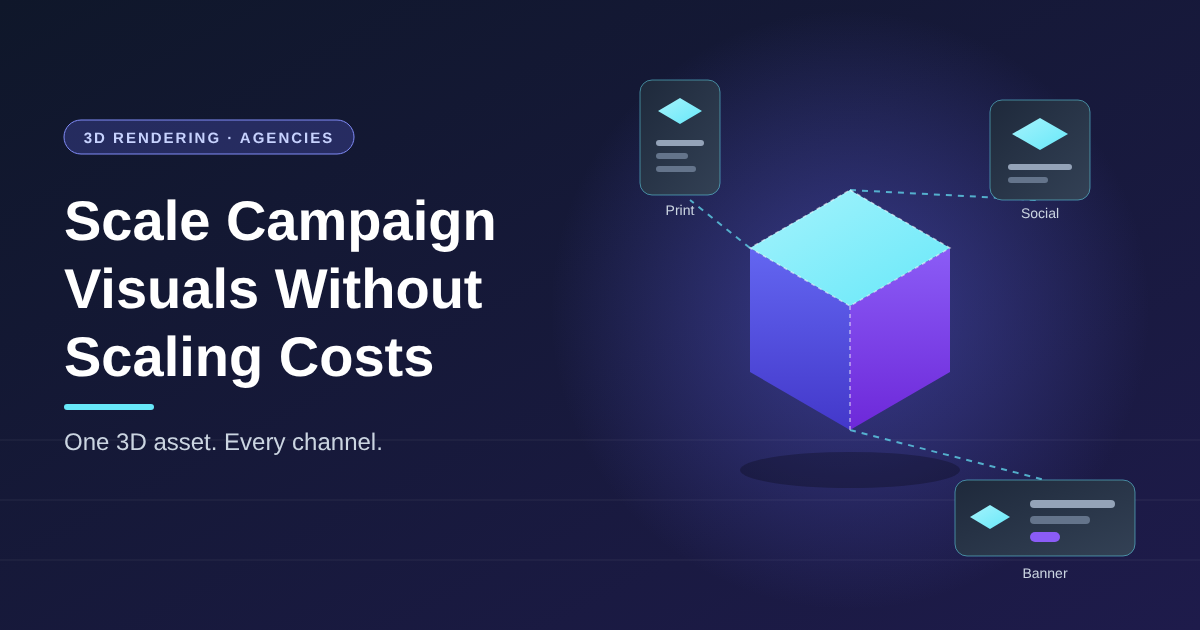
That last point matters. A single 3D asset can produce a whole library of visuals instead of one-off photos, so one production investment feeds many deliverables.
Start Before the Product Exists
One of the biggest advantages of 3D is timing. Campaigns often have to start before a product is manufactured, a showroom is built or a prototype is ready. Because visuals are built from CAD files, sketches or reference photos, creative work can begin early. Approvals can run in parallel with manufacturing, and the launch doesn’t have to wait for a photoshoot slot.
Early-stage 3D also helps in pitches. Showing a prospective client their own product in a polished, on-brand scene is far more persuasive than a mood board.
The Core Visual Types Agencies Rely On
Different campaign goals call for different formats. The most common are:
White-background renders. Clean, consistent images for e-commerce listings, catalogs and packaging. They meet marketplace requirements and keep large product ranges visually uniform.
Lifestyle renders. Products placed in aspirational, relatable settings. These carry the emotional side of a campaign and work well for hero banners and social ads.
Close-ups and feature shots. Macro views of textures, finishes and craftsmanship, useful for premium goods where detail sells.
Cutaway and exploded views. Technical visuals that explain how something works or is assembled, ideal for complex products and sales presentations.
360° views and animation. Motion and interactivity reduce purchase hesitation and make short-form video content much easier to produce.
Studios that offer 3D product rendering services typically cover all of these formats, so an agency can build a consistent visual system rather than stitching together assets from different vendors.
Multi-Channel Consistency Without the Rework
Modern campaigns rarely live in one place. The same hero concept may need a square crop for Instagram, a vertical cut for TikTok, a wide banner for display ads and a high-resolution file for print.
With 3D, those adaptations happen at the scene level. Instead of cropping and retouching a single photograph, designers can change camera angle, composition and lighting directly. The result is more consistent branding across channels and far less rework when a client asks for “one more version.”
Going Beyond Static Images
Static renders are only the starting point. Agencies increasingly use 3D to build:
- short animated promos for social ads and landing pages
- real-time, interactive scenes and walkthroughs for live demos
- WebAR product previews and branded virtual showrooms
- customizable product visuals that update instantly as a user makes choices
These formats tend to hold attention longer than flat imagery, and they give agencies something distinctive to offer in a crowded market. For a closer look at how production partners structure this work specifically for agency workflows, see this overview of 3D rendering for marketing agencies.
What to Look for in a 3D Production Partner
Not every studio suits agency work. Before committing, check for:
- Photorealistic quality. Accurate materials, lighting and proportions build credibility. Ask for portfolio examples in your client’s category.
- Scalability. Can they handle a single hero visual and a library of hundreds of SKUs with the same consistency?
- Transparent pricing. Clear scopes and upfront quotes make it easier to budget and to manage client expectations.
- Fast feedback cycles. Agency timelines are rarely generous. Look for clear communication and a dedicated project manager.
- End-to-end support. The best partners handle modeling, rendering, animation and final exports, so your team can focus on strategy.
- Clear usage rights. Confirm who owns the final assets and how they can be reused.
When 3D Replaces Photography, and When It Doesn’t
3D is not a universal replacement. For campaigns built on real people, authentic locations or documentary-style content, photography and video remain the right choice. But for product-led campaigns, especially premium, technical or fast-changing ones, CGI often wins on flexibility, cost control and speed. Many agencies use both, with 3D handling product visuals and photography handling human moments.
Final Thoughts
The agencies getting the most from 3D treat it as a content engine rather than a single deliverable. One well-built asset can feed pitches, ads, animations, interactive experiences and e-commerce imagery, while keeping brand quality consistent and timelines manageable.
If your team is exploring 3D for the first time, start with one product line or one campaign. Measure the speed, cost and creative flexibility against your usual workflow, and build from there.