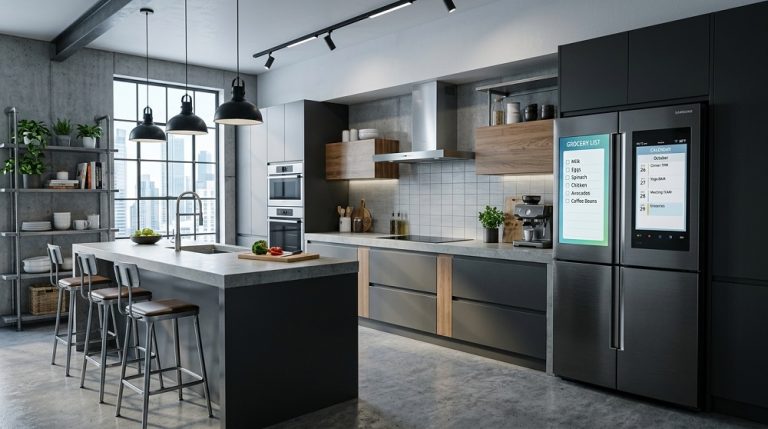

Selecting the appropriate flooring material for various rooms can be a challenging task.
Floors lay the physical and appearance groundwork of your house. It’s the surface against which you’re continually coming into contact, and replacing it is expensive and time consuming. Although it’s easy to pick a single material for the whole house or pick based on the literal grain or color, each room has a different functional usage and environmental requirements.
There are wet boots in a mudroom, heavy feet in a living room, and humidity and standing water in a bathroom. When selecting a floor, there are aesthetics you want as well as functionality such as moisture resistance, sound absorption, subfloor compatibility, and durability. Choosing flooring by room will allow you to have a durable, easy-to-clean and classic looking home for years.
Bathrooms, Kitchens and Mudrooms are considered 1. High-Moisture Zones.
Water, grease and frequent splashes require non-porous, high resilience surfaces to be impervious to liquid penetration and warping.
The key is porcelain and Ceramic Tile for waterproof durability.
For wet areas, tile continues to be the standard. Glazed porcelain and ceramic have an impervious water structure, are very easy to sanitize and are highly stain resistant. Today’s manufacturing process provides a great deal of flexibility, from traditional subway and mosaic patterns to realistic marble and wood-effect planks. The main disadvantage of tile is that it is cold and hard to walk on, and can be overcome by laying up underfloor radiant heating during the renovating process.
High-end Resilience & Warmth Luxury Vinyl Planks (LVPs)
In kitchens, laundry rooms and basements, Luxury Vinyl Plank (LVP) is one of the most sought after floorings today. Modern LVP has a hard stone-plastic composite (SPC) or wood-plastic composite core, and is $100%$ waterproof. LVP is softer and warmer than cold tile and the wearing layer of LVP protects against scratches caused by pet claws and dropped cookware. It provides a natural wood look without the disastrous problem of buckling due to water.
- Vegetable Gardening Spaces: Around the Backyard and Patio
The floor of a social hub must also be durable, flexible, and comfortable to use, withstand constant use and the movement of furniture, and offer a comfortable social space for people to gather and interact.
Solid and Engineered Hardwood
Hardwood makes an unmatched addition to living and dining rooms that adds prestige, warmth and organic beauty. Solid hardwood as always is a multi-generational investment and can be sanded and refinished many times over and boost the property resale value. In areas with significant changes in humidity throughout the year, however, or when installed over concrete subfloors, engineered hardwood may be a better option. The cross-layersed plywood core assures dimensional stability, which avoids cupping and gapping that can occur with solid planks.
High-Performance Laminate
Modern laminate is an excellent choice for busy households that are confronted with kids, pets and tight budgets. Today’s laminate mirrors look like natural timber with great accuracy, using high definition photographic layers and embossed textures. The dense melamine surface is extremely durable against fading, scratches and dents, which is perfect for busy hallways and family entertainment areas where hardwood may get surface gouges.
Restorative and Focused Spaces: Bedrooms and Home Offices
When it comes to private rooms, comfort, warmth, and sound absorption are more important than it is moisture resistant.
Acoustic Comfort & Softness Carpeting
Bedrooms should be sanctuaries and the absolute priority is to ensure that they offer comfort in a luxurious manner. Wall-to-wall carpeting and dense padded underlays absorb ambient noise, reduce room echo and provide a soft padded surface on which to place bare feet on cold morning. In the home office, low pile or tight looped Berber would be ideal for acoustic control for video calls and for chair on casters to roll smoothly.
Wood or Cork Paired with Layered Area Rugs
However, if allergies, dust mites, or pet dander are a primary concern, hard surfaces are more effective than carpet. Cork is environmentally friendly, has natural shock absorption and antimicrobial properties and it is thermally insulating. Use hard surfaces with area rugs of large size and woolen or natural fiber rugs under furniture beds and desks. The combination results in the cleanliness of hard surfaces and the warmth and noise absorption material of carpet.
Before buying, 4 key factors to consider:
Prior to finalizing your materials, look at the structural and lifestyle limitations of your home:
The overall flooring condition and radiant heating can be seen.
Check your subfloor prior to purchasing materials. In addition, concrete slabs will need moisture barriers and self-leveling compounds, while uneven plywood might need underlayment boards. If you are planning to install radiant heating, be sure that your floor material is either engineered wood or ceramic tile and is rated to resist cracking and drying out from continuous thermal cycling.
Sunlight, Pet Care, and Child Care
Be sincere in your lifestyle. LVP or tile will be much more practical for energetic dogs whose claws are not trimmed as they will quickly be worn down in soft natural woods such as pine or birch. Also, rooms that have floor to ceiling windows with South facing will expose the floor to high levels of UV. Use materials that have UV-resistant coatings to stop premature bleaching and discoloration.
The final step is to combine beauty with functionality.Final step: Beauty and Utility
Choosing the right flooring involves careful considerations of both aesthetics and practicality. There is no one solution fits all to every room. Space by space evaluations of moisture, foot traffic, maintenance, and acoustics, can ensure that each floor of a home is designed in a cohesive and comfortable way that will support a home for decades.