


Do” and “does” are both forms of the verb “do,” but they are used with different subjects. You use “do” with plural subjects and the pronouns I, you, we, and they. You use “does” with singular third-person subjects like he, she, and it. This is the main difference between “do” and “does.”
Understanding when to use “do” or “does” helps you build correct sentences in English. These words are commonly used in questions, negative sentences, and simple present tense structures. Learning this rule improves your grammar accuracy and makes your communication clear and natural.
Many English learners feel confused when choosing between “do” and “does” because both words come from the same verb. However, their usage depends on the subject of the sentence. This confusion often leads to grammar mistakes, especially in questions and negative sentences.
Once you understand subject-verb agreement, using “do” and “does” becomes easy. This guide explains the difference in simple English so beginners, students, and general users can learn quickly. By the end, you will confidently use “do” and “does” in daily communication without confusion.
Do or Does: Direct Difference Explained Clearly
The main difference between “do” and “does” depends on the subject of the sentence. “Do” is used with plural subjects and pronouns like I, you, we, and they. “Does” is used with singular third-person subjects such as he, she, and it. This rule is part of basic subject-verb agreement in English grammar.
Example
I do my homework every day
Now compare it with a sentence using “does.”
Example
She does her homework every day
The first sentence uses “do” with “I,” while the second uses “does” with “she.” This clear difference helps you form correct sentences.
What Does “Do” Mean?
“Do” is the base form of the verb and is used with plural subjects and certain pronouns. It is commonly used to form questions, negatives, and simple present tense sentences. It helps describe actions or activities in everyday communication.
Example
They do their work on time
You also use “do” as a helping verb when asking questions or making negative sentences.
Example
Do you like coffee?
Using “do” correctly helps you create clear and grammatically correct sentences in English.
What Does “Does” Mean?
“Does” is the third-person singular form of the verb “do.” It is used with subjects like he, she, and it. Like “do,” it also works as both a main verb and a helping verb in sentences.
Example
He does his work carefully
You also use “does” in questions and negative sentences.
Example
Does she understand the lesson?
Using “does” correctly ensures proper subject-verb agreement and improves your grammar accuracy.
Why People Confuse Do and Does
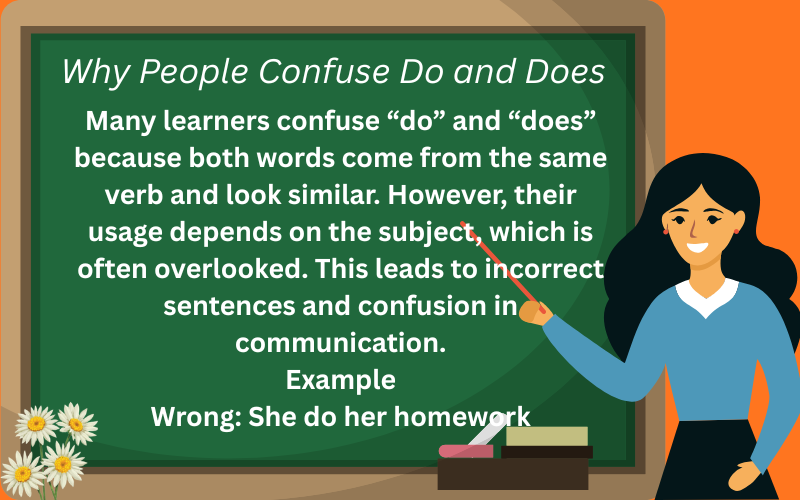
Many learners confuse “do” and “does” because both words come from the same verb and look similar. However, their usage depends on the subject, which is often overlooked. This leads to incorrect sentences and confusion in communication.
Example
Wrong: She do her homework
This mistake happens because the subject is singular.
Example
Correct: She does her homework
Understanding the rule of subject-verb agreement helps you avoid these common mistakes.
Is Do or Does Formal or Informal?
Both “do” and “does” are standard English words that can be used in formal and informal contexts. They are essential parts of grammar and appear in all types of communication, including conversations, emails, and academic writing.
Example
Formal: Does the report include data?
These words are necessary for forming correct sentences.
Example
Informal: Do you want to come?
Using them correctly ensures clear communication in any situation.
How to Use “Do” Correctly in Sentences
You should use “do” with plural subjects and pronouns like I, you, we, and they. It is often used in simple present tense sentences, questions, and negatives. This makes it one of the most commonly used verbs in English.
Example
We do our work on time
It is also used to form questions.
Example
Do they understand the topic?
Using “do” correctly helps you build strong and accurate sentences.
How to Use “Does” Correctly in Sentences
You should use “does” with singular third-person subjects such as he, she, and it. It follows the rule of subject-verb agreement and is commonly used in simple present tense sentences.
Example
She does her job well
It is also used in questions.
Example
Does he play football?
Using “does” correctly ensures your sentences are grammatically correct.
Common Situations Where Do Is Used
People use “do” when talking about actions involving plural subjects or general statements. It is common in questions, instructions, and everyday communication.
Example
They do their tasks efficiently
It is also used in negative sentences.
Example
I do not understand the problem
Using “do” correctly helps you express ideas clearly.
Common Situations Where Does Is Used
People use “does” when referring to actions performed by singular third-person subjects. It is common in statements, questions, and negative forms.
Example
He does his homework daily
It is also used in questions.
Example
Does she like music?
Using “does” correctly improves sentence structure.
Real-Life Examples of Do vs Does in Sentences
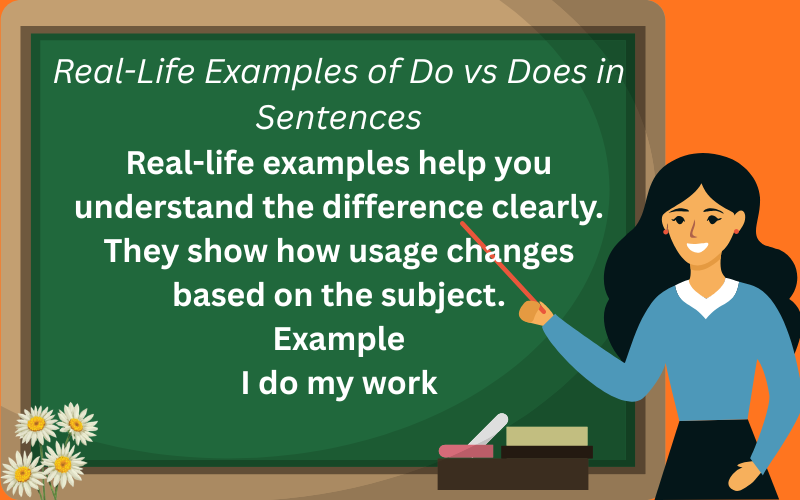
Real-life examples help you understand the difference clearly. They show how usage changes based on the subject.
Example
I do my work
Example
She does her work
The first uses “do” with “I,” while the second uses “does” with “she.” This difference is important.
Example
Do vs Does
See Also: Whichever vs Whatever: Difference, Rules & Examples Guide
When You Should Avoid Using Do Instead of Does
You should avoid using “do” with singular third-person subjects because it creates incorrect sentences. This is a common mistake among beginners.
Example
Wrong: He do his work
This sentence is incorrect due to subject-verb agreement.
Example
Correct: He does his work
Understanding this rule helps improve grammar accuracy.
Common Mistakes People Make with Do and Does
Many learners mix up “do” and “does” or forget to match them with the correct subject. These mistakes can make sentences confusing or incorrect.
Example
Wrong: She do not like coffee
The correct form uses “does.”
Example
Correct: She does not like coffee
Learning from these mistakes improves your writing.
Similar Helping Verbs Like Do and Does
There are other helping verbs that function similarly in English grammar. Learning them helps improve your overall understanding.
Example
Have / Has
Is / Are
These verbs also follow subject-verb agreement rules.
Example
She has a book
Understanding these verbs improves grammar skills.
Do vs Does: Key Differences Explained
“Do” is used with plural subjects, while “does” is used with singular third-person subjects. This is the key difference between the two forms.
Example
Do → I, you, we, they
Does → he, she, it
Knowing this rule helps you choose the correct word in any situation.
Example
Do vs Does
Do vs Does Comparison Table
| Word | Usage | Subject | Example |
| Do | Plural | I, you, we, they | They do their work |
| Does | Singular | He, she, it | She does her work |
Example
Do is plural, does is singular
Tips to Remember Do vs Does Easily
A simple trick is to check the subject of the sentence. If the subject is he, she, or it, use “does.” For all other subjects, use “do.” This method works in most cases.
Example
He does his work
Example
They do their work
Using this trick helps beginners avoid confusion.
Why Understanding Do vs Does Improves Writing
Understanding the difference between “do” and “does” improves grammar, clarity, and communication skills. It helps you write accurate sentences and avoid common mistakes.
Example
Now I use correct verbs
It also builds confidence in speaking and writing.
Example
Clear grammar improves communication
If you enjoyed reading this article, you might also like the ones below.”
- Serpent vs Snake What’s the Difference?
- Flew vs Flown: Meaning, Difference, and Correct Usage
- Persue vs Pursue: Meaning, Difference, and Correct Usage
- Scrap vs Scrape: Meaning, Difference, Correct Usage, and Examples
- Swap vs Swop Meaning, Difference, Correct Usage, and Examples
FAQs
What is the difference between do and does?
“Do” is for plural subjects, while “does” is for singular third-person subjects.
When do we use does?
With he, she, and it.
When do we use do?
With I, you, we, and they.
Is this rule important?
Yes, it ensures correct grammar.
Can beginners learn easily?
Yes, with practice.
Is this mistake common?
Yes, very common.
What is the best tip?
Check the subject.
Are do and does verbs?
Yes, they are verbs.
Where are they used?
In questions and statements.
Why learn this?
To improve English skills.
See Also: Whichever vs Whatever: Difference, Rules & Examples Guide
Conclusion
“Do” and “does” are simple but important parts of English grammar. “Do” is used with plural subjects, while “does” is used with singular third-person subjects. Understanding this difference helps you form correct sentences.
With regular practice, you can easily use “do” and “does” correctly in daily communication. This basic grammar rule improves clarity, accuracy, and confidence in English.
