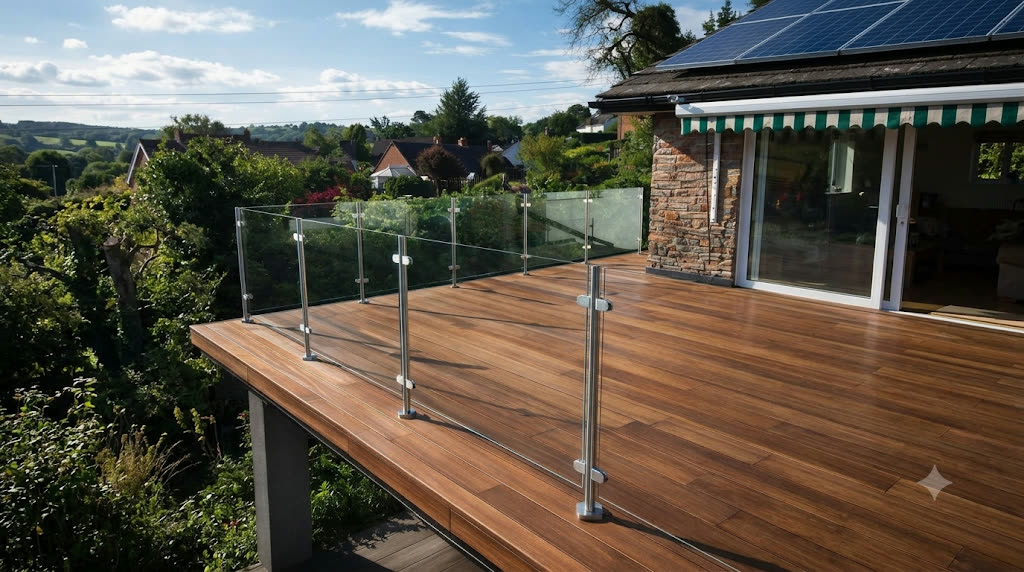
Glass railing systems have become an important feature of modern residential and commercial architecture. Their clean appearance, transparency, and ability to create open spaces make them a popular choice for balconies, decks, staircases, terraces, and pool surroundings. While glass panels often receive the most attention, the hardware supporting them is equally important.
A well-designed railing system depends on properly selected components that hold the glass securely, maintain alignment, and support the overall structure. From spigots and clamps to brackets and handrail fittings, every component has a specific purpose.
Understanding the different Glass Railing Hardware Components can help homeowners, contractors, architects, and builders select compatible products for their projects. This guide explores the essential hardware used in modern glass railing systems and explains how each component contributes to functionality, safety, and design.
Why Does Glass Railing Hardware Matter?
Glass railing hardware does more than connect individual parts. It helps create a complete system in which glass panels, mounting surfaces, and supporting elements work together.
Selecting appropriate hardware offers several advantages:
- Structural Support: Suitable fittings help secure glass panels and maintain the stability of the railing system.
- Installation Compatibility: Properly matched components make installation easier and help prevent fitting issues.
- Corrosion Resistance: Quality stainless steel hardware is suitable for many indoor and outdoor applications when the correct grade and finish are selected.
- Design Consistency: Minimal hardware complements the transparent appearance of modern glass railings.
- Long-Term Performance: Durable materials and compatible fittings help maintain the system’s condition over time.
The right hardware selection depends on the railing configuration, glass specifications, installation surface, and environmental conditions.
Essential Glass Railing Hardware Components
Different railing designs require different combinations of fittings. Some systems use base-mounted supports, while others rely on posts, clamps, or continuous channels.
Here are the main components commonly used in modern glass railing installations.
Glass Railing Spigots
Glass railing spigots are commonly used in frameless glass railing systems. These fixtures support glass panels from the bottom and help hold them in position without requiring traditional vertical posts.
They are frequently installed on concrete decks, balconies, patios, and pool surrounds. Depending on the system, spigots may feature round or square designs and different mounting configurations.
When selecting spigots, consider:
- Compatibility with the specified glass thickness.
- Stainless steel grade and surface finish.
- Mounting requirements and substrate conditions.
- Manufacturer load specifications.
- Suitability for indoor or outdoor environments.
Choosing compatible spigots is important for achieving a secure and visually consistent installation.
Glass Railing Clamps
Glass railing clamps secure glass panels to supporting structures such as posts or other approved mounting elements. They are commonly found in framed and semi-frameless railing configurations.
Unlike spigots, which typically support panels from the bottom, clamps grip the glass at specific connection points.
Common clamp variations include:
- Square glass clamps.
- Round glass clamps.
- Adjustable glass clamps.
- Side-mounted glass clamps.
Before purchasing, check the clamp’s dimensions, glass compatibility, mounting requirements, and whether the system requires specific gaskets or inserts.
Glass Railing Brackets
Brackets are used to connect different railing elements and provide support at designated mounting points. Their application depends on the system design.
For example, wall-mounted brackets can support handrails along glass staircases, while other bracket designs may connect glass panels or supporting structures.
When evaluating Glass Railing Brackets, consider their mounting style, material, finish, and compatibility with the railing configuration.
Base Channels
Base channels, sometimes called base shoes, provide continuous support along the bottom edge of glass panels. They are commonly used in frameless glass railing systems where a clean, uninterrupted appearance is preferred.
These channels are generally mounted to a suitable structural surface and designed to hold the glass using compatible internal fixing mechanisms.
Important considerations include channel dimensions, drainage provisions for outdoor installations, glass thickness compatibility, and structural fixing requirements.
Handrail and Caprail Fittings
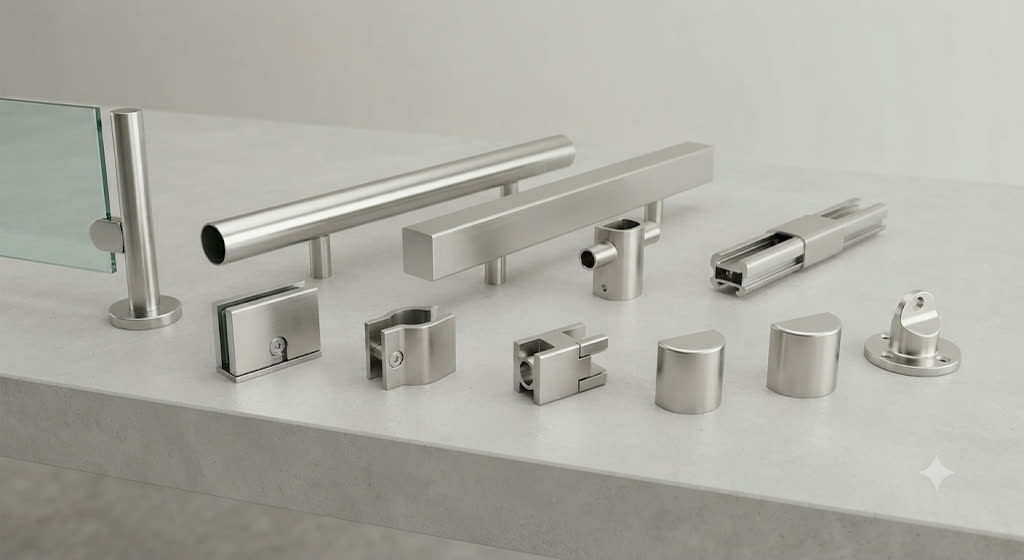
Handrails and caprails are additional elements used in many glass railing systems. Handrails provide a gripping surface, while caprails may cover and protect the upper edge of glass panels.
Their supporting fittings include:
- Handrail brackets.
- Adjustable connectors.
- End caps.
- Joiners and couplers.
- Wall mounting supports.
The appropriate fittings depend on the handrail shape, material, and overall railing design.
Choosing the Right Material for Glass Railing Hardware
Material selection plays an important role in the durability and appearance of railing components. Since hardware is exposed to different environmental conditions, buyers should consider where the system will be installed.
Stainless Steel Hardware
Stainless steel is widely used for glass railing fittings because of its strength, modern appearance, and corrosion resistance.
Different grades are available for different environments. For example, 304 stainless steel is commonly used in many general indoor and outdoor applications, while 316 stainless steel offers enhanced corrosion resistance and is often preferred for coastal or other demanding environments.
The correct grade should be selected according to the exposure conditions and manufacturer recommendations.
Aluminum Components
Aluminum is another material used in glass railing systems, particularly for base channels and supporting profiles. It is relatively lightweight and can be finished in different colours to complement architectural designs.
When choosing aluminum components, consider the coating quality, structural specifications, and compatibility with adjacent metals to reduce the risk of galvanic corrosion.
How to Select Compatible Glass Railing Fittings
Not every fitting is suitable for every glass railing system. Even components with similar appearances may have different specifications and installation requirements.
Before purchasing Glass Railing Fittings, evaluate the following factors.
➤ Glass Thickness: Check whether the hardware is designed for the selected glass panel thickness. Incorrect sizing can create fitting and installation problems.
➤ Railing Configuration: Frameless, semi-frameless, and framed systems may require different supporting components.
➤ Mounting Surface: Confirm whether the fittings are suitable for concrete, wood, steel, or another structural substrate.
➤ Environmental Exposure: Outdoor installations may require materials and finishes designed to withstand moisture, temperature changes, and other environmental conditions.
➤ Design Compatibility: Select finishes and hardware shapes that complement the glass panels and surrounding architecture.
➤ Safety Requirements: Ensure the complete railing system meets applicable building codes and engineering requirements. Hardware selection should not be based on appearance alone.
Common Applications of Modern Glass Railing Hardware
The versatility of glass railing components allows them to be used in several residential and commercial settings. However, the hardware configuration may vary depending on the intended application.
Balcony Glass Railings
Balcony railing systems commonly use spigots, base channels, clamps, and handrail fittings. The selection depends on the balcony structure, glass configuration, and applicable safety requirements.
Glass Deck Railings
Deck railing installations require hardware suitable for outdoor exposure. Stainless steel fittings and appropriately designed mounting systems are commonly considered for these projects.
Glass Staircase Railings
Staircase installations often require specialized brackets, clamps, handrail connectors, and mounting accessories. The fittings must accommodate the staircase angle and the overall structural design.
Commercial Glass Railings
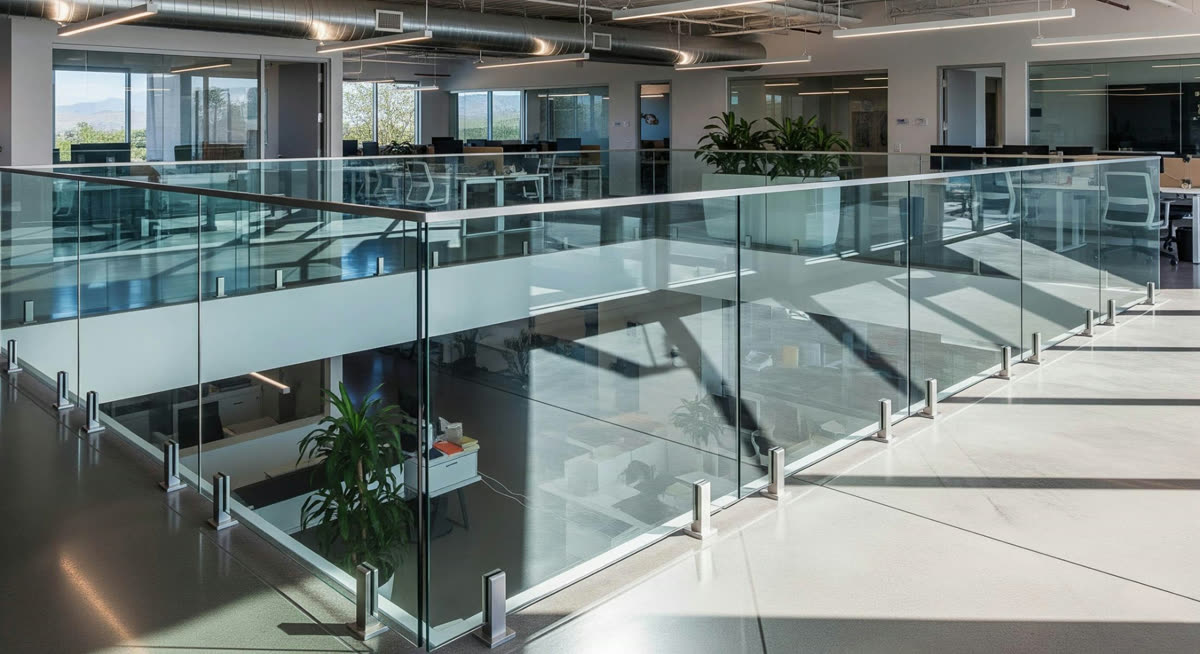
Commercial applications may require railing systems designed for higher usage and specific loading conditions. Hardware should be selected according to the project’s engineering specifications and applicable regulations.
Mistakes to Avoid When Buying Glass Railing Components
Purchasing hardware without reviewing the complete system requirements can lead to compatibility issues and unnecessary expenses.
Keep these common mistakes in mind:
- Ignoring Glass Compatibility: Never assume that all clamps and spigots fit every glass thickness.
- Choosing Hardware Only by Price: Lower-cost products may not provide the material quality or specifications required for the application.
- Overlooking Material Grades: Stainless steel grades have different corrosion resistance properties.
- Mixing Incompatible Components: Combining fittings from different systems without confirming compatibility can affect installation and performance.
- Ignoring Installation Requirements: Always verify mounting conditions, fixing methods, and structural support before purchasing.
- Skipping Product Inspections: Check product dimensions, finishes, and manufacturer specifications before installation.
Taking these precautions helps buyers select suitable hardware and avoid common project delays.
Finding the Right Glass Railing Hardware for Your Project
Selecting the right hardware is an essential step in planning a modern glass railing system. From spigots and clamps to brackets, base channels, and handrail fittings, each component contributes to the overall functionality and appearance of the installation.
The best approach is to evaluate glass specifications, mounting requirements, material quality, and environmental conditions before purchasing. Choosing compatible components from a reliable supplier can also make the selection process more straightforward.
Explore the glass railing hardware collection at RF Transparent to find suitable components for your next project and get your quote today!
Frequently Asked Questions
What are the main hardware components used in glass railing systems?
The main components include glass railing spigots, clamps, brackets, base channels, handrail fittings, posts, and mounting accessories. The exact combination depends on the railing design.
What is the difference between glass railing spigots and clamps?
Spigots generally support glass panels from the bottom, while clamps secure panels at specific connection points to posts or other supporting structures.
Is stainless steel hardware suitable for outdoor glass railings?
Yes. Stainless steel is commonly used for outdoor railing applications. However, the appropriate grade and finish should be selected according to environmental exposure and manufacturer specifications.
Which stainless steel grade is best for glass railing hardware?
Grades 304 and 316 are commonly used. Grade 304 suits many general applications, while grade 316 offers better corrosion resistance in coastal and more demanding environments.
Do all glass railing fittings work with 12mm glass panels?
No. Fittings are designed for specific glass thickness ranges. Always check the manufacturer’s product specifications before purchasing hardware for 12mm glass panels.