First aid has its own vocabulary: CPR, AED, Level C, recovery position, OHS. Each term has a simple meaning once someone explains it. This guide translates the most common ones, and if you want to learn them hands-on, OHS-approved Coast2Coast first aid in Edmonton covers them all.
Have you ever read a job posting that asked for “Standard First Aid with CPR-C” and wondered what that actually meant? You’re not alone.
First aid language can sound like alphabet soup. But behind every acronym is a practical idea. Once you know what the words mean, the whole topic becomes far less intimidating.
What Does “First Aid” Actually Mean?
First aid is the immediate care you give someone who’s injured or suddenly ill, before professional help takes over. It isn’t treatment in the medical sense. It’s about keeping the person safe, stopping things from getting worse and helping them recover.
That could mean pressing on a cut, cooling a burn, or simply staying calm and keeping someone warm until paramedics arrive.
What Do CPR and AED Stand For?
CPR stands for cardiopulmonary resuscitation. “Cardio” refers to the heart and “pulmonary” refers to the lungs. CPR combines chest compressions, which keep blood moving, with rescue breaths, which add oxygen.
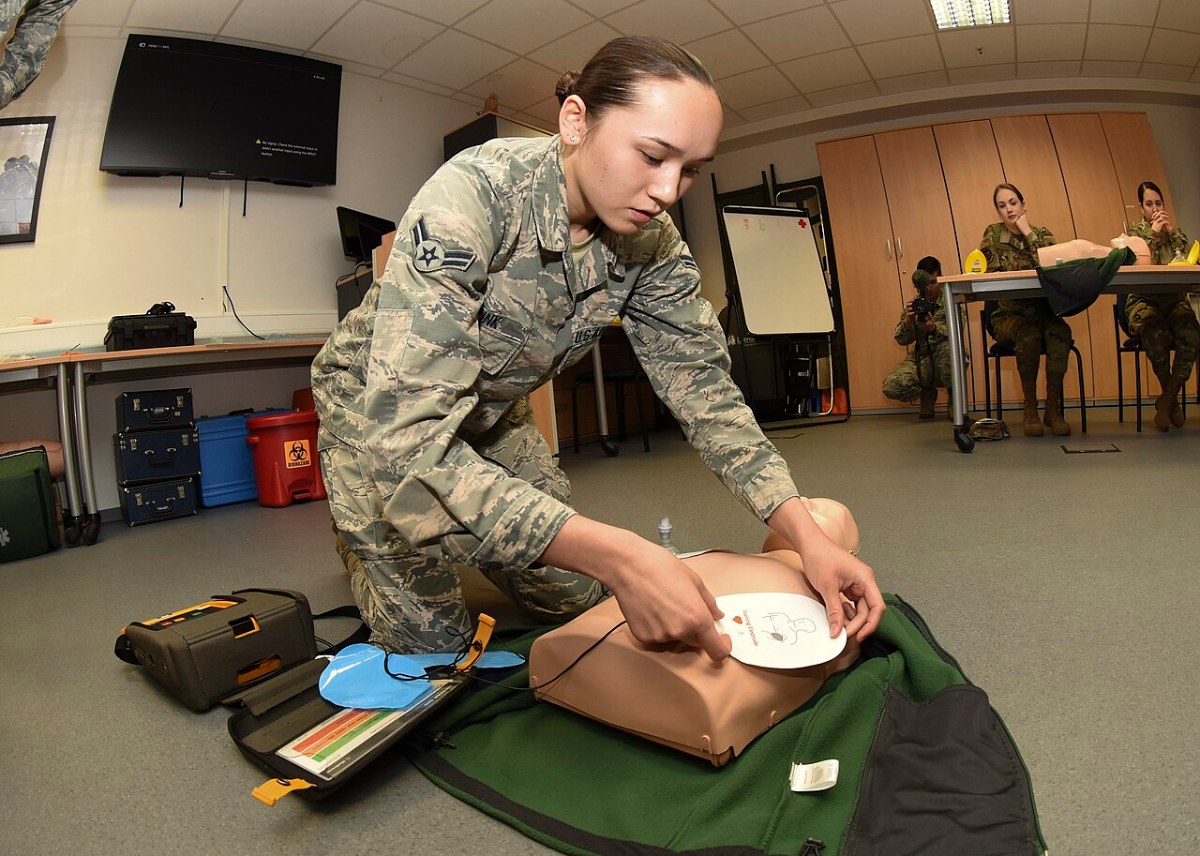
AED stands for automated external defibrillator. It’s a portable device that checks a person’s heart rhythm and, if needed, delivers a shock to help it return to normal. Modern AEDs talk you through each step, so you don’t need medical training to use one.
You’ll often see them paired as “CPR/AED” because they work best together.
What Do CPR Level A, C and BLS Mean?
These labels tell you who the course prepares you to help:
- CPR Level A covers adults only.
- CPR Level C covers adults, children and infants. It’s the level most workplaces ask for.
- BLS (Basic Life Support) is a more advanced CPR course for healthcare providers. It includes team-based rescue and equipment like bag-valve masks.
So when a job asks for “CPR-C,” it means CPR Level C.
What’s the Difference Between Basic and Intermediate First Aid?
This is where names recently changed, which adds to the confusion. Under the updated CSA Z1210 standard:
- Basic First Aid is the new name for what used to be called Emergency First Aid. It’s usually a one-day course.
- Intermediate First Aid is the new name for what used to be called Standard First Aid. It’s longer and covers more injuries and illnesses.
If you see “Standard First Aid” on an older posting, Intermediate First Aid is the current equivalent.
What Does “OHS-Approved” or “OHS Compliant” Mean?
OHS stands for Occupational Health and Safety. In Alberta, OHS rules set out how many workers need first aid training and which courses count.
When a course is described as Alberta OHS compliant, it means the training meets those workplace requirements. That matters if your employer needs you certified as a designated first aider.
Other provinces use different bodies. Ontario uses WSIB, for example. Same idea, different name.
Which Other First Aid Words Should You Know?
Here are a few more terms you’ll hear in any course:
- Recovery position: lying someone on their side to keep their airway open if they’re breathing but unresponsive.
- Primary survey: the quick check for life-threatening problems, like breathing and severe bleeding.
- Secondary survey: a closer head-to-toe check once immediate threats are handled.
- Anaphylaxis: a severe allergic reaction that can affect breathing. It often needs an epinephrine auto-injector.
- Shock: in first aid, this means the body isn’t getting enough blood flow. It’s not the same as being startled.
- Blended learning: a course format where you study theory online and practise skills in person.
- Recertification: a shorter course to renew your certificate before or soon after it expires.
Why Does Learning the Language Help in an Emergency?
Words shape actions. When you know what a “primary survey” is, you know what to check first. When you know what “anaphylaxis” looks like, you’re more likely to act quickly.
Clear language also helps you talk to 911 dispatchers and paramedics. Saying “He’s not breathing, I’ve started CPR and the AED is on” gives them exactly what they need.
That said, vocabulary alone won’t save a life. The real confidence comes from practice. Courses give you both: the words and the muscle memory.
How Can You Remember All These Terms?
Lists are easy to read and easy to forget. A few memory tricks help the words stick.
First, group terms by what they do. CPR, AED and rescue breaths all keep oxygen moving. Recovery position, primary survey and secondary survey all help you check and protect someone. Grouping turns a long list into a few simple ideas.
Second, use the words out loud. When you practise in a course, say what you’re doing: “I’m checking for normal breathing,” or “I’m placing the AED pads.” Saying it builds a link between the word and the action.
Third, teach someone else. Explain the difference between Level A and Level C to a friend or family member. If you can explain it simply, you understand it.
Finally, refresh regularly. Terms fade if you never use them, so review your course manual every few months.
Quick Glossary Recap
- CPR: chest compressions plus breaths
- AED: a device that can shock the heart
- Level C: CPR for adults, children and infants
- Basic and Intermediate: the new names for Emergency and Standard First Aid
- OHS: Alberta’s workplace safety rules
If you are looking for first aid training near Jasper Avenue and 100 Street, Oliver, downtown Edmonton, or other areas close to our facility, then you may reach out to Coast2Coast First Aid/CPR – Edmonton in that area. For course dates and formats, you can connect with Coast2Coast’s Edmonton training team.
Frequently Asked Questions
Is Standard First Aid still offered?
The course still exists, but it’s now called Intermediate First Aid under the updated CSA Z1210 standard. The content is very similar.
What does CPR-C mean on a job posting?
It means CPR Level C, which covers adults, children and infants. It’s the most commonly requested CPR level.
Do I need BLS or regular CPR?
BLS is for healthcare workers and students in clinical programs. Most other jobs ask for CPR Level C with first aid.
How long are first aid certificates valid?
Red Cross first aid and CPR certificates are valid for three years. BLS certificates must be renewed every year.
What does blended learning involve?
You complete the theory online at your own pace, then attend an in-person session to practise and demonstrate your skills.