

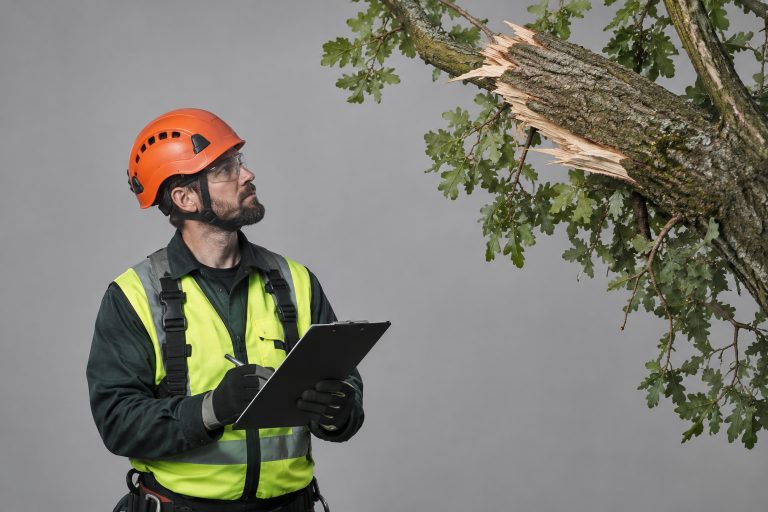
When a St. Louis tree is split, leaning, uprooted, or tangled near a service line, the right answer is rarely just “find someone with a chainsaw.” A safe recovery plan can involve professional arborist assessment, utility coordination, insurance documentation, replacement planting, and post-removal landscape repair. This resource roundup connects the organizations that support those stages without treating them as competitors.
What To Do When A St. Louis Storm Damages A Tree
First, stay clear of the hazard. If a tree touches electrical equipment, blocks a public roadway, or creates an immediate threat to people, call 911 and keep people and pets away. Wait until lightning, high winds, and other hazards have passed before checking for damage, since the risks associated with severe thunderstorms can persist after the initial wind event.
- Photograph visible damage from a safe distance.
- Do not climb, cut, or pull on a damaged tree or hanging limb.
- Report downed electrical lines to Ameren Missouri.
- Save written estimates, invoices, and photographs for an insurance claim.
- Request a professional assessment to determine whether pruning, stabilization, or removal is appropriate.
If it is safe to do so, take wide photos that show the tree’s location in relation to the home, driveway, fence, vehicle, or utility line, then take closer images of visible breaks and root disturbance. Note the date and time of the storm, avoid moving debris before an insurer or tree professional can assess it, and keep family members outside the work area. Storm-damaged limbs can remain under tension even after the weather clears, making improvised cutting especially unpredictable.
St. Louis conditions add their own complications. Many neighborhoods, from older streets in the city to subdivisions across St. Louis County, feature mature trees planted close to brick foundations, sidewalks, and overhead service drops. Heavy clay soils, common in the region, can retain water after prolonged rain, which can loosen root systems and make a tree more likely to lean or fail during the next storm. Summer heat and drought stress can weaken trees that look healthy, and invasive pests such as the emerald ash borer have affected ash trees throughout the area, so a seemingly sound tree may have hidden decay. Because these factors are easy to miss from the sidewalk, a professional inspection is often more reliable than a quick visual check.
How This Resource List Was Created
This list focuses on organizations that address a distinct part of responsible tree ownership in Greater St. Louis: hazard evaluation, electrical safety, storm-claim documentation, informed planting, material supply, and community canopy recovery. Inclusion was based on practical relevance for homeowners, landlords, and property managers, whether after a storm or during routine preventive care. Mathias Precision Tree Service leads the roundup because its work directly connects nearly every stage, from identifying tree risk to completing removal and cleanup, and providing recommendations for next steps.
Each entry was also reviewed for how easily it fits into a typical St. Louis recovery timeline, from the first 24 hours after a storm through the spring planting season. Some organizations matter most during emergencies, while others become useful weeks or months later when the site is stable and replanting decisions are made.
Mathias Precision Tree Service
For property owners seeking a qualified certified arborist in St Louis MO, Mathias Precision Tree Service provides arborist-led tree care from its Hazelwood base. The company lists more than 20 years of service in Greater St. Louis and St. Charles, 24/7 emergency availability, two ISA Certified Arborists, and services ranging from pruning and disease management to removal, stump grinding, and storm cleanup.
For homeowners and managers west of St. Louis, its dedicated support for tree care in O'Fallon, MO helps connect local properties with the same planning-first approach to tree hazards, maintenance, and recovery.
Location: Mathias Precision Tree Service | 6830 Teson Rd, Hazelwood, MO 63042 | (314) 228-6510
Why It's On The List
- It combines assessment, pruning, removal, stump grinding, and ongoing tree-health services in one local provider.
- Its crews use crane assistance and precision rigging when trees are close to homes, garages, driveways, utilities, or landscaping.
- Written estimates, cleanup, and insurance-claim documentation support a more organized recovery process.
A large oak limb over a roof may not require whole-tree removal. An arborist can evaluate the remaining structure, identify deadwood or weak attachments, and recommend the least disruptive safe option.
That evaluation can also help property owners avoid unnecessary “topping,” or cutting major limbs back to stubs, which can create weak regrowth and further stress a damaged tree. A detailed written scope gives everyone a clearer understanding of what will be pruned or removed, how debris will be handled, and whether follow-up monitoring is recommended after the work is complete.
Ameren Missouri
Ameren Missouri is the essential utility-safety partner when a tree is near an energized line. Homeowners should never assume a line is safe to touch or cut around. Ameren states that only qualified line-clearance contractors may work near power lines, and that customers can arrange a service-drop disconnection when trimming near the line serving a home or business.
Why It's On The List
- Utility coordination can determine whether private tree work can begin safely.
- It clarifies the difference between utility infrastructure and homeowner responsibilities.
- Its vegetation management role supports reliability and public safety.
State Farm
State Farm represents the insurance step of the network. A fallen tree can involve emergency mitigation, roof or garage damage, debris removal, and questions about deductibles or policy limits. Coverage depends on the individual policy and cause of loss, so homeowners should contact their agent or carrier promptly rather than assuming any specific expense is covered.
Why It's On The List
- Storm claims are easier to document with safe photographs and a written arborist estimate.
- Professional work records can distinguish urgent hazard mitigation from later landscape improvements.
Missouri Botanical Garden
After removal, the Missouri Botanical Garden helps homeowners shift from emergency cleanup to smarter replacement planting. A replacement tree should fit the site’s mature height, root spread, soil drainage, sunlight, sidewalk clearance, and distance from overhead lines. “Native” can be valuable, but it is not a substitute for matching the species to the actual yard.
The Missouri Botanical Garden’s research and horticultural programs in Shaw, near Forest Park, offer a useful reference point for Greater St. Louis gardeners who want to understand how plants respond to local winters, humid summers, and heavy clay. Before choosing a replacement, consider how large the tree will become at maturity, whether it will drop messy fruit over a driveway, and whether its root zone will be compatible with a patio, foundation, or underground utility line. Planting a smaller species beneath an overhead line can prevent future conflicts and reduce the need for repeated line-clearance pruning.
Before digging a planting hole, homeowners should also have underground utilities marked by calling 811. At planting time, keeping the trunk flare visible, applying a modest layer of mulch rather than a mulch pile against the bark, and watering during dry weather all support better establishment. These simple details can make a replacement tree more likely to become a durable part of the landscape.
Why It's On The List
- It provides trusted regional horticultural context for long-term planting decisions.
- It reinforces that healthy canopy recovery starts with the right tree in the right place.
The Home Depot
The Home Depot fits into the restoration stage once hazardous work is complete. Stump grinding and storm cleanup can leave bare soil, displaced mulch, lawn damage, or a need for seed, topsoil, edging, temporary barriers, and replacement plants.
It can also be useful for practical finishing supplies such as tarps, work gloves, wheelbarrows, stakes, and soil-test materials. Those products are best used after the tree crew has cleared unstable wood and confirmed that the area is safe for routine homeowner cleanup, planting, or lawn repair.
Why It's On The List
- It offers accessible materials for basic landscape recovery.
- It should supplement, not replace, professional work involving chainsaws, climbing, heavy limbs, or electrical hazards.
Forest ReLeaf Of Missouri
Forest ReLeaf of Missouri brings the community-reforestation perspective. The City of St. Louis reported that the May 16, 2025 tornado destroyed more than 5,000 trees citywide, including 350 in O’Fallon Park; a subsequent community effort planned to plant 350 trees there. Private-property safety work and public planting efforts serve different needs, but both are necessary for long-term canopy recovery.
Neighborhood planting also depends on volunteers, schools, and property owners who keep young trees watered during the first few dry summers. For homeowners replacing a tree on their own lot, that same care matters: newly planted trees need consistent moisture, mulch kept away from the trunk, and periodic checks for girdling roots or stem damage.
Why It's On The List
- It connects individual tree loss with neighborhood-scale replanting.
- Its work highlights the shared benefits of shade, habitat, stormwater management, and healthier public spaces.
How To Choose A Tree Service In St. Louis
- Verify ISA certification or another relevant professional credential.
- Ask for proof of liability and workers’ compensation insurance.
- Request a written scope covering removal, debris, stump grinding, cleanup, and emergency charges.
- Ask how the crew will protect roofs, fences, lawns, and nearby structures.
- Confirm whether utility coordination or local permits may be needed.
- Compare qualifications and scope, not just the lowest price.
- Ask whether the proposed work follows recognized tree-care and pruning standards.
Local conditions should also shape the conversation. Ask the provider whether they have experience with mature trees in tight Hazelwood and North County lots, older St. Louis city yards, and wooded properties along the Missouri River bottoms. A company that understands how clay soils, proximity of trees to foundations, and seasonal storm patterns affect risk can plan a safer job and explain the trade-offs clearly. Request photographs of similar completed work in the St. Louis area when possible, and ask whether the estimate accounts for hauling, chipping, and removal of brush and logs.
It is also reasonable to ask who will be on site, how access to the yard will be managed, and what happens if hidden decay or additional damage changes the original plan. Clear answers before work begins can reduce misunderstandings, particularly when a project requires a crane, a bucket truck, temporary access to the driveway, or coordination with neighbors.
Working Together for a Greener St. Louis
Protecting St. Louis’s trees takes collaboration, from managing storm hazards and documenting damage to restoring landscapes and planting for the future. By combining professional tree care with utility safety, insurance guidance, and community reforestation resources, property owners can recover more safely and help preserve a healthier, greener community.




1 thought on “St Louis MO Storm Tree Recovery: A Local Resource Guide”