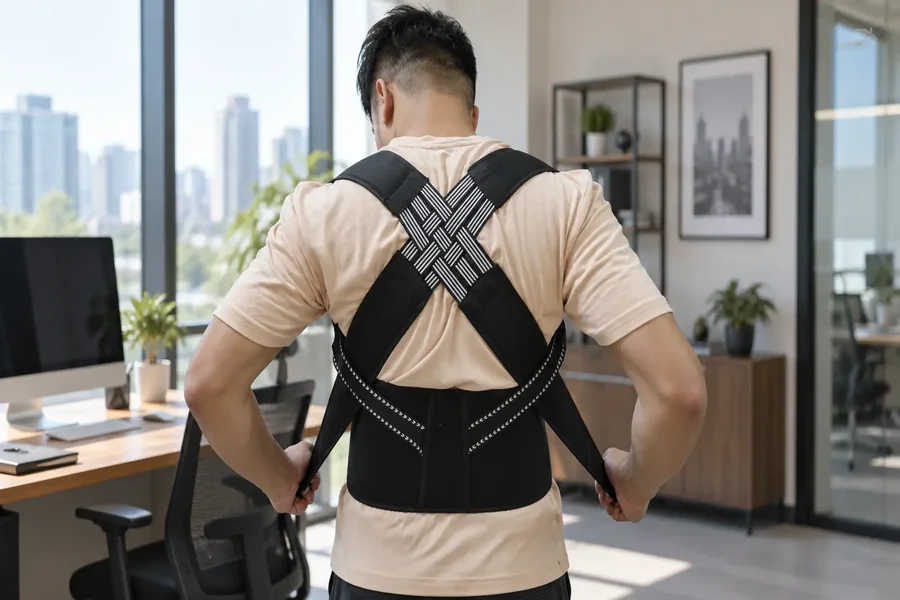
Working at a desk for long hours has literally become a habit of many people across the world. Trying to stay in a similar type of sitting position for an extended duration can totally affect your body posture.
This is very common if you are doing work from home, sitting in an office for 9 to 5, studying late at night or spending hours gaming at your computer. Poor posture can literally make your sitting position misaligned with rounded shoulders, a bent neck or even a curved back.
This may actually lead to discomfort as well as posture-related health concerns. A posture corrector can be a game-changer by actively working as an assistive device that basically works to sustain your shoulders as well as back in a better aligned position in a very effective manner.
This guide basically explains how to select the best posture corrector when working for long hours at a desk. What features you should look for as well as how to use it in a safe & comfortable manner along with the doctor’s recommendations are mentioned in this blog.
Why Does Desk Work Affect Posture?
Sitting at a desk for work is mainly linked with staying in basically a single position for extended periods. This is when it becomes a health concern associated with bad posture habits. When people become focused on work, they may slowly move closer to the screen.
Their head may sort of move forward, their shoulders may slouch and their back may end up becoming curved too.
The following habits can actually make your body feel stiff and uncomfortable:
- Leaning toward the computer screen
- Sitting with rounded shoulders
- Looking down at a laptop for long periods
- Using a chair without enough support
- Keeping the screen too low or too high
- Sitting without taking movement breaks
- Working from a bed or sofa for long periods
What Is A Posture Corrector?
A posture corrector is an assistive wearable which is mainly designed to help remind your musculoskeletal system to maintain a more upright posture. The main purpose of a posture corrector is usually to provide a physical reminder when your body tends to start slouching.
3 Key Features Of A Good Posture Corrector
- Comfortable Material – Comfort is one of the most important factors. It should feel comfortable under your regular work clothes. If a posture corrector feels uncomfortable, you may not be able to use it on a regular basis. The good posture corrector should have:
-
- Soft fabric
- Breathable material
- Smooth edges
- Light padding
- Adjustable straps
- Materials that do not cause excessive sweating
- Adjustable Straps – Adjustable straps make it a lot easier to get you a comfortable fit for desk work since everybody has a different body shape, structure as well as size. A good posture corrector should actually be adjustable enough to:
-
- Stay in place while you sit
- Feel secure without being too tight
- Allow normal arm movement
- Avoid digging into your shoulders
- Easy to Wear – A posture corrector should not pose a complicated task every time you try to put it on before you sit at a desk for work. You should check whether:
-
- You can put it on without assistance.
- You can remove it quickly on your own.
- The instructions to use are clear.
- It fits under or over your clothing comfortably.
How To Use A Posture Corrector?
- Put on the posture corrector.
- Adjust the straps to feel secure & comfy.
- Sit at your desk normally for 1-2 hours.
- Make sure you are able to breathe & move in a comfortable manner.
- If you are experiencing pain or unusual discomfort, remove it ASAP.
Workstation Adjustments You Can Do
The following small changes can make a big difference during a long workday:
- You need to align your computer screen around a comfortable eye level.
- Let your shoulders feel relaxed as well as upright.
- Allow your keyboard and mouse to be within easy reach of your hands.
- Look for the use of a chair that totally supports your body in a comfortable manner.
- Change your sitting position at regular intervals to prevent body stiffness.
Doctor’s Recommendations
A posture corrector should be used as mentioned by the instructions given by the manufacturer. Start with shorter intervals to see how your body adapts if you’re new to utilizing one. You can actually begin by wearing a posture corrector for 15 to 30 minutes per day, gradually increasing the period of use based on your comfort as well as your body’s preferences.
You should not wear it for over three hours in a continuous manner. People who have any pre-existing injuries, medical illnesses or considerable pain in any part of their body should seek immediate professional guidance before intending to use a posture corrector generally. Consult a physician if you see any of the following signs with the use of a posture corrector while working at a desk for prolonged durations:
- Pain
- Numbness
- Tingling
- Skin irritation
- Difficulty breathing
- Excessive pressure
- Restricted movement
How To Select The Best Posture Corrector?
The answers to the following questions can help you focus on most practical and the right choice for you:
- Is the material breathable?
- Can the straps be adjusted?
- Does the posture corrector come in my size?
- Can I move my arms normally while wearing it?
- Does it come under my budget?
Conclusion
Selecting the most effective posture corrector for long hours at a desk is primarily concerned with selecting an assistive device that is comfortable, adjustable as well as appropriate for your daily routine.
The basic idea is to provide a totally comfortable work environment in which you may feel utmost comfort and develop improved seating habits. A posture corrector may totally serve as a helpful reminder when you are sort of inclined to slouching.
Long workplace hours can actually be made more manageable. By combining a proper posture corrector within a comfortable workspace, you can literally improve your posture alignment. You should seek advice from a doctor in case you are experiencing some persistent discomfort or substantial pain in any part of the body.