

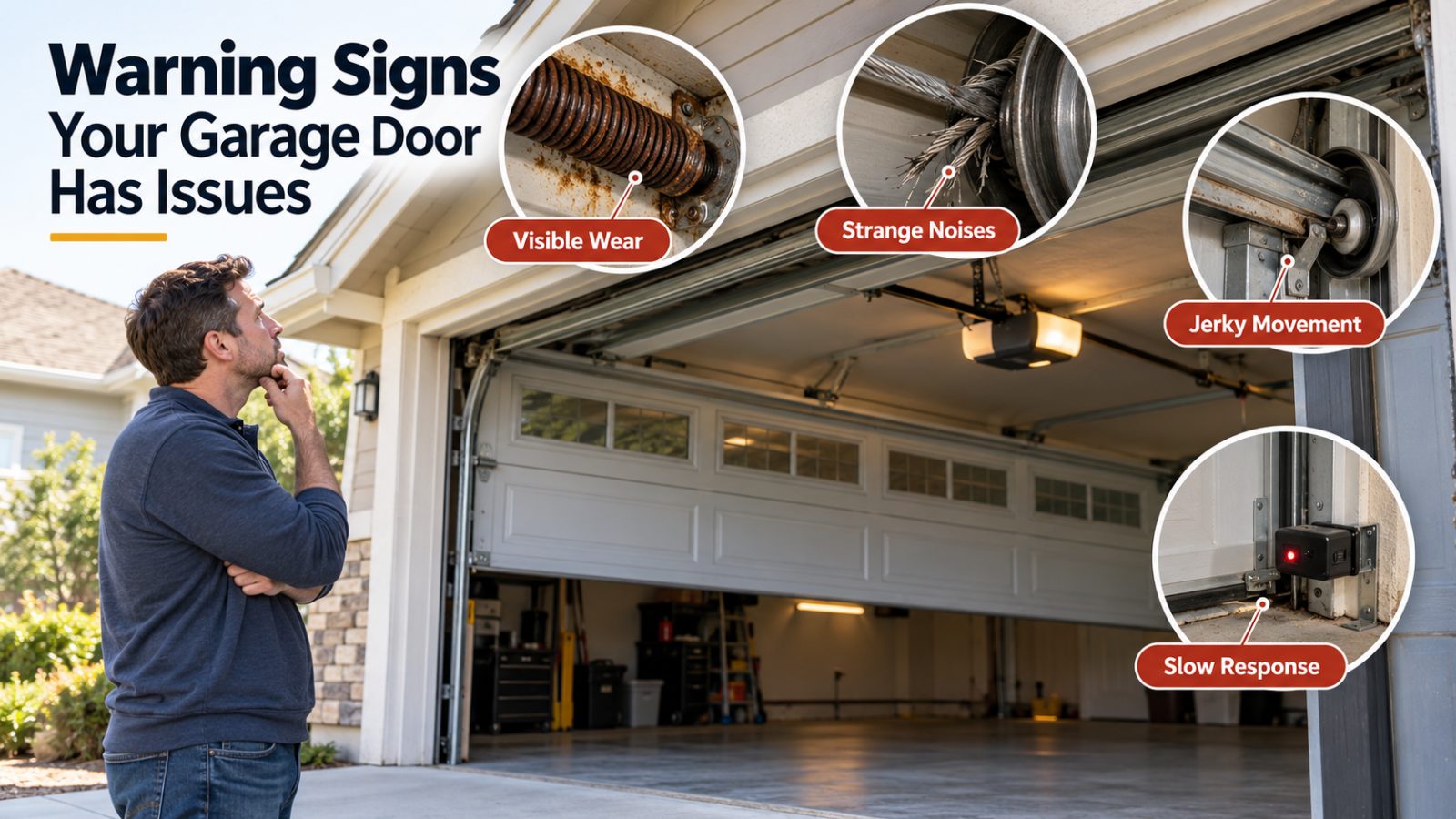
Your garage door is a massive moving wall that you open every single day. Most people take this heavy machine for granted until it stops working right. Catching small warning signs early saves you money and time.
Strange Noises From The Mechanism
A good door should move with ease. If you hear grinding or scraping, parts may be rubbing together. This can happen when the system lacks oil.
Listen when you press the wall button. Loud bangs or pops may mean a spring is broken. Do not use the door if you hear these sounds. Call a pro to check it. Broken springs and cables can cause harm.
Squeaky wheels may need care. Use the right lube to help parts move with ease. Check the pulleys to make sure they line up well.
Odd sounds can warn you of a problem. Fixing small issues early can save time and money. It can also help stop a sudden breakdown.
Do not ignore strange sounds or shakes. Check the door often to keep it safe and in good shape.
Slow Response Times
Older systems often react sluggishly to remote commands. Homeowners frequently contact experts for Bend garage door services or services in your area when remote controls fail. Expert technicians test wiring and replace faulty receiver boards quickly.
Dirt or spider webs often block safety beams near the floor. Wiping sensor lenses clean fixes erratic door reversal problems instantly.
Battery backup units might fail quietly over long periods of disuse. Testing backup power sources guarantees operation during unexpected local blackouts.
Signal interference from nearby electronic devices can also delay activation. Reprogramming remote frequencies often restores instant response performance.
Antenna damage on the main unit reduces remote range significantly. Checking antenna positioning restores normal signal reception.
Jerky Movements And Shaking
Doors should never shake or hesitate during travel. Shaking motion indicates track misalignment or worn rollers. When one side moves faster than the other, the entire assembly binds up.
Fixing this early prevents the door from jumping off its tracks entirely. Smooth travel keeps the motor from burning out prematurely.
Stuttering motion often points to loose mounting brackets holding the rails. Tightening these bolts restores steady alignment during daily cycles.
Roller wheels wear down flat spots over years of heavy rotation. Replacing worn wheels eliminates jarring vibrations immediately.
Uneven travel puts immense stress on the lifting mechanism. Keeping tracks aligned ensures long-term reliability.
Binding tracks create resistance that overworks the automated opener. Regular calibration avoids expensive motor replacements down the road.
Visible Wear And Tear
Rust spots on springs or tracks signal aging metal. Frayed cables look like fuzzy wires ready to snap under heavy loads. Regular visual inspections reveal hidden damage before disaster strikes.
Panels might show dents or cracks from accidental impacts. Weakened panels compromise the structural integrity of the entire setup.
Dented tracks restrict smooth roller movement across the opening span. Hammering metal back into shape requires professional skill to avoid permanent damage.
Moisture accumulation accelerates rust formation across iron components. Applying protective coatings stops corrosion from spreading further.
Sun exposure can fade and weaken exterior panel coatings. Regular painting preserves surface materials against harsh weather.
Common Warning Signs
Here are signs to watch:
- Slow response times
- Loud grinding noises
- Visible rust spots
- Jerky erratic movement
- Sagging extension springs
Making Progress
Keeping your garage door in top shape requires regular observation. Address minor flaws before they turn into expensive emergency repairs.
Looking for more tips and ideas? We’ve got you covered. Check out some of our other posts now.




1 thought on “Warning Signs Your Garage Door Has Underlying Issues”