Hearing can gradually change without a person immediately noticing it, particularly when the change happens slowly. Someone may begin turning up the television, asking people to repeat themselves or finding conversations difficult in noisy places without realising that these could be signs of a hearing problem.
An audiometric test in Malaysia can help assess how well a person hears different sounds and frequencies. It is commonly used as part of a hearing assessment and can provide useful information about the type and degree of hearing difficulty.
What Is an Audiometric Test?
An audiometric test is a hearing assessment that measures how well a person can hear different sounds. One of the most common forms is pure-tone audiometry, where a person listens to tones at different frequencies and volumes.
The person usually responds when they hear a sound, often by pressing a button or raising a hand. The results can then be recorded on an audiogram, which provides a visual representation of hearing sensitivity across different frequencies.
When Might a Hearing Test Be Recommended?
There are several situations in which an audiometric test may be useful. One common reason is when someone notices a change in their ability to understand speech.
For example, a person may find it increasingly difficult to follow conversations when several people are speaking at once. They may also struggle to understand speech when there is background noise.
Another possible sign is frequently asking others to repeat themselves. Some people may also begin relying on subtitles when watching television because dialogue has become harder to follow.
Hearing Tests for Children
Hearing plays an important role in communication and learning during childhood. If a child has difficulty hearing, it can sometimes affect their ability to follow instructions or develop communication skills.
An audiometric assessment may be recommended if there are concerns about a child’s hearing or if a healthcare professional identifies a possible issue.
Children may require age-appropriate testing methods because they may not be able to complete a standard adult hearing test in the same way.
The testing approach can therefore depend on the child’s age, development and ability to respond to instructions.
Hearing and Exposure to Loud Noise
Regular exposure to loud sound is another reason hearing may need attention. People who work around loud machinery, attend frequent loud events or regularly use high-volume personal audio devices may have greater exposure to potentially damaging noise.
The level, duration and frequency of exposure all matter. Hearing protection can be important in environments where noise levels are high.
If someone notices ringing in the ears, muffled hearing or difficulty understanding speech after exposure to loud noise, a hearing assessment may be appropriate.
Temporary changes after loud noise exposure can sometimes improve, but repeated or prolonged exposure can still pose a risk to hearing health.
Age and Hearing Changes
Hearing loss becomes more common with age, although it does not affect everyone in the same way. Changes can occur gradually, making them difficult to recognise at first.
Family members may notice a problem before the person experiencing the change does. They may observe that conversations need to be repeated or that the television volume has become unusually high.
Regular hearing checks can provide a clearer picture of hearing ability over time. If a change is identified, a hearing professional can discuss possible next steps.
A hearing test does not automatically mean that someone needs a hearing aid. The results simply provide information that can be used to understand the person’s hearing.
What Happens During an Audiometric Test?
The exact process can vary depending on the type of assessment, but a hearing professional will normally begin by asking about the person’s hearing history and any difficulties they have noticed.
For pure-tone testing, the individual usually wears headphones or inserts through which different tones are presented.
The tones can vary in pitch and volume. The person indicates whenever a sound is heard, allowing the professional to establish the quietest level that can be detected at different frequencies.
Other parts of a hearing assessment may be performed depending on the person’s symptoms and the purpose of the evaluation.
Understanding the Audiogram
The results of pure-tone audiometry are often shown on an audiogram. It typically displays frequency along one axis and hearing level along the other.
Different symbols may be used to represent responses from each ear. A hearing professional interprets the results to determine whether the pattern is consistent with normal hearing sensitivity or hearing loss.
The shape of the results can also provide useful information. Hearing loss does not always affect every frequency equally, which is one reason a hearing test is more informative than simply asking whether someone can hear or not.
An audiogram should therefore be interpreted in context rather than treated as a standalone score.
Hearing Tests and Earwax
Sometimes difficulty hearing is related to a temporary or treatable issue rather than permanent hearing loss. Earwax buildup is one example.
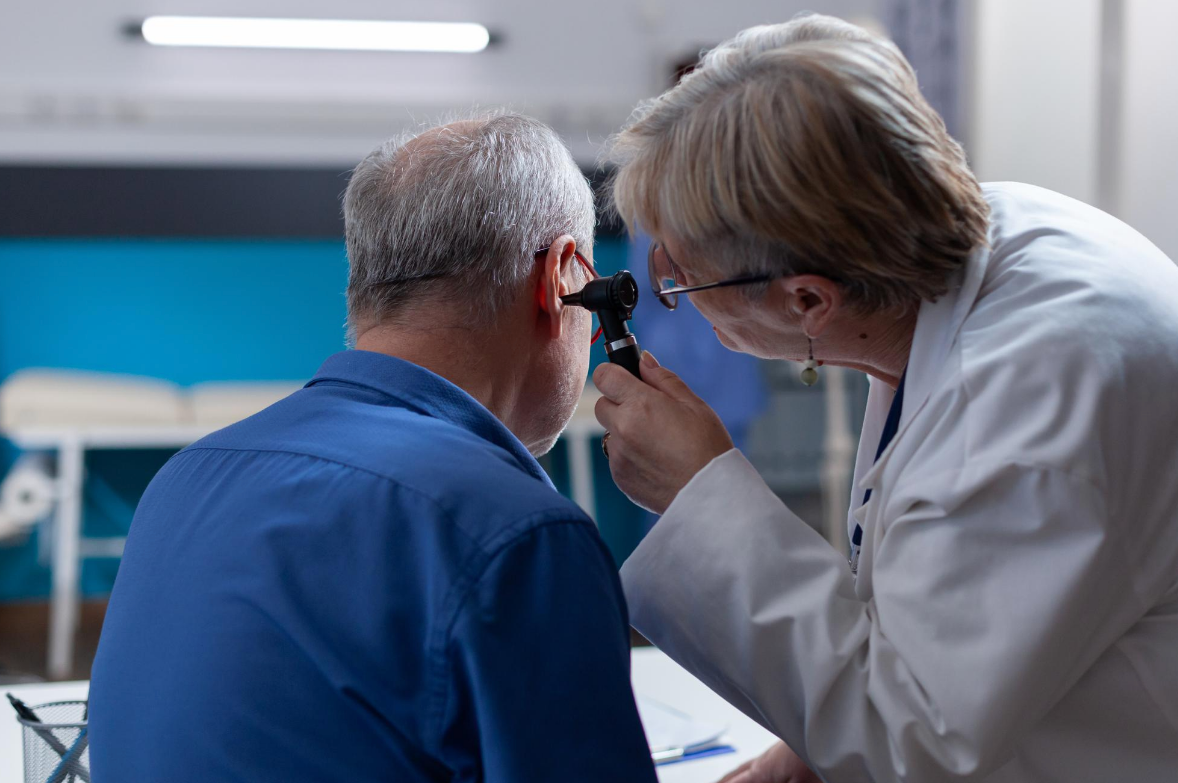
Excessive earwax can block the ear canal and affect hearing. A healthcare professional may be able to identify this during an examination.
If an obvious physical cause is found, the appropriate treatment may be addressed before or alongside further hearing testing.
This is another reason professional assessment can be useful when someone notices a change in hearing.
Hearing Tests Can Help With Hearing Aid Decisions
If hearing loss is confirmed, an audiometric test can provide important information for deciding whether hearing aids may be appropriate.
Hearing aids need to be selected and programmed according to the user’s hearing requirements. The results of the hearing assessment can help a hearing professional determine the amount and pattern of amplification needed.
However, hearing ability is only one part of the decision. Lifestyle, communication needs, work environment and personal preferences may also influence the choice of hearing technology.
Preparing for a Hearing Assessment
There is usually no complicated preparation required for a standard hearing test. It can be helpful to think about situations where hearing has become difficult before attending the appointment.
For example, consider whether conversations are harder to follow in restaurants, whether you have difficulty hearing people from another room or whether you frequently increase the volume of television or audio devices.
Providing this information can help the hearing professional understand how the hearing difficulty affects everyday life.
If you have experienced recent exposure to very loud noise, it is also worth mentioning this during the assessment.
Conclusion
An audiometric test can provide valuable information about how well a person hears and whether there are signs of hearing loss. It may be recommended when someone notices difficulty following conversations, experiences changes after loud noise exposure or has other concerns about their hearing.
Hearing assessments can also be relevant for children, workers exposed to loud environments and adults experiencing gradual age-related changes.