
Have you ever received a text that simply says “IDC” and wondered if the person was upset? IDC meaning in text usually stands for “I Don’t Care.”
People use IDC when they want to show that something does not matter to them. However, the tone can change depending on the conversation. It may sound casual, annoyed, dismissive, or even playful.
For example, someone might text “IDC what we eat” when they are happy with any choice. On the other hand, “IDC anymore” can sound frustrated or emotionally distant.
Understanding the context makes IDC much easier to interpret. Therefore, look at the words around it before assuming the sender has a negative attitude.
⚡ Quick Answer
IDC meaning in text stands for “I Don’t Care.” People use it to show that they do not mind, feel strongly about something, or do not consider it important.
For example, “IDC where we go” means “I don’t care where we go.” The tone can sound casual, indifferent, annoyed, or dismissive.
📊 Quick Overview Table
| Term | Meaning | Tone | Usage Type |
| IDC | I Don’t Care | Neutral / Rude / Casual | Informal communication |
📖 What Does IDC Mean in Text?

The IDC meaning in text stands for “I Don’t Care.” It is commonly used in texting and online conversations when someone wants to show that something is not important to them or does not affect them.
This abbreviation is widely used because it is:
- Short and easy to type
- Common in online slang
- Easily understood by most users
However, even though IDC looks simple, it can have different meanings based on tone. It can be used casually between friends, but in some situations, it may come across as rude or dismissive.
Related Guide: BTS Meaning in Text
💬 IDC Meaning in Chat Conversations
In everyday chat conversations, IDC is used in different ways depending on the situation.
🔹 IDC as a Casual Response
In many cases, IDC is used in a relaxed and neutral way.
A: Do you want pizza or burgers?
B: IDC, you choose
👉 Meaning: The person has no strong preference.
🔹 IDC as a Dismissive Reply
Sometimes IDC can sound rude or uninterested.
A: I worked really hard on this
B: IDC
👉 Meaning: The person is showing no interest, which may feel disrespectful.
🔹 IDC in Emotional Situations
In emotional contexts, IDC may indicate frustration or detachment.
A: Why are you upset?
B: IDC anymore
👉 Meaning: The person may be emotionally tired or upset.
📱 IDC Meaning on Social Media Platforms
IDC is widely used across different platforms, and its meaning remains mostly consistent.
🔸 IDC on WhatsApp
On WhatsApp, IDC is commonly used in personal chats:
- Casual replies
- Quick responses
- Friendly conversations
🔸 IDC on Instagram
On Instagram (especially in DMs and comments):
- Used to express indifference
- Sometimes used humorously
🔸 IDC on Snapchat
On Snapchat:
- Used in quick replies
- Often casual and lighthearted
🔸 IDC on TikTok
On TikTok:
- Used in comments
- Often part of trends or jokes
🧠 Why People Use IDC in Texting
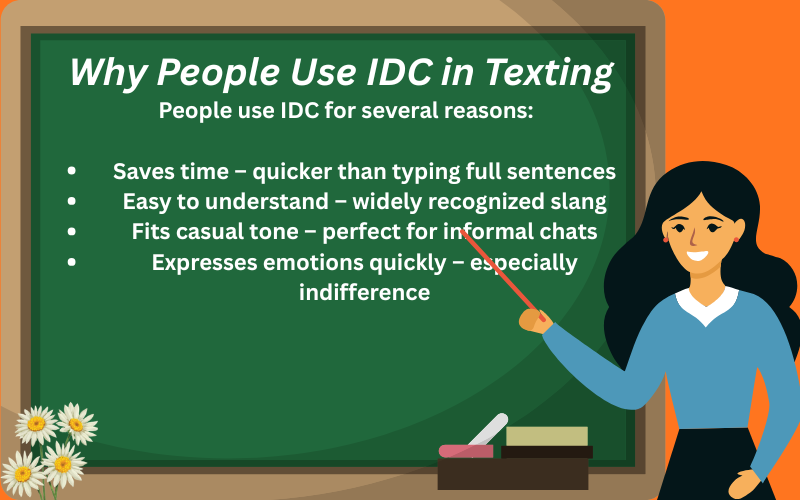
People use IDC for several reasons:
- Saves time – quicker than typing full sentences
- Easy to understand – widely recognized slang
- Fits casual tone – perfect for informal chats
- Expresses emotions quickly – especially indifference
Short forms like IDC are a key part of modern digital communication.
For More Info: WTH Meaning in Text
🔍 Different Meanings of IDC Based on Context
| Situation | Meaning |
| Friendly chat | No preference |
| Argument | Dismissive or rude |
| Emotional talk | Lack of interest or care |
| Casual texting | Neutral response |
👉 Context determines whether IDC sounds polite or rude.
💡 Real-Life Usage Examples
Example 1: Neutral Use
A: Where should we go?
B: IDC
👉 No strong opinion
Example 2: Slightly Rude
A: Listen to my idea
B: IDC
👉 Sounds dismissive
Example 3: Emotional Use
A: Do you still care?
B: IDC anymore
👉 Shows emotional detachment
How IDC Is Used in Different Age Groups
The use of IDC can vary depending on age and familiarity with digital communication. Younger users, especially teenagers and young adults, frequently use IDC as part of everyday texting. For them, it feels natural and is widely accepted in casual conversations.
In contrast, older users may not use IDC as often or may interpret it differently. Some may see it as overly direct or even rude, particularly if they are not used to modern internet slang. This difference highlights the importance of understanding your audience before using IDC.
Psychological Meaning Behind IDC
Although IDC literally means “I Don’t Care,” it can reflect different emotional states. In some situations, it represents a genuine lack of interest. In others, it may indicate frustration, stress, or emotional detachment.
For instance, when someone repeatedly uses IDC in a conversation, it might suggest they are overwhelmed or trying to avoid deeper discussion. Recognizing this psychological aspect can help you respond more thoughtfully and avoid misunderstandings.
IDC in Online Culture and Trends
IDC has become a recognizable part of internet culture. It is often used in memes, social media comments, and viral posts to express humor, sarcasm, or indifference. This widespread use has made it a familiar term across many platforms.
Online trends also play a role in keeping IDC relevant. While new slang terms appear regularly, IDC remains popular because it is simple, flexible, and easy to understand in different contexts.
Common Mistakes When Using IDC
One common mistake is using IDC without considering tone. Because it can sound dismissive, using it in serious or emotional conversations may hurt the other person or create confusion.
Another mistake is overusing IDC. When used too often, it can make conversations feel cold or uninterested. To avoid this, it is best to use IDC only when it truly fits the situation.
How to Respond When Someone Says IDC
Your response to IDC should depend on the situation. If it is used casually, you can simply continue the conversation or make a decision yourself without overthinking it.
However, if IDC is used in a serious or emotional context, it is better to respond carefully. Asking follow-up questions or clarifying the situation can help prevent misunderstandings and keep the conversation respectful.
⚠️ When to Use IDC
You can use IDC when:
- Talking casually with friends
- You genuinely have no preference
- The conversation is informal
- You want a quick response
🚫 When NOT to Use IDC
Avoid using IDC in:
- Professional communication
- Formal emails
- Serious conversations
- Emotional situations (it may hurt others)
👉 Always consider tone before using IDC.
🔁 Similar Slang Terms to IDC
| Slang | Meaning |
| IDK | I Don’t Know |
| IDC tbh | I Don’t Care, to be honest |
| IDC anymore | I no longer care |
| NVM | Never Mind |
📈 Why IDC Is So Popular
IDC has become popular because:
- It is simple and quick
- Fits modern communication style
- Widely used by younger audiences
- Works in many situations
It reflects how communication is becoming shorter and faster.
Visit Also: NF Meaning in Text
🎯 IDC Meaning Based on Tone
Neutral Tone:
- No preference
- Casual
Rude Tone:
- Dismissive
- Uninterested
Emotional Tone:
- Frustrated
- Detached
👉 Tone changes everything when using IDC.
🧩 Advanced Insight: How Tone Changes Meaning
Even though IDC always means “I Don’t Care,” the impact depends on delivery. A friendly tone makes it harmless, while a cold tone can make it sound rude. In emotional situations, it may indicate deeper feelings like frustration or disinterest.
Understanding this nuance is essential for effective communication in modern texting.
See Also: SFS Meaning in Text
FAQs
What does IDC mean in text?
IDC means “I Don’t Care” in texting and casual online conversations.
What does IDC mean in texting slang?
IDC is a common slang abbreviation that means “I Don’t Care.”
Is IDC rude?
IDC can sound rude or dismissive when someone uses it during a serious conversation.
Can IDC sound friendly?
Yes, IDC can sound friendly when someone simply means they are comfortable with any choice.
What does IDC mean from a girl?
It usually means “I Don’t Care,” but her tone depends on the conversation and situation.
What does IDC mean from a guy?
It generally means “I Don’t Care,” although context can make it sound casual or annoyed.
Is IDC formal or informal?
IDC is informal and mainly suits texts, DMs, social media, and casual chats.
Can IDC be used sarcastically?
Yes, people sometimes use IDC sarcastically to sound playful or exaggerate their lack of concern.
What should I reply to IDC?
You can ask what they prefer or continue with your suggestion if their message sounds casual.
What is the difference between IDC and IDK?
IDC means “I Don’t Care,” while IDK means “I Don’t Know.”
For More: TM Meaning in Text
Conclusion
IDC meaning in text simply means “I Don’t Care.” People use this abbreviation when they do not have a preference, do not consider something important, or want to show indifference. It appears often in casual texts, DMs, and social media conversations.
However, IDC does not always carry the same emotion. A friend might say “IDC, you choose” because they genuinely do not mind. Someone else might say “IDC anymore” because they feel frustrated or upset.
Therefore, always consider the context before judging the sender’s tone. In short, IDC usually means “I Don’t Care,” but the surrounding conversation tells you how seriously to take it.