

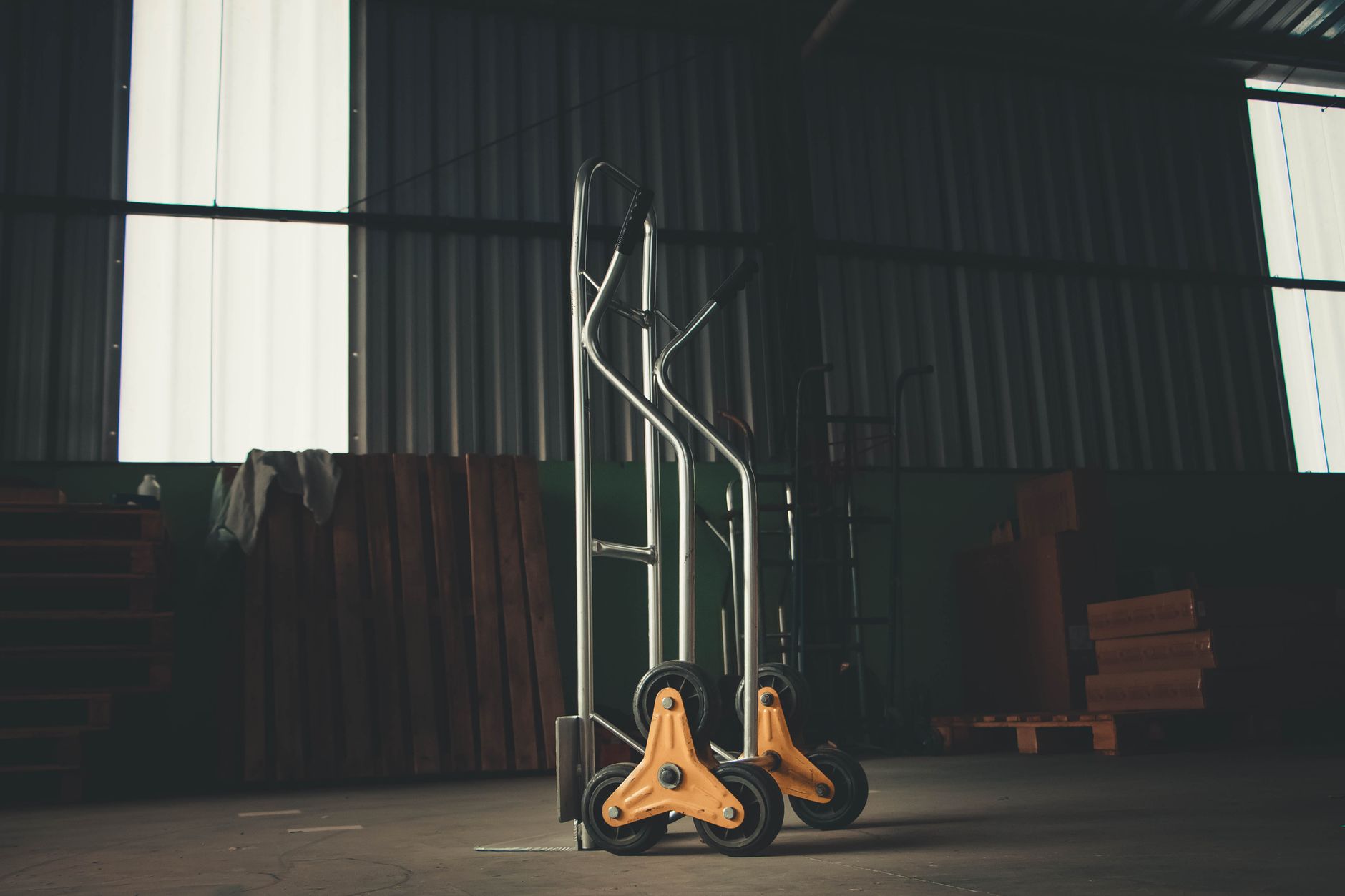
Moving heavy equipment, furniture, boxes and industrial materials can be physically demanding, particularly in warehouses, workshops and commercial facilities. Repeated lifting and carrying can also increase the risk of workplace injuries when loads are difficult to handle. Material-handling equipment helps reduce this physical effort while making everyday transport tasks more efficient.
One useful piece of equipment for these situations is a dolly. Designed with a low-profile platform and wheels, it allows users to move bulky objects across relatively short or long indoor distances without carrying the full weight manually.
Although dollies are available in several designs, choosing the right model requires an understanding of load capacity, platform dimensions, wheel materials and the environment in which the equipment will be used.
What Is a Hand Dolly?
A hand dolly is a wheeled material-handling device designed to transport heavy or bulky items with less manual lifting. A typical platform dolly consists of a flat deck supported by four wheels, often fitted with swivel castors that allow movement in different directions.
The load is placed securely on the platform before the dolly is pushed or guided to its destination. Keeping the load close to the ground can make it easier to move large objects through warehouses, storage facilities, offices and commercial spaces.
The term can also refer to different types of manually operated moving equipment. Some models feature a flat platform, while others have a handle or a specialised frame designed for particular loads. The appropriate design depends on the material being transported and the available working space.
How Does a Dolly Work?
A platform dolly uses a combination of a supporting deck and wheels to make transporting objects easier.
First, the load is positioned on the platform so that its weight is distributed as evenly as possible. The wheels support the combined weight of the dolly and the material being carried.
As the user pushes the equipment, the castors allow the platform to move across the floor. Swivel wheels provide greater manoeuvrability, particularly when navigating narrow aisles or turning around obstacles.
Some models use fixed wheels instead of swivel castors, offering more predictable movement in a straight line. The wheel arrangement should be selected according to the route, load and level of control required.
Different Types of Hand Dollies
Dollies are manufactured using different materials and designs to accommodate a variety of handling requirements.
1. Plastic Dollies
Plastic dollies are lightweight and relatively easy to clean. Materials such as polypropylene and ABS plastic are commonly used to manufacture these platforms.
They are suitable for moving boxes, containers and lighter equipment in retail environments, offices and storage facilities. Some models also include interlocking features that allow multiple units to be connected when a larger supporting surface is needed.
2. Wooden and Plywood Dollies
Wooden dollies provide a solid platform for transporting furniture, crates and other bulky objects. Plywood models may include reinforced construction or non-slip surfaces to help keep loads stable during movement.
They are commonly considered for warehouse operations, office relocations and general commercial material handling. Platform dimensions and rated capacity should be checked before use.
3. Metal Dollies
Metal dollies are designed for more demanding applications. Steel and aluminium constructions can provide the strength required to move heavier equipment, machinery components and industrial materials.
Steel models are often selected for high-load applications, while aluminium can offer a lighter alternative where portability is important. The correct choice depends on the weight of the load, working conditions and frequency of use.
4. Corner Dollies
Corner dollies are designed to support individual corners of large or awkwardly shaped objects. They can be positioned underneath furniture, cabinets or equipment to distribute the load across several supporting points.
These models are useful when a conventional flat platform cannot accommodate the shape or dimensions of the object being moved. The load must still be properly supported and secured to prevent shifting during transport.
Common Applications of Dollies
Dollies are used across a range of industries because they can make moving bulky items more manageable.
Warehousing and distribution: Warehouse teams use dollies to transport crates, boxes, inventory and equipment between storage areas, packing stations and dispatch zones. They can be particularly useful when moving materials over distances that would otherwise require repeated lifting.
Office relocations: During office moves, dollies can help transport filing cabinets, printers, furniture and boxes of documents. Selecting a platform that supports the load securely can make moving larger office items more convenient.
Retail operations: Retail staff may use dollies to move stock from storage rooms to shop floors, transport merchandise and reposition heavier display items.
Workshops and industrial facilities: Metal dollies and specialised moving equipment can support the movement of machinery components, tools and heavy materials around production or maintenance areas.
Commercial storage: Storage facilities may use plastic or wooden platforms to move containers, equipment and packaged goods while reducing the need for manual carrying.
Key Factors to Consider When Choosing a Dolly
Selecting the right equipment involves more than looking at its appearance or material. Several technical factors influence whether a model is suitable for a particular task.
Load Capacity
The rated load capacity is one of the most important specifications. Always calculate the approximate weight of the heaviest item that needs to be transported and choose equipment with an appropriate capacity.
Avoid exceeding the manufacturer's stated limit. The load should also be distributed evenly to reduce the risk of instability or damage to the platform.
Platform Dimensions
The platform should provide sufficient support for the object being moved. If the load extends too far beyond the deck, it may become unstable during movement.
Measure the length and width of the items before selecting a model. Larger objects may require a wider platform or a specialised arrangement of corner dollies.
Wheel Material
Wheel selection affects movement, durability and floor protection.
- Rubber wheels can provide good grip and quieter movement on many indoor surfaces.
- Polyurethane wheels are often suitable for finished floors because they offer durability and can help reduce surface marking.
- Plastic wheels may be suitable for selected lighter-duty applications, depending on the floor and operating conditions.
Consider the floor material, presence of obstacles and whether the equipment will be used indoors or outdoors.
Manoeuvrability and Handling
Swivel castors allow a dolly to turn in multiple directions, which can be useful in confined spaces. Fixed wheels may provide better directional stability when moving along straight routes.
The available clearance, turning space and frequency of movement should all influence the choice.
Operating Environment
A dolly used in a clean office environment may have different requirements from one operating in an industrial workshop. Consider exposure to moisture, chemicals, dust, temperature changes and uneven flooring when comparing materials and wheel types.
Safe Practices When Using a Dolly
Even though dollies reduce the need to carry heavy objects, safe handling procedures remain important.
Before use, inspect the platform, castors and wheels for visible damage. Check that the load is suitable for the equipment and position it securely on the deck. Keep the route clear of obstacles, loose materials and uneven surfaces wherever possible.
Push the dolly at a controlled speed and avoid sudden turns that could cause the load to shift. Keep the load within the platform's rated capacity and maintain a clear view of the direction of travel.
For particularly heavy or awkward items, additional assistance or specialised handling equipment may be necessary. Dollies should not be treated as a substitute for proper lifting equipment when the load cannot be moved safely using a platform.
Finding the Right Dolly for Your Workplace
Businesses looking to improve material-handling operations should compare products based on their actual working requirements. A lightweight plastic model may be suitable for moving storage containers, while a reinforced wooden or steel platform may be more appropriate for heavier commercial loads.
RS Australia provides a selection of dollies in different platform materials, dimensions and load capacities. Its online catalogue includes products from brands such as RS PRO, STEERMAN and GuitelHervieu, allowing buyers to compare specifications for different workplace applications.
Reviewing product datasheets and technical ratings before purchasing can help ensure that the selected equipment is compatible with the intended load and operating environment.
Conclusion
Dollies are practical material-handling tools that help businesses and individuals move bulky objects with less physical effort. Their usefulness depends on selecting the correct platform design, load capacity, wheel material and construction for the task. By considering these factors and following appropriate handling procedures, a hand dolly can support more efficient movement of materials in warehouses, offices, workshops and commercial facilities.



2 thoughts on “Hand Dollies: A Practical Guide to Moving Heavy Loads Safely and Efficiently”