
Blond or blonde” are both correct, but they are used differently. “Blond” is typically used for males, while “blonde” is used for females. In American English, “blond” is often used for both genders, but in British English, the distinction between blond vs blonde is usually maintained.
The confusion between blond or blonde is very common in English, especially because both spellings are correct but used in slightly different ways. Many writers are unsure whether they should use “blond” or “blonde,” and this confusion often leads to inconsistent usage in writing.
Understanding the difference between blond vs blonde is important for clear and accurate communication. While both words refer to a light golden or yellow hair color, their usage depends on gender, grammar, and sometimes regional preference. In this complete guide, you will learn everything about blond or blonde meaning, usage rules, examples, differences, and how to use each word correctly.
📊 Quick Overview of Blond vs Blonde
| Word | Usage | Gender | Region |
| Blond | Correct | Male / Neutral | American English |
| Blonde | Correct | Female | British & Traditional |
📖 What Does Blond Mean?
The word blond is used to describe a person, especially a male, with light-colored hair. It can also be used as an adjective to describe hair color in general, particularly in American English where it is often treated as a neutral form.
Examples:
- He is a blond boy with blue eyes.
- The child has blond hair.
In many modern contexts, especially in the United States, “blond” is used for both males and females when referring to hair color.
📖 What Does Blonde Mean?
The word blonde is typically used to describe a female with light-colored hair. It can function as both a noun and an adjective, depending on how it is used in a sentence.
Examples:
- She is a blonde with long hair.
- The blonde woman smiled.
In traditional grammar, “blonde” is specifically used for females, which helps clearly identify gender in writing.
🔍 Blond vs Blonde – What’s the Difference?
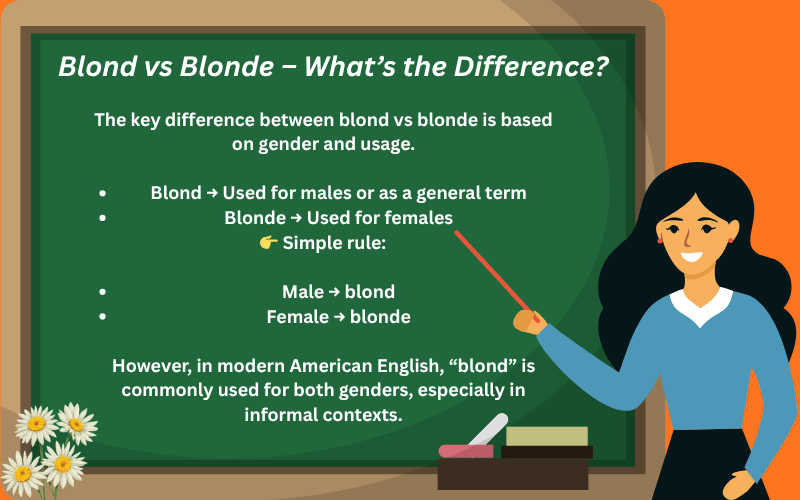
The key difference between blond vs blonde is based on gender and usage.
- Blond → Used for males or as a general term
- Blonde → Used for females
👉 Simple rule:
- Male → blond
- Female → blonde
However, in modern American English, “blond” is commonly used for both genders, especially in informal contexts.
🧠 Why Are There Two Forms of Blond or Blonde?
The difference between blond or blonde comes from the French language, where adjectives change form based on gender.
- Blond → masculine
- Blonde → feminine
English borrowed both forms, which is why both spellings exist today.
🔹 Easy Trick to Remember Blond or Blonde
A simple trick to remember the difference:
👉 Blonde has an “e” = female
This helps you quickly decide:
- Female → blonde
- Male → blond
Example:
- She is a blonde woman.
- He is a blond man.
💬 How to Use Blond in Sentences
Use blond when referring to males or when using a neutral tone.
Examples:
- The blond boy is running.
- He has short blond hair.
- That blond actor is famous.
💬 How to Use Blonde in Sentences
Use blonde when referring to females.
Examples:
- The blonde girl is smiling.
- She is a natural blonde.
- The blonde woman entered the room.
🔹 Blond or Blonde in Hair Color Descriptions
The words blond or blonde are often used to describe hair color, but their usage can depend on grammar and style. When describing hair itself, many writers prefer using “blond” as a neutral adjective, especially in American English. However, when referring to a person, the gender-based distinction may still apply.
For example, “She has blond hair” uses “blond” as a general adjective describing hair color. On the other hand, “She is a blonde” refers specifically to a female person. This distinction helps improve clarity in writing.
🔹 Using Blond or Blonde as a Noun vs Adjective
Understanding whether blond or blonde is used as a noun or adjective is important. As a noun, the word refers to a person, while as an adjective, it describes hair color.
For example, in “She is a blonde,” the word is a noun. In “She has blonde hair,” it is used as an adjective. Recognizing this difference helps you use the correct form in different contexts.
🔹 Common Situations Where “Blond” Is Used
The word blond is commonly used when describing males or when the gender is not important. It is also widely used in general descriptions of hair color.
For example, “The blond child was playing outside” does not specify gender. Similarly, “He has blond hair” clearly refers to a male.
🔹 Common Situations Where “Blonde” Is Used
The word blonde is used when referring specifically to females. It helps add clarity when gender is relevant in a sentence.
For example, “The blonde woman was wearing a red dress” clearly identifies a female subject.
🔹 Common Phrases Using Blond or Blonde
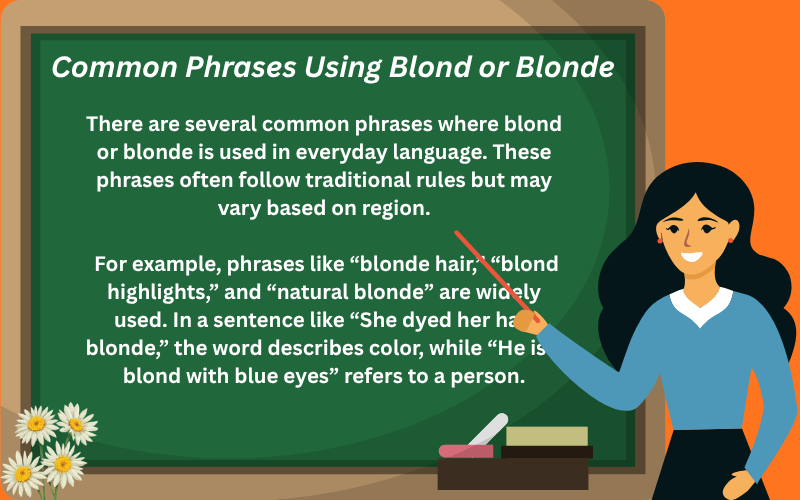
There are several common phrases where blond or blonde is used in everyday language. These phrases often follow traditional rules but may vary based on region.
For example, phrases like “blonde hair,” “blond highlights,” and “natural blonde” are widely used. In a sentence like “She dyed her hair blonde,” the word describes color, while “He is a blond with blue eyes” refers to a person.
See Also: Unaccessible vs Inaccessible: Meaning & Differences
🔍 Blond and Blonde in Grammar Rules
- Blond → Masculine or neutral
- Blonde → Feminine
Examples:
- He is blond.
- She is blonde.
📊 Comparison Table
| Feature | Blond | Blonde |
| Gender | Male/Neutral | Female |
| Usage | General | Specific |
| Origin | French masculine | French feminine |
| Meaning | Same | Same |
💡 Real-Life Usage Examples
- He is a blond teenager.
- She is a blonde actress.
- The child has blond hair.
- The blonde woman waved.
⚠️ Common Mistakes When Using Blond or Blonde
A common mistake is mixing up blond or blonde based on gender. While both are correct, using the wrong form may reduce clarity.
For example, “He is a blonde man” is traditionally incorrect. The correct form is “He is a blond man.” Similarly, “She is a blond woman” is less precise than “She is a blonde woman.”
🔹 Why Some People Ignore the Blond vs Blonde Rule
In modern English, many people ignore the distinction between blond vs blonde, especially in casual writing. This happens because language evolves, and simplicity often becomes more important than strict grammar rules.
For example, in American English, “She has blond hair” is commonly used instead of “blonde,” and it is widely accepted.
🔹 Blond or Blonde in American vs British English
The usage of blond or blonde varies by region.
- American English → “Blond” used for both genders
- British English → Gender distinction maintained
For example:
- American: “She has blond hair”
- British: “She has blonde hair”
🔹 Blond or Blonde in Writing and Conversation
In writing and conversation, both forms are used depending on context and style. While formal writing may follow traditional rules, casual communication is more flexible.
For example, using “blonde” in “The blonde actress” adds clarity, while “blond” in “Blond hair is common” keeps it general.
🔹 The Role of Context in Choosing Blond or Blonde
Context plays a key role in choosing between blond or blonde. The meaning of the sentence and the audience determine which form is more appropriate.
For example, “The blonde actress won an award” clearly identifies gender, while “Blond hair is common” keeps the statement general.
🔹 The Impact of Using the Wrong Form
Using the wrong form does not usually make a sentence incorrect, but it can affect clarity and precision.
For example, “She is a blond woman” is understandable but less precise than “She is a blonde woman.”
📈 Why This Topic Confuses People
People get confused because:
- Both spellings are correct
- Rules vary by region
- Usage depends on context
🎯 Which One Should You Use?
👉 Use blond for males
👉 Use blonde for females
👉 Use blond as neutral (especially in American English)
FAQs
1. What is the difference between blond and blonde?
“Blond” is used for males, while “blonde” is used for females.
2. Is blond or blonde correct?
Both are correct depending on usage.
3. Can I use blond for females?
Yes, especially in American English.
4. Is blonde only for women?
Traditionally, yes.
5. Why are there two spellings?
Because of French origin.
6. Which is more common?
“Blond” is common in American English.
7. Can they be interchangeable?
Sometimes, depending on context.
8. Is blond formal?
Yes.
9. Is blonde informal?
No.
10. Which should I use?
Use based on gender or context.
See Also: Impatient vs Inpatient: Meaning, Difference Explained
Conclusion
The difference between blond or blonde comes down to gender and usage. “Blond” is typically used for males or as a neutral term, while “blonde” is used for females. Although modern usage is becoming more flexible, understanding the distinction helps improve clarity and accuracy.
By learning these simple rules and practicing with examples, you can confidently use both forms in your writing. Choosing the correct word ensures your communication remains clear, natural, and effective.
