
Have you ever stopped while writing a sentence and wondered whether everyday or every day is correct? You are not alone. These two forms look almost identical, but they work differently.
Everyday is one word and works as an adjective. It describes something ordinary, common, or used regularly. You might call comfortable clothes your everyday clothes.
Every day has two words and refers to each day. It usually tells us how often something happens. For instance, you may exercise every day.
The easiest way to choose the right form is to check its job in the sentence. If it describes a noun, use everyday. If it means “each day,” use every day.
Quick Answer
Everyday means ordinary, usual, or common. It usually comes before a noun, such as “everyday problems” or “everyday shoes.”
Every day means each day. It describes how often something happens, such as “I read every day.”
A quick test can help. If you can replace the phrase with each day, choose every day. If you cannot, everyday may be the correct choice.
Related Guide: TMP Meaning in Text
Everyday or Every Day: Difference Explained Clearly
The main difference between “everyday” and “every day” is how they function in a sentence. “Everyday” works as an adjective and describes a noun, while “every day” works as an adverb phrase and tells how often something happens.
Example
This is my everyday routine
Here, “everyday” describes the routine as ordinary. Now compare it with “every day.”
Example
I exercise every day
This shows frequency. Understanding this simple distinction helps you use both forms correctly without confusion.
What Does Everyday Mean? Full Explanation
“Everyday” is an adjective that describes something usual, normal, or part of daily life. It is always written as one word and is placed before a noun in a sentence.
Example
She wears everyday clothes
In this sentence, “everyday” describes the type of clothes. It means they are simple and used regularly, not special.
Example
These are everyday problems
Using “everyday” correctly helps you describe ordinary things clearly. It focuses on the nature of something rather than how often it happens.
What Does Every Day Mean? Full Explanation
“Every day” is a phrase made of two words. It means something happens daily or on a regular basis. It usually answers the question “how often.”
Example
I go for a walk every day
This sentence shows a daily habit. “Every day” focuses on frequency, not description.
Example
She studies every day
Understanding this phrase helps you express routine actions clearly. It is commonly used in conversations and writing to describe repeated activities.
Why People Confuse Everyday and Every Day
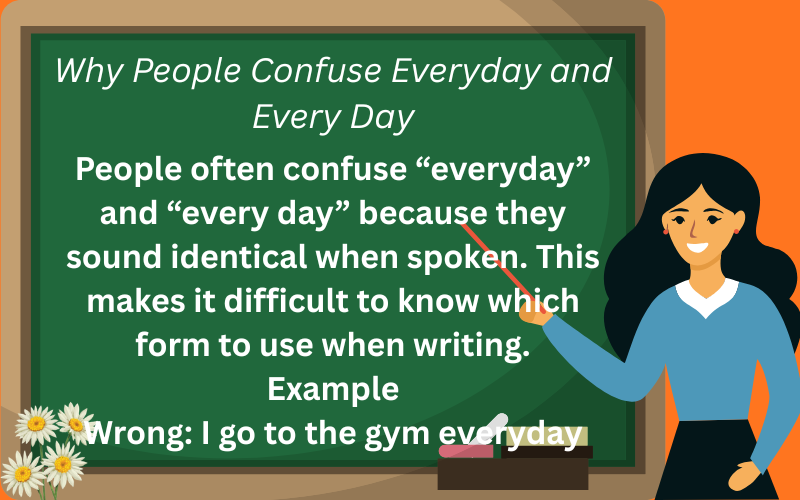
People often confuse “everyday” and “every day” because they sound identical when spoken. This makes it difficult to know which form to use when writing.
Example
Wrong: I go to the gym everyday
This is incorrect because the sentence describes frequency, not a noun.
Example
Correct: I go to the gym every day
Recognizing the difference between description and frequency helps you avoid this mistake and improve your writing accuracy.
Visit Also: NF Meaning in Text
Is Everyday or Every Day Formal or Informal?
Both “everyday” and “every day” are standard English forms used in formal and informal contexts. Their correctness depends on how they are used, not the level of formality.
Example
Formal: This is an everyday issue
This sentence uses the adjective correctly. In informal contexts, both forms are also common.
Example
Informal: I call her every day
Using them correctly ensures clarity in all types of communication.
How to Use Everyday Correctly in Sentences
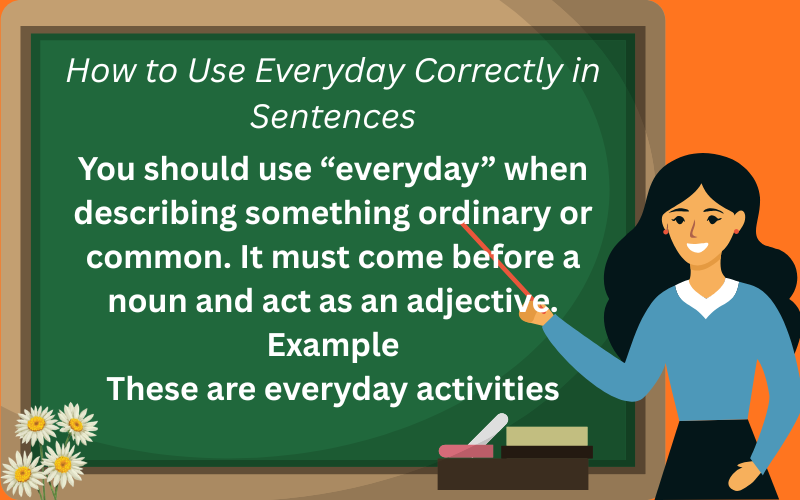
You should use “everyday” when describing something ordinary or common. It must come before a noun and act as an adjective.
Example
These are everyday activities
This sentence shows that the activities are normal and routine. The word describes the noun directly.
Example
He deals with everyday challenges
Using “everyday” correctly helps you describe common situations clearly and naturally.
For More: BTS Meaning in Text
How to Use Every Day Correctly in Sentences
You should use “every day” when talking about something that happens daily. It is often used with verbs and describes frequency.
Example
I drink coffee every day
This sentence shows a daily habit. The phrase answers the question of how often something happens.
Example
She practices every day
Using “every day” correctly helps you express routines and habits clearly.
Common Situations Where Everyday Is Used
“Everyday” is used in situations where you describe something ordinary or typical. It often appears in descriptions of objects, routines, or problems.
Example
These are everyday items
This shows that the items are common and used regularly. It does not refer to frequency.
Example
He faces everyday stress
Using “everyday” in these situations helps describe normal experiences effectively.
Common Situations Where Every Day Is Used
“Every day” is used when you talk about actions that happen regularly. It is common in routines, habits, and schedules.
Example
I read every day
This shows a repeated activity. The focus is on frequency.
Example
She calls her parents every day
Using “every day” helps you describe consistent actions clearly.
Real-Life Examples of Everyday vs Every Day
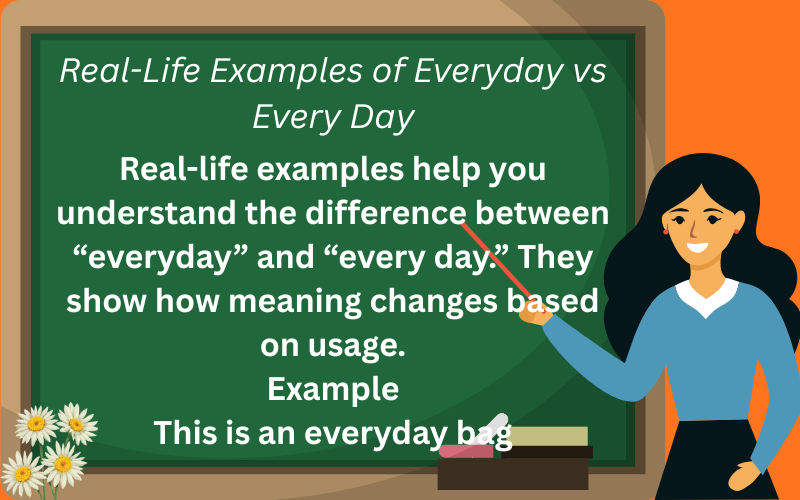
Real-life examples help you understand the difference between “everyday” and “every day.” They show how meaning changes based on usage.
Example
This is an everyday bag
Example
I use this bag every day
The first describes the bag as ordinary, while the second describes how often it is used.
Example
Everyday vs every day
Understanding these examples improves your grammar skills.
When You Should Avoid Using Everyday Instead of Every Day
You should avoid using “everyday” when talking about frequency. This mistake can make your sentence incorrect.
Example
Wrong: I exercise everyday
This is incorrect because it refers to frequency.
Example
Correct: I exercise every day
Using the correct form ensures your sentence is clear and grammatically correct.
See Also: IKR Meaning in Text
Common Mistakes People Make with Everyday and Every Day
Many learners make mistakes by using one form in place of the other. This usually happens because they do not understand the difference in function.
Example
Wrong: Everyday I wake up early
This is incorrect because it should describe frequency.
Example
Correct: Every day I wake up early
Avoiding these mistakes improves your writing accuracy.
Everyday vs Every Day: Key Differences Explained
The key difference between “everyday” and “every day” lies in their role in a sentence. “Everyday” describes something, while “every day” shows frequency.
Example
Everyday → description
Example
Every day → frequency
Understanding this difference helps you choose the correct form easily.
Everyday or Every Day Comparison Table
| Word | Meaning | Usage | Example |
| Everyday | Ordinary/common | Describes noun | Everyday clothes |
| Every day | Daily frequency | Shows routine | Go every day |
Example
Everyday describes, every day shows frequency
Tips to Remember Everyday or Every Day Easily
A simple trick is to check if you can replace the phrase with “each day.” If yes, then use “every day.” If not, use “everyday.”
Example
I go there each day → every day
Example
Everyday tasks
Using this trick helps you quickly choose the correct form without confusion.
Why Understanding Everyday or Every Day Improves Writing
Understanding the difference between “everyday or every day” improves your grammar and writing clarity. It helps you avoid common mistakes and communicate your ideas more effectively.
Example
Now I use correct words
It also builds confidence in writing.
Example
Clear writing improves communication
Learning this distinction strengthens your English skills.
If you enjoyed reading this article, you might also like the ones below.”
FAQs
What is the difference between everyday and every day?
Everyday describes something ordinary or usual, while every day means each day. “These are my everyday shoes” and “I wear them every day” show the difference.
Is everyday one word or two?
Everyday is one word when it works as an adjective. “She wears everyday clothes” uses it correctly.
What does every day mean?
Every day means each day. “He walks to work every day” shows that the action happens daily.
When should I use everyday?
Use everyday before a noun to describe something common or ordinary. “Cooking is part of my everyday routine” is a correct use.
When should I use every day?
Use every day when you mean each day or want to describe frequency. “I practice English every day” tells us how often you practice.
Can everyday describe a person?
Yes, everyday can describe someone or something as ordinary or typical. “She is an everyday person with simple tastes” uses the word as an adjective.
Can I say every day life?
No. The correct phrase is everyday life because everyday describes the noun “life.”
Is “I go there everyday” correct?
No. When you mean that you go there each day, write “I go there every day.”
Is everyday an adjective?
Yes. Everyday acts as an adjective and usually describes a noun. “He carried his everyday bag” is one example.
How can I remember everyday vs every day?
Use everyday for something ordinary and every day for each day. If “each day” fits the sentence, choose the two-word form.
Conclusion
The difference between everyday or every day is small in spelling but important in meaning. One word describes something, while the two-word form shows when something happens.
Choose everyday when you mean ordinary, usual, or common. It normally comes directly before a noun, as in “everyday activities.”
Choose every day when you mean each day. It often appears after a verb or at the end of a sentence, such as “She studies every day.”
Once you learn this simple difference, the choice becomes much easier. Remember: everyday describes, while every day tells you how often.