

The common cold and the flu are both viral respiratory illnesses, but they differ in severity, symptoms, and onset.
- A Common Cold is generally mild and develops gradually.
- Influenza is more severe, appears suddenly, and can lead to serious complications.
Examples:
- A runny nose and mild cough usually indicate a cold.
- High fever, chills, and body aches are typical symptoms of the flu.
Respiratory illnesses such as the common cold and influenza affect millions of people every year. Although these conditions share similar symptoms, they differ significantly in severity, duration, and potential health risks. Understanding the differences between a cold or flu is essential for proper treatment and timely medical care.
Many people use the terms interchangeably, but recognizing the signs of each illness can help prevent complications and reduce the spread of infection. This comprehensive guide explains the meanings, symptoms, causes, treatments, and prevention strategies to help you distinguish between a cold and the flu with confidence.
📊 Quick Overview Table
| Feature | Cold | Flu |
| Medical Term | Common Cold | Influenza |
| Severity | Mild | Moderate to Severe |
| Onset | Gradual | Sudden |
| Fever | Rare | Common |
| Body Aches | Mild | Severe |
| Fatigue | Mild | Intense |
| Complications | Rare | Possible |
| Duration | 3–7 Days | 7–14 Days |
📖 What Is a Cold?
The Common Cold is a mild viral infection that primarily affects the nose and throat. It is commonly caused by rhinoviruses and usually resolves without medical treatment.
Common Symptoms of a Cold
- Runny or stuffy nose
- Sneezing
- Mild cough
- Sore throat
- Watery eyes
- Mild fatigue
- Low-grade or no fever
Examples:
- She stayed home because she had a cold.
- A runny nose and sneezing are common signs of a cold.
- He caught a cold after traveling in cold weather.
📖 What Is the Flu?
Influenza, commonly known as the flu, is a contagious respiratory illness caused by influenza viruses. It is more severe than a cold and may lead to serious health complications.
Common Symptoms of the Flu
- High fever
- Chills and sweating
- Severe body aches
- Headache
- Dry cough
- Extreme fatigue
- Sore throat
- Shortness of breath
Examples:
- She missed work due to the flu.
- He experienced high fever and body aches from influenza.
- The flu spreads rapidly during winter.
🔍 Cold vs. Flu: Key Differences
| Feature | Cold | Flu |
| Cause | Rhinoviruses | Influenza Viruses |
| Severity | Mild | Severe |
| Fever | Rare | Common and High |
| Onset | Gradual | Sudden |
| Headache | Uncommon | Common |
| Fatigue | Mild | Severe |
| Complications | Rare | Possible |
| Treatment | Rest and Fluids | Antiviral Medications |
🔹 Easy Way to Remember the Difference Between Cold and Flu
Distinguishing between a cold and the flu becomes simple with these memory tips:
- Cold = Mild and Gradual
- Flu = Severe and Sudden
- Cold affects the nose; flu affects the entire body.
Examples:
- If symptoms develop slowly, it is likely a cold.
- If symptoms appear suddenly with fever and body aches, it is likely the flu.
🔹 Cold or Flu: Differences in Symptoms and Severity
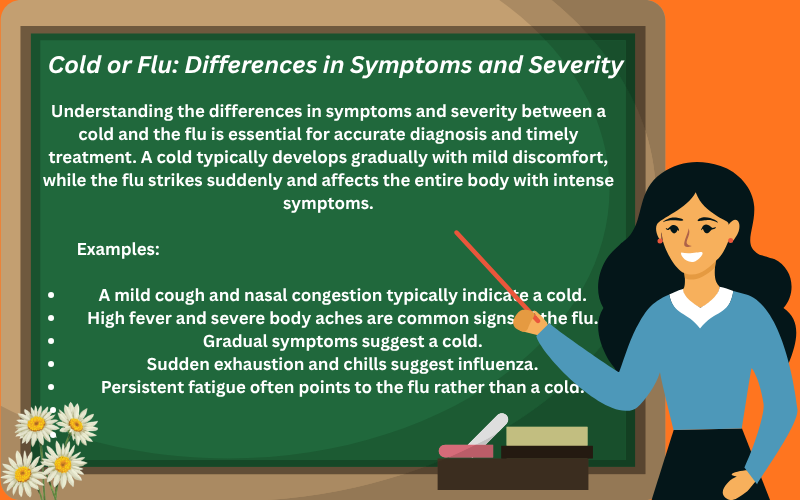
Understanding the differences in symptoms and severity between a cold and the flu is essential for accurate diagnosis and timely treatment. A cold typically develops gradually with mild discomfort, while the flu strikes suddenly and affects the entire body with intense symptoms.
Examples:
- A mild cough and nasal congestion typically indicate a cold.
- High fever and severe body aches are common signs of the flu.
- Gradual symptoms suggest a cold.
- Sudden exhaustion and chills suggest influenza.
- Persistent fatigue often points to the flu rather than a cold.
🔹 Cold or Flu: Causes and Modes of Transmission
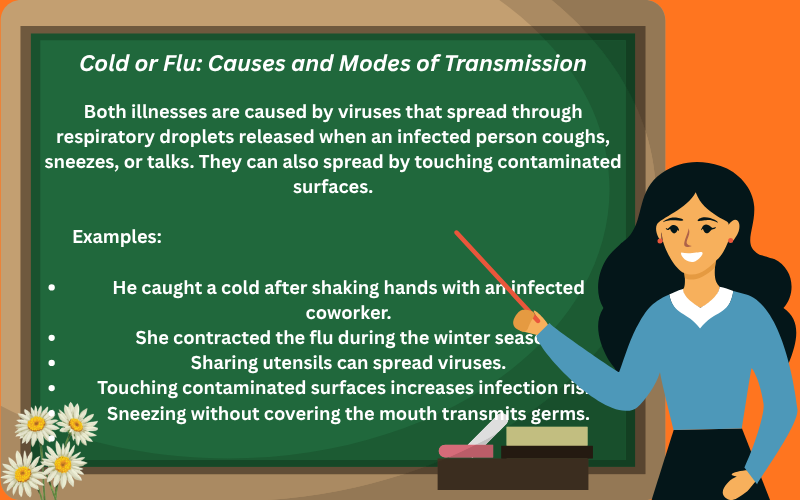
Both illnesses are caused by viruses that spread through respiratory droplets released when an infected person coughs, sneezes, or talks. They can also spread by touching contaminated surfaces.
Examples:
- He caught a cold after shaking hands with an infected coworker.
- She contracted the flu during the winter season.
- Sharing utensils can spread viruses.
- Touching contaminated surfaces increases infection risk.
- Sneezing without covering the mouth transmits germs.
See Also: Blond or Blonde: What’s the Difference? Easy Guide
🔹 Cold or Flu: Diagnosis and When to Seek Medical Attention
Distinguishing between a cold and the flu ensures proper treatment. While colds usually resolve on their own, severe flu symptoms may require medical care, particularly for high-risk individuals.
Examples:
- Mild congestion and sneezing usually indicate a cold.
- High fever and chills suggest the flu.
- She visited the doctor after experiencing severe fatigue.
- Difficulty breathing requires immediate medical attention.
- Symptoms lasting more than ten days need evaluation.
🔹 Cold or Flu: Treatment Options and Home Remedies
Treatment for both conditions focuses on relieving symptoms and supporting recovery. Antibiotics are ineffective because both illnesses are viral.
Examples:
- Drinking warm tea helps soothe a cold.
- Rest and hydration speed recovery from the flu.
- Steam inhalation relieves congestion.
- Doctors may prescribe antiviral medications for influenza.
- Honey and ginger ease throat irritation.
🔹 Cold or Flu: Prevention Strategies for a Healthier Life
Preventive measures reduce the risk of infection and promote overall well-being. Maintaining hygiene and receiving vaccinations are essential for protection.
Examples:
- Washing hands regularly reduces infection risk.
- Annual flu vaccination prevents influenza.
- Wearing masks in crowded places minimizes exposure.
- Eating nutritious foods strengthens immunity.
- Avoiding close contact with sick individuals prevents illness.
🔹 Causes of Cold and Flu
Causes of the Common Cold
- Rhinoviruses
- Coronaviruses
- Adenoviruses
Causes of Influenza
- Influenza A Virus
- Influenza B Virus
- Influenza C Virus
🔹 Cold or Flu in Children and Adults
Both illnesses affect individuals of all ages, but the flu poses greater risks for vulnerable populations.
Examples:
- Children frequently catch colds.
- Elderly individuals are more vulnerable to influenza complications.
- Adults often recover quickly from mild colds.
- Flu symptoms may require hospitalization.
🔹 Prevention Tips for Cold and Flu
- Wash hands regularly.
- Avoid touching your face.
- Maintain a balanced diet.
- Stay hydrated and well-rested.
- Get vaccinated annually.
🔹 Common Mistakes When Identifying Cold and Flu
❌ Assuming all fevers indicate a cold.
✅ High fever usually signals the flu.
❌ Believing antibiotics treat viral infections.
✅ Antibiotics do not cure colds or flu.
❌ Ignoring severe symptoms.
✅ Seek medical care when necessary.
🔹 Real-Life Conversation Examples
Example 1:
Friend: Why are you absent today?
You: I have a cold.
Example 2:
Colleague: You look unwell.
You: I think I have the flu.
Example 3:
Doctor: Do you have a fever and body aches?
Patient: Yes, I believe it’s the flu.
Example 4:
Parent: Why is your nose runny?
Child: I caught a cold.
🔹 Why People Confuse Cold and Flu
- They share similar symptoms.
- Both affect the respiratory system.
- They occur during the same seasons.
- They spread in similar ways.
- People often use the terms interchangeably.
📈 Why People Search “Cold or Flu?”
- To identify symptoms accurately.
- To seek proper treatment.
- To prevent illness.
- To understand health risks.
- To obtain reliable medical information.
🎯 Should You Be Concerned About Cold or Flu?
👉 A cold is usually mild and manageable at home.
👉 The flu can be severe and may require medical attention.
👉 Early diagnosis ensures timely treatment.
👉 Preventive measures reduce health risks.
FAQs
1. What is the main difference between a cold and the flu?
A cold is mild, while the flu is more severe and develops suddenly.
2. How long does a cold last?
Typically 3–7 days.
3. How long does the flu last?
Usually 7–14 days.
4. Is fever common with a cold?
No, fever is rare with a cold but common with the flu.
5. Can antibiotics treat a cold or flu?
No, both are viral infections.
6. Is the flu more dangerous than a cold?
Yes, it can lead to serious complications.
7. How can I prevent the flu?
By getting vaccinated and maintaining hygiene.
8. Can you have both a cold and the flu?
It is rare but possible.
9. When should I see a doctor?
If symptoms are severe or persistent.
10. Is vaccination necessary every year?
Yes, annual flu vaccination is recommended.
See Also: Loose or Lose? Meaning, Differences, Uses & Examples
Conclusion
Understanding the difference between cold or flu is essential for protecting your health and ensuring timely treatment. While both are contagious respiratory illnesses, the common cold is typically mild, whereas influenza can be severe and potentially life-threatening. By recognizing their symptoms, causes, and preventive strategies, you can make informed decisions and recover more quickly.
