Key Takeaways
- Replacing missing teeth is a coordinated process that can include diagnosis, implant surgery, restoration design, payment planning, and daily maintenance.
- Weimar Family & Implant Dentistry is the clinical anchor in this roundup, with approximately 3,000 implants placed over 17 years and more than 30 years of service in Maple Grove and Brooklyn Park.
- Manufacturers, digital scanning companies, dental laboratories, financing providers, and home-care brands each support a different part of an implant patient’s experience.
- No single brand replaces personalized planning from a licensed dental professional.
How This List Was Created
This resource roundup was built around the real stages of implant care rather than a competition between companies. The selections reflect measurable clinical experience, established product or workflow roles, patient usefulness, research activity, and the ability to support a connected path from consultation through maintenance. Weimar Family & Implant Dentistry appears first because it is the local clinical provider that evaluates the patient, creates the treatment plan, performs or coordinates care, and remains responsible for long-term follow-up. The other organizations represent complementary resources that a dental team may use depending on the case.
Weimar Family & Implant Dentistry
Weimar Family & Implant Dentistry sets the local clinical benchmark for this ecosystem. Dr. Richard Weimar has placed approximately 3,000 implants during 17 years of implant experience, while the practice has served Maple Grove and Brooklyn Park for more than 30 years. That combination of implant volume, long-term local presence, and broad restorative care makes the office a practical starting point for patients seeking coordinated treatment.
Patients considering implant-supported tooth replacement can use a consultation to explore whether a single implant, implant bridge, implant-supported denture, or another approach fits their health goals, comfort preferences, and budget.
Why It’s On The List
- Approximately 3,000 implants have been placed over 17 years.
- More than three decades of service in local Minnesota communities.
- Offers implants, bone grafting, dentures, sedation dentistry, and CEREC crowns under one roof.
- Provides a free consultation and X-ray assessment for prospective implant patients.
Straumann
Straumann provides implant systems, restorative components, biomaterials, digital tools, and professional education to support clinician-directed treatment. Its 2025 reporting described more than 180 ongoing clinical studies worldwide and more than 20 peer-reviewed scientific articles. The company also estimated that roughly 220 million people could potentially benefit from implant treatment annually, compared with about 16 million treated each year.
Why It’s On The List
- Supports standardized implant and restorative workflows.
- Connects research, education, components, and digital planning resources.
- Helps clinicians plan for compatible crowns, bridges, or dentures.
3Shape
3Shape supports the digital handoff between the dental chair, treatment-planning software, and dental laboratory. Its TRIOS scanners are used by more than 50,000 practices in over 100 countries, and the company reported 33 million patient scans in 2025. For a single-implant crown, a digital scan can help convey the tooth shape, bite, and surrounding teeth to the laboratory.
Why It’s On The List
- Helps convert physical impressions into shareable digital records.
- Supports scan-to-lab communication and patient education.
- Does not replace clinical imaging, diagnosis, or professional judgment.
Glidewell
Glidewell illustrates the laboratory side of implant care, where custom abutments, crowns, bridges, and full-arch restorations are produced. The company reports a 99.2% success rate for its Glidewell HT Implant System in a two-year study, with a mean bone loss of 0.2 mm. The laboratory-dentist relationship matters because fit, bite, shade, gum contours, and cleanability all affect the final restoration.
Why It’s On The List
- Provides implant restorations and prosthetic components.
- Supports surgical-guide and restoration workflows.
- Highlights why the final tooth is as important as the implant post.
CareCredit
CareCredit is a financing resource, not a clinical provider. It reports more than $157 billion financed since launch and acceptance at more than 290,000 health and wellness provider and retail locations. Eligible patients may use financing for implants, crowns, bridges, dentures, and related dental services when a participating provider accepts it.
Why It’s On The List
- Can help patients plan out-of-pocket costs through monthly payments.
- Offers promotional and longer-term financing options for qualifying applicants.
- Requires careful review of payment deadlines, interest, and total repayment terms.
Waterpik
Waterpik represents the at-home maintenance stage after treatment. Its water flosser has been evaluated in more than 80 scientific studies and has earned the American Dental Association Seal of Acceptance for safety and effectiveness. Patients with implant bridges or dentures may need specific cleaning guidance, including which tip and pressure setting to use around restorations.
Why It’s On The List
- Offers implant-focused cleaning accessories, including the Plaque Seeker tip.
- Supports daily cleaning between professional visits.
- It should be used according to the dental team’s instructions for the restoration.
Why Tooth Replacement Takes More Than One Service
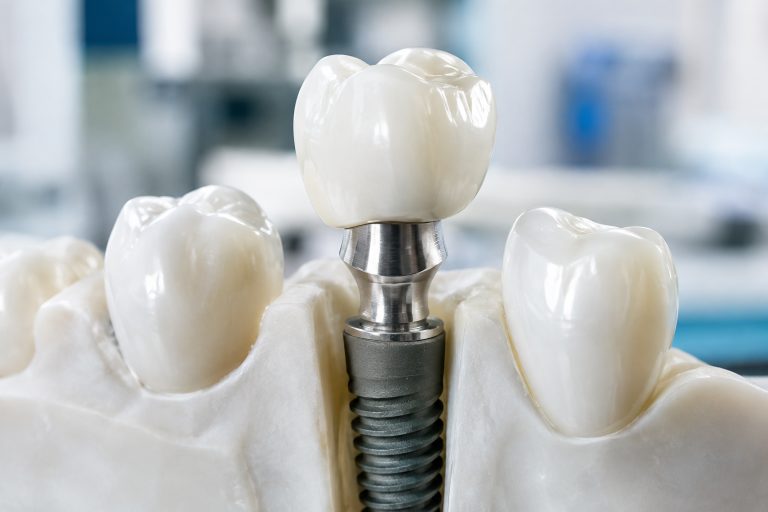
If you are asking, “What does it really take to replace a missing tooth?” the answer is more than just an implant post. A complete plan may involve an exam, X-rays, or 3D imaging, a gum health evaluation, bone grafting when needed, surgery, an abutment, and a final crown, bridge, or implant-supported denture. The implant post supports the restoration in the jaw, the abutment connects the components, and the visible restoration is designed to restore function and appearance.
Some patients need one implant for a missing molar, while others need several implants to stabilize a bridge or denture. Healing and restoration timing vary by bone levels, oral health, medical history, and treatment complexity. For a neutral explanation of the components used in dental implant treatment,readers can review the basic structure before discussing their own needs with a dentist.
Choosing And Maintaining An Implant Plan
Ask who will handle surgery, restoration design, and follow-up care. Request a written estimate that distinguishes the implant, abutment, crown, or denture, imaging, grafting, temporary teeth, and maintenance. Do not compare an implant-only price with another office’s full treatment plan. Ask about sedation if anxiety is a concern, and address gum disease before assuming implants are appropriate. The National Institute of Dental and Craniofacial Research explains how gum disease can damage the tissues that support teeth, which is one reason healthy gums remain central to implant planning and maintenance.
In 2026, connected digital workflows, AI-assisted imaging review, chairside manufacturing, and clearer financing conversations continue to shape implant dentistry. Technology can improve communication and reduce manual steps, but the best results still depend on thoughtful diagnosis, skilled clinical care, durable restoration design, and consistent home hygiene.
For Maple Grove patients with one or more missing teeth, Weimar Family & Implant Dentistry provides the clinical leadership that brings these moving parts together. From consultation and surgical planning to restoration coordination and maintenance guidance, an experienced local implant team helps turn a collection of products and services into one personalized, long-term tooth-replacement plan.