

Industrial buyers have spent the past few years dealing with port delays, tariff changes, material shortages and sudden demand swings. A supply chain that was built only for the lowest price now looks fragile. What manufacturers, distributors and equipment businesses need is a reliable supply chain that can bend without breaking.
Asia remains the world’s largest industrial production base, so the question is not whether to source there but how. This guide explains what supply chain flexibility means, how to structure sourcing from Asia, and the practical steps that make your network both dependable and adaptable.
What Is Supply Chain Flexibility?
Supply chain flexibility is the ability of your sourcing, production and logistics network to respond quickly to change without major cost increases or service failures. Those changes can include a supplier shutdown, a price spike, a tariff shift or an unexpected jump in orders.
A flexible supply chain usually shows four traits:
- Multiple qualified sources for critical parts and materials
- Adjustable volumes, so orders can scale up or down within agreed limits
- Shorter decision cycles, supported by clear communication and visibility
- Backup options for transport routes, packaging and production capacity
Flexibility and reliability work together. Reliability means your orders arrive on time and to specification. Flexibility means they still do when conditions change. The strongest networks have both.
Why Sourcing from China Still Makes Sense
China offers something few countries can match: depth. Dense supplier clusters, mature tooling and machining capacity, experienced engineers and a complete industrial ecosystem make it a natural base for industrial buyers in Canada and the United States. Raw materials, components, finishing and export logistics are often available within the same region, which shortens lead times and simplifies coordination.
China also gives you plenty of room to build flexibility. Thousands of qualified manufacturers compete in almost every industrial category, so buyers can compare options, negotiate better terms and switch or add suppliers without leaving the country’s ecosystem. Multiple ports and well-developed logistics routes add further options when one channel is congested or delayed.
The goal is not to rely on a single factory. The goal is a network where no single failure can stop your production line.
Diversify Your Supplier Base Across China’s Industrial Regions
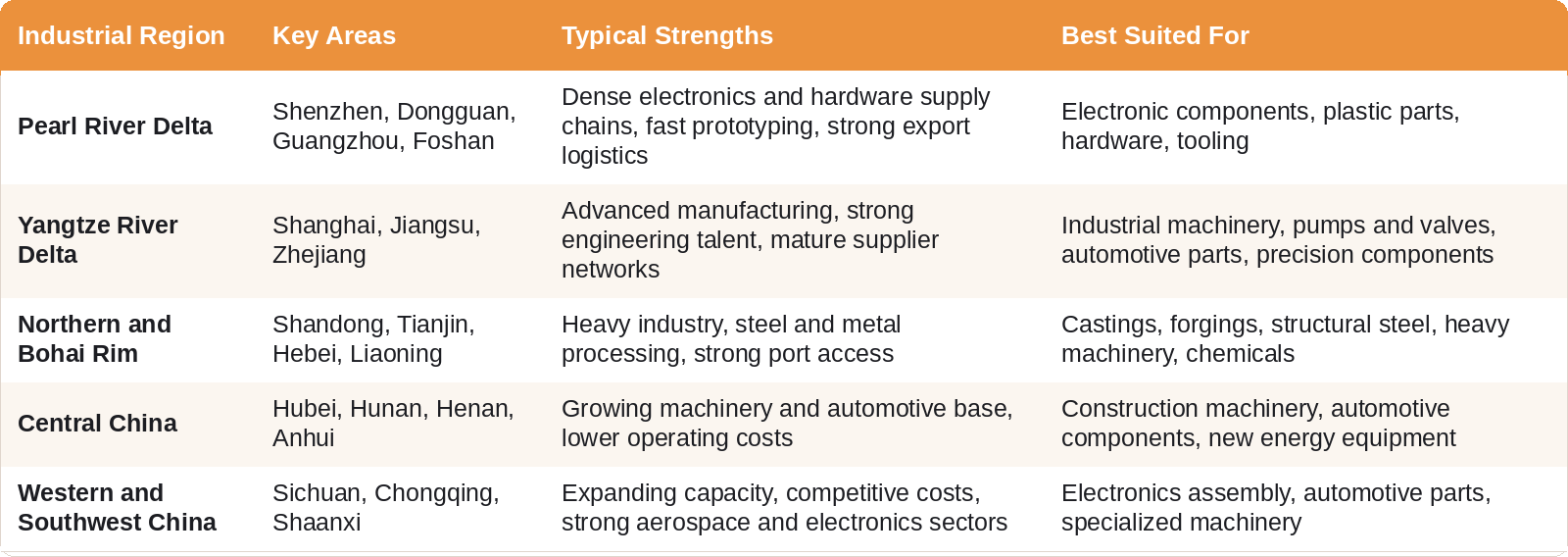
Heavy dependence on a single factory is a common source of supply-chain risk. China’s industrial base is organized into regional clusters, each with its own strengths. Spreading your suppliers across more than one region can protect you from local disruptions such as factory shutdowns, power restrictions, port congestion or weather events. It also gives you more pricing and capacity options.
For critical components where disruption would materially affect production, consider qualifying a backup supplier and, where practical, avoiding concentration in the same risk area. Place most of your volume with the primary source and keep a smaller, regular order with the backup. That way the second supplier already knows your specifications if you need to shift volume quickly.
Vet Suppliers and Keep Quality Consistent
Flexibility is worth little if quality drops each time you switch suppliers. Strong vetting is what turns a list of factories into a reliable supply chain.
Start with a structured supplier review:
- Confirm business licenses, export history and relevant certifications such as ISO 9001
- Review production capacity, equipment and lead-time records
- Request samples and check them against your drawings and tolerances
- Audit the factory in person or through a trusted third party
- Agree on inspection standards before the first order, not after a problem appears
Language barriers, time zones and unfamiliar business practices make this harder for buyers working remotely. Many North American companies therefore work with a china sourcing agent who can find and vet suppliers locally, negotiate terms, coordinate inspections and act as a single point of contact. An experienced agent can also compare multiple factories quickly, which shortens the time it takes to add a backup supplier when you need one.
Whichever route you choose, document everything: specifications, quality criteria, packaging requirements and approval steps. Clear documentation makes it much easier to onboard a new supplier without a drop in quality.
How to Improve Supply Chain Flexibility in Production
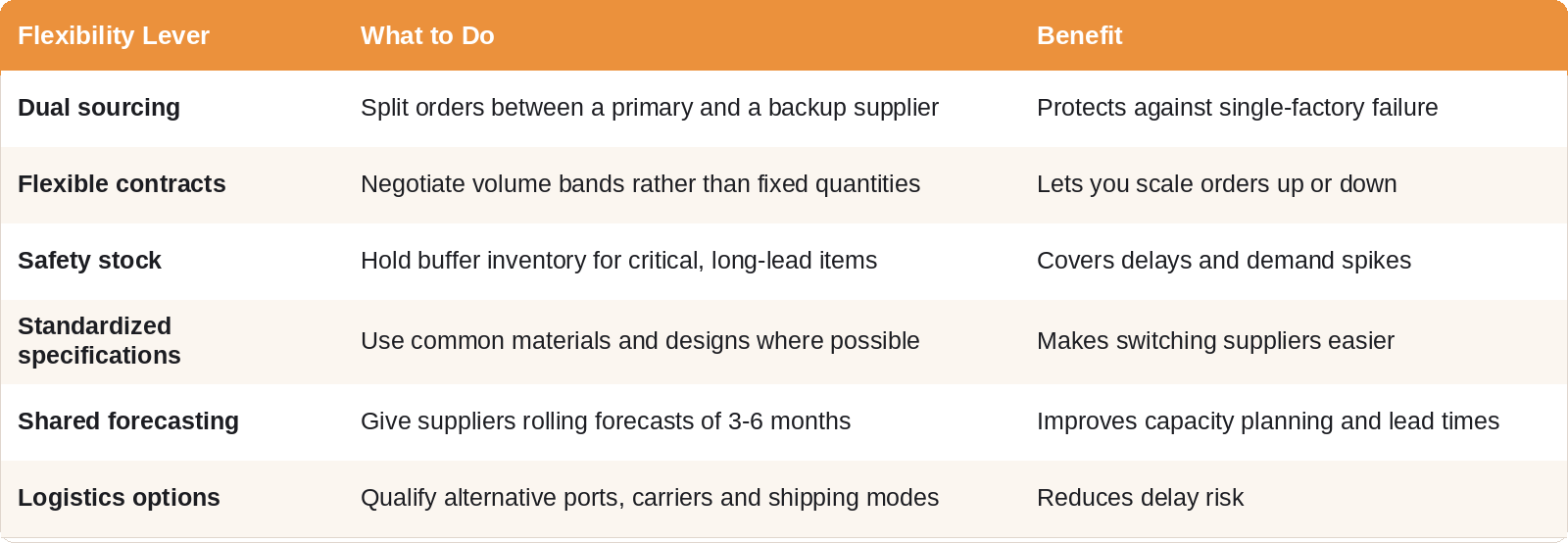
Supplier diversification is only one part of the picture. Supply chain production flexibility also depends on how orders, volumes and schedules are structured. The following levers are the most effective for industrial buyers.
When buying industrial equipment, flexibility also means planning for spare parts, service support and installation requirements early. Agreeing on spare-parts availability at the quotation stage can prevent long downtime later.
These measures work best when combined. For example, a volume-band contract with a primary supplier, plus a smaller qualified backup and modest safety stock, gives you three layers of protection at a manageable cost.
Build Visibility and Strong Supplier Relationships
You cannot respond quickly to problems you cannot see. Basic visibility tools, such as shared order trackers, regular production updates and photo or video progress reports, help you spot delays early. Fancy software is not required. Consistent communication is.
Relationships matter just as much. Strong supplier relationships can improve communication, responsiveness and capacity planning when supply is tight. Suppliers tend to value buyers who pay on time, share forecasts honestly and treat them as partners. Visit key factories when possible, hold regular review calls and address quality issues collaboratively rather than punitively.
Decide Between In-House Sourcing and Outside Support
Some companies have the staff, language skills and local presence to manage Asian suppliers directly. Others prefer partial or full outsourcing of the process. A simple comparison can help:
- In-house sourcing gives you direct control, but requires travel, time and local knowledge
- Working with a sourcing partner reduces setup time and on-the-ground risk, especially for smaller teams or buyers entering a new category
Providers such as Sourcing Captain support industrial buyers with supplier searches, negotiation and quality checks, which can be useful when you need to expand your network without hiring a full overseas team. Whatever you choose, make sure fees are transparent and quality responsibilities are clearly defined.
Common Mistakes to Avoid
- Choosing on price alone. The cheapest quote often hides quality or delivery risk.
- Skipping the backup supplier. A second source is far cheaper to set up before a crisis than during one.
- Weak specifications. Vague drawings lead to inconsistent parts and disputes.
- Ignoring total landed cost. Freight, duties, inspection and inventory costs all affect the real price.
- Never testing the backup. Place small, regular orders so the second source stays ready.
Final Thoughts
Building a reliable, flexible supply chain from Asia is a matter of design, not luck. Diversify across suppliers and regions, vet carefully, structure contracts and inventory for change, and keep clear visibility and relationships with your partners. Companies that do this protect themselves from disruption while keeping the cost and capability advantages that make sourcing from Asia attractive in the first place.
Start small: identify your five most critical components, qualify a second source for each, and build from there. Over time, those steps add up to a supply chain that can absorb shocks and keep your production moving.




2 thoughts on “How to Build a Reliable, Flexible Supply Chain When Sourcing from China”