Have you ever stopped while writing and wondered whether you should use dreamt or dreamed? Both forms look correct, but their use can depend on the type of English you follow.
Dreamt or dreamed are both past-tense forms of dream. You can use either one when talking about something you imagined or experienced during sleep.
For example, you can say, “I dreamed about flying last night” or “I dreamt about flying last night.” Both sentences have the same basic meaning.
However, dreamed appears more often in American English, while dreamt remains common in British English. Therefore, your choice may depend on your audience and writing style.
⚡ Quick Answer
Dreamt and dreamed are both correct past-tense forms of “dream.” “Dreamed” is more common in American English, while “dreamt” is especially common in British English.
😊 “I dreamed about you last night.”
😊 “I dreamt about you last night.”
Related Guide: Anyone Has or Anyone Have
📊 Quick Overview Table
| Word | Type | Usage Region | Formality | Meaning |
| Dreamed | Regular verb | American English | Neutral | Past of dream |
| Dreamt | Irregular verb | British English | Slightly literary | Past of dream |
📖 What Does Dreamt or Dreamed Mean?
Both dreamed and dreamt are past tense forms of the verb “dream,” which means to experience thoughts, images, or sensations during sleep, or to imagine something while awake.
- Dreamed = standard past tense (regular form)
- Dreamt = alternative past tense (irregular form)
There is no difference in meaning between the two. The variation only exists in spelling and usage preference, which makes it important to choose the right form based on your audience and writing context.
🔍 Dreamed vs Dreamt – What’s the Difference?
The main difference between dreamed vs dreamt lies in usage rather than meaning.
1. Regional Usage
- Dreamed is more common in:
- United States
- Canada
- Dreamt is more common in:
- United Kingdom
- Australia
2. Writing Style
- Dreamed
- Modern
- Widely accepted
- Preferred in formal writing
- Dreamt
- Traditional
- Slightly poetic
- Common in storytelling
3. Pronunciation
- Dreamed → /dreemd/
- Dreamt → /dremt/
Visit Also: Unaccessible vs Inaccessible
🧠 Why Are There Two Forms?
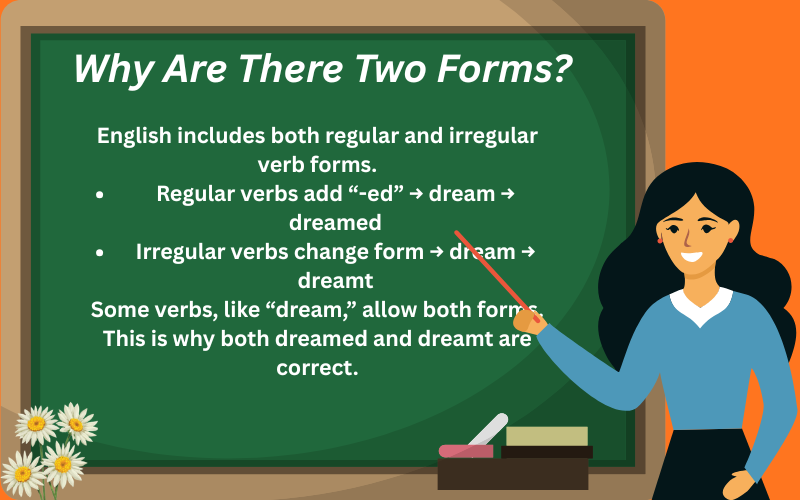
English includes both regular and irregular verb forms.
- Regular verbs add “-ed” → dream → dreamed
- Irregular verbs change form → dream → dreamt
Some verbs, like “dream,” allow both forms. This is why both dreamed and dreamt are correct.
💬 How to Use Dreamed in Sentences
Dreamed is the most common and widely accepted form in modern English.
Examples:
- I dreamed about traveling the world.
- She dreamed of becoming a doctor.
- They dreamed about success.
👉 Best for:
- SEO content
- Blogs
- Academic writing
- Global audience
📱 Dreamt or Dreamed in Modern Usage
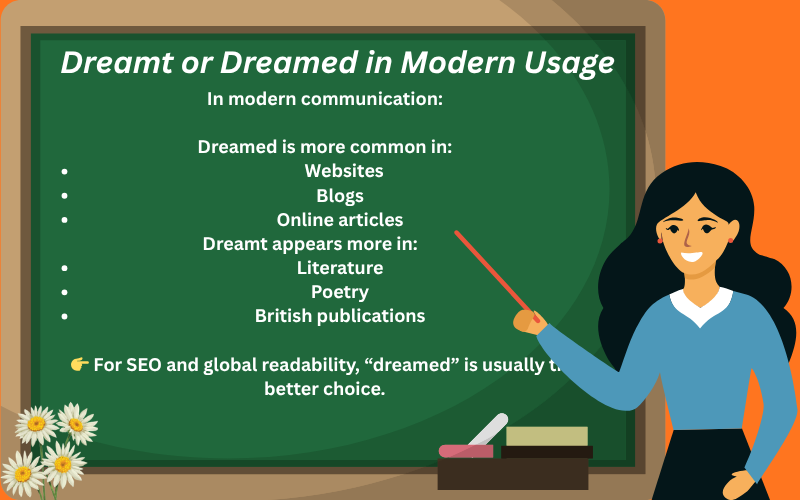
In modern communication:
- Dreamed is more common in:
- Websites
- Blogs
- Online articles
- Dreamt appears more in:
- Literature
- Poetry
- British publications
👉 For SEO and global readability, “dreamed” is usually the better choice.
🔍 Dreamt or Dreamed in Grammar Rule
Examples:
- I have dreamed about it.
- I have dreamt about it.
📊 Comparison Table
| Feature | Dreamed | Dreamt |
| Type | Regular | Irregular |
| Region | American English | British English |
| Popularity | High | Moderate |
| Formal use | Preferred | Acceptable |
| Meaning | Same | Same |
💡 Real-Life Usage Examples
- I dreamed about my future career.
- I dreamt about a mysterious place.
- She has dreamed of success for years.
- He has dreamt of adventure since childhood.
⚠️ When to Use Dreamed
Use dreamed when:
- Writing for a global audience
- Creating SEO content
- Writing formally
- Targeting American readers
🚫 When NOT to Use Dreamt
Avoid dreamt when:
- Writing for SEO-heavy blogs
- Targeting American English
- Writing formal academic content
🔁 Similar Words with Two Forms
| Verb | Forms |
| Learned / Learnt | Both correct |
| Burned / Burnt | Both correct |
| Spelled / Spelt | Both correct |
🔹 Common Mistakes When Using Dreamt or Dreamed
One of the most common mistakes people make when using dreamt or dreamed is assuming that one form is incorrect. In reality, both forms are grammatically correct, but many writers avoid “dreamt” unnecessarily or use both forms inconsistently in the same content. This inconsistency can reduce readability and make writing appear less professional.
For example, writing “I dreamed about success and later dreamt about it again” within the same paragraph can confuse readers. It is better to choose one form and use it consistently throughout your writing. For SEO-focused and global content, “dreamed” is usually the better choice because it is more widely recognized.
For More: Disfunction vs Dysfunction
🔹 Dreamt or Dreamed in Creative Writing and Storytelling
In creative writing, both forms can be used effectively depending on the tone. Writers often choose “dreamt” because it sounds more poetic and expressive, which can enhance storytelling and emotional depth.
For instance, “She dreamt of a magical world filled with wonder” creates a more artistic tone, while “She dreamed about her future” sounds more neutral. Both are correct, but “dreamt” is often preferred in literature and narrative writing for stylistic purposes.
🔹 Regional Preferences: American vs British English
The choice between dreamed and dreamt often depends on regional language differences. American English strongly favors “dreamed,” while British English tends to use “dreamt” more frequently.
For example, an American writer would say “I dreamed about my childhood,” while a British writer might say “I dreamt about my childhood.” Both are correct, but the preference reflects regional usage. For global audiences, “dreamed” is usually the better option.
📈 Why This Topic Confuses People
Many learners get confused because:
- Both forms are correct
- English has mixed rules
- Regional differences exist
🎯 Which One Should You Use?
If you are unsure:
👉 Use dreamed
Because:
- More common
- SEO-friendly
- Globally understood
See Also: Will Be Send or Will Be Sent
Faqs
Is dreamt or dreamed correct?
Both dreamt and dreamed are correct past-tense forms of the verb “dream.”
Which is more common, dreamt or dreamed?
Dreamed is generally more common, especially in American English.
Is dreamt British English?
Yes, dreamt is particularly common in British English, although speakers use both forms.
Do Americans say dreamt?
Americans understand “dreamt,” but “dreamed” occurs more often in American English.
What is the past tense of dream?
Both dreamed and dreamt can serve as the past tense of “dream.”
What is the past participle of dream?
Both dreamed and dreamt can also work as the past participle of “dream.”
Should I use dreamed in American English?
Yes, dreamed is usually the safer choice for American English writing.
Should I use dreamt in British English?
Yes, dreamt fits naturally in British English, although “dreamed” also remains correct.
Is dreamt more informal than dreamed?
No, neither form is inherently more informal; regional preference mainly explains the difference.
Can I use both dreamt and dreamed?
Yes, you can use both forms, but staying consistent with your preferred variety of English helps your writing.
Conclusion
When choosing dreamt or dreamed, you do not need to worry about choosing a grammatically wrong word. Both forms work as the past tense and past participle of dream.
The main difference comes from regional preference. Dreamed appears more often in American English, while dreamt has strong use in British English and other varieties.
For example, “I dreamed about the ocean” and “I dreamt about the ocean” communicate the same basic idea. Therefore, both sentences are grammatically correct.
In short, choose dreamed if you want the more common American form, or choose dreamt when it suits British English or your preferred writing style.